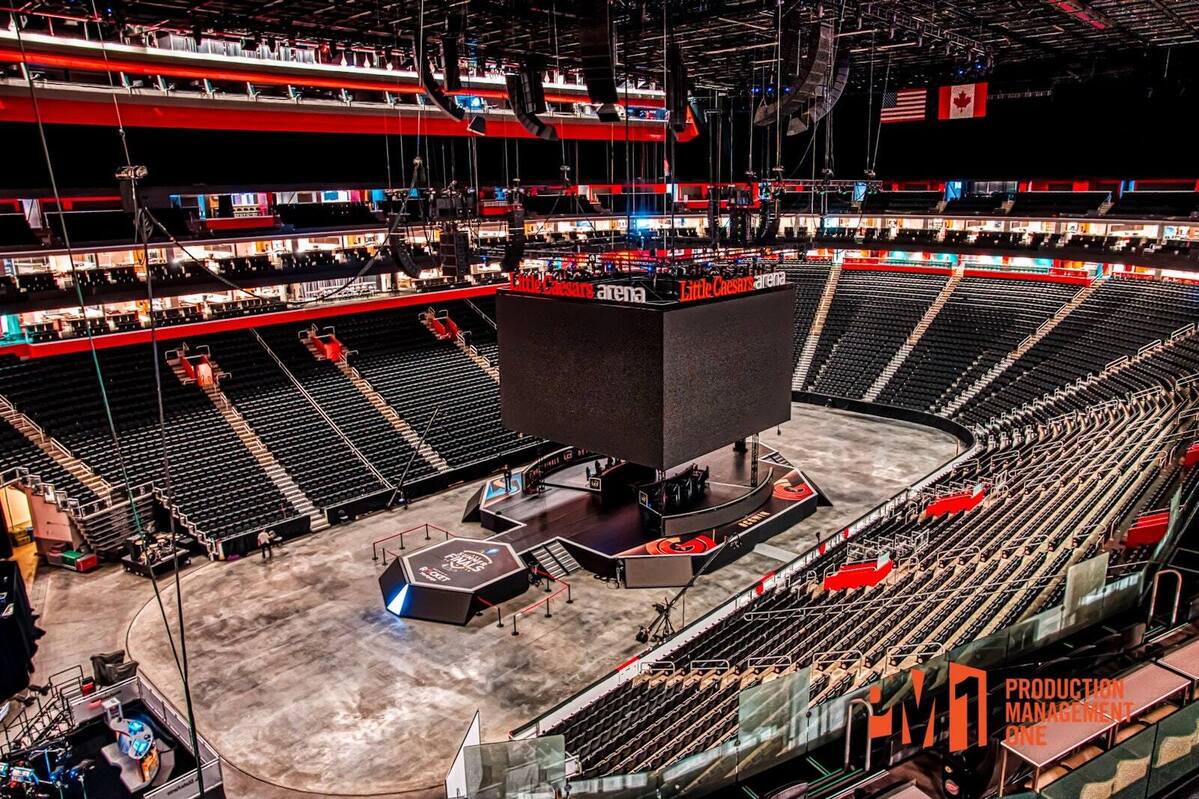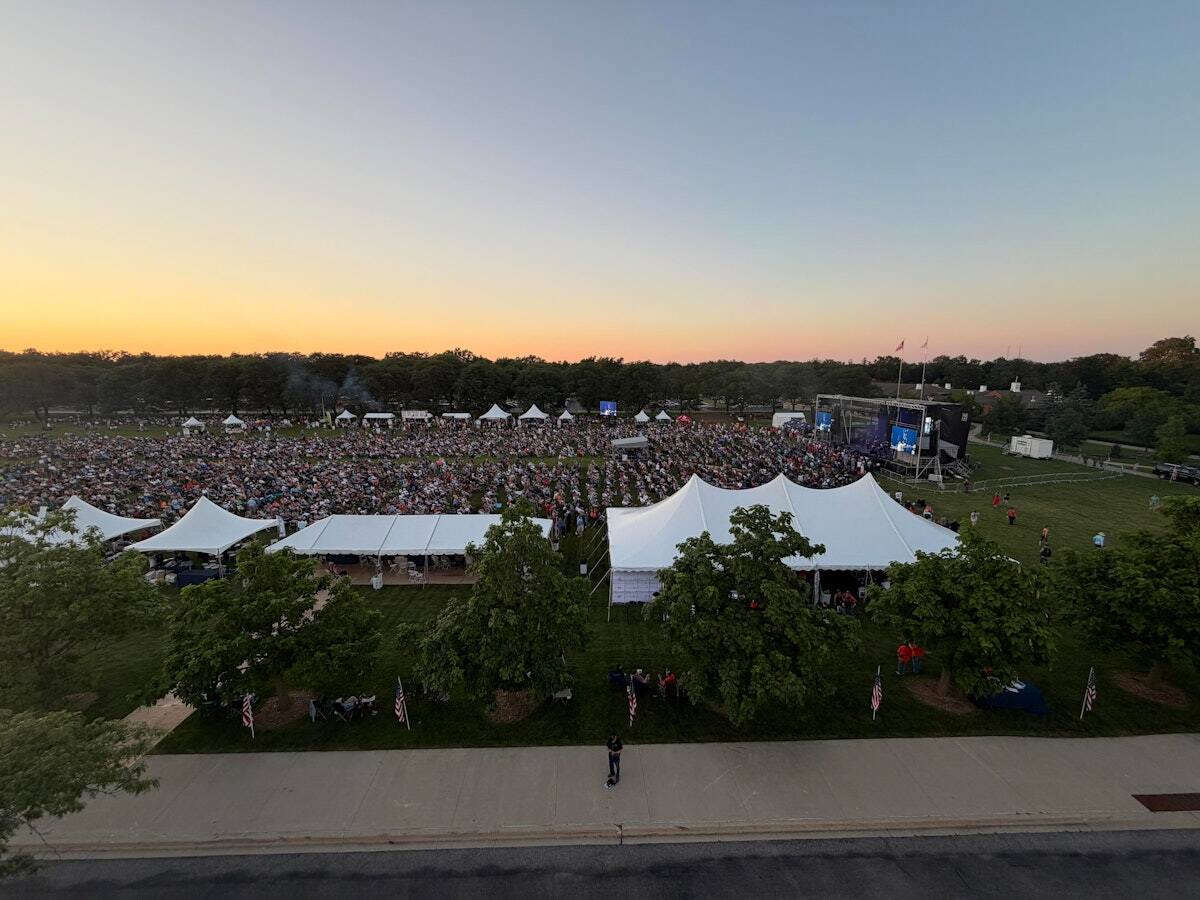
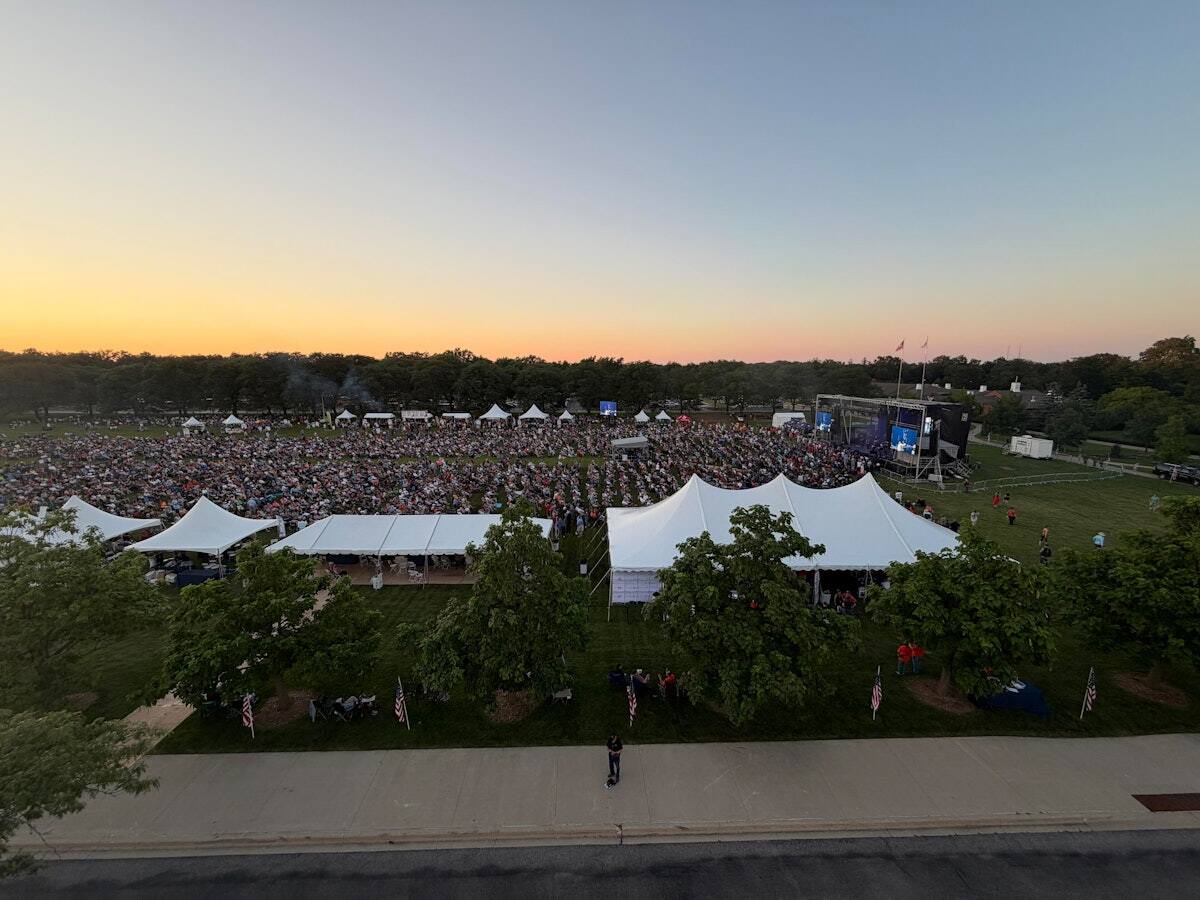
Some of the best events happen in places that were never built for a show. A field, a parking lot, a city street, a plaza, an ice rink, a swimming pool. Building a venue where none exists means bringing everything a venue normally provides: a level stage, seats with sightlines, power, access, egress, shade, and a place for the cameras. Then the show goes on top of it.
It's some of the most rewarding work in live events, and the easiest to underestimate. Here's what it takes.
Start With the Ground
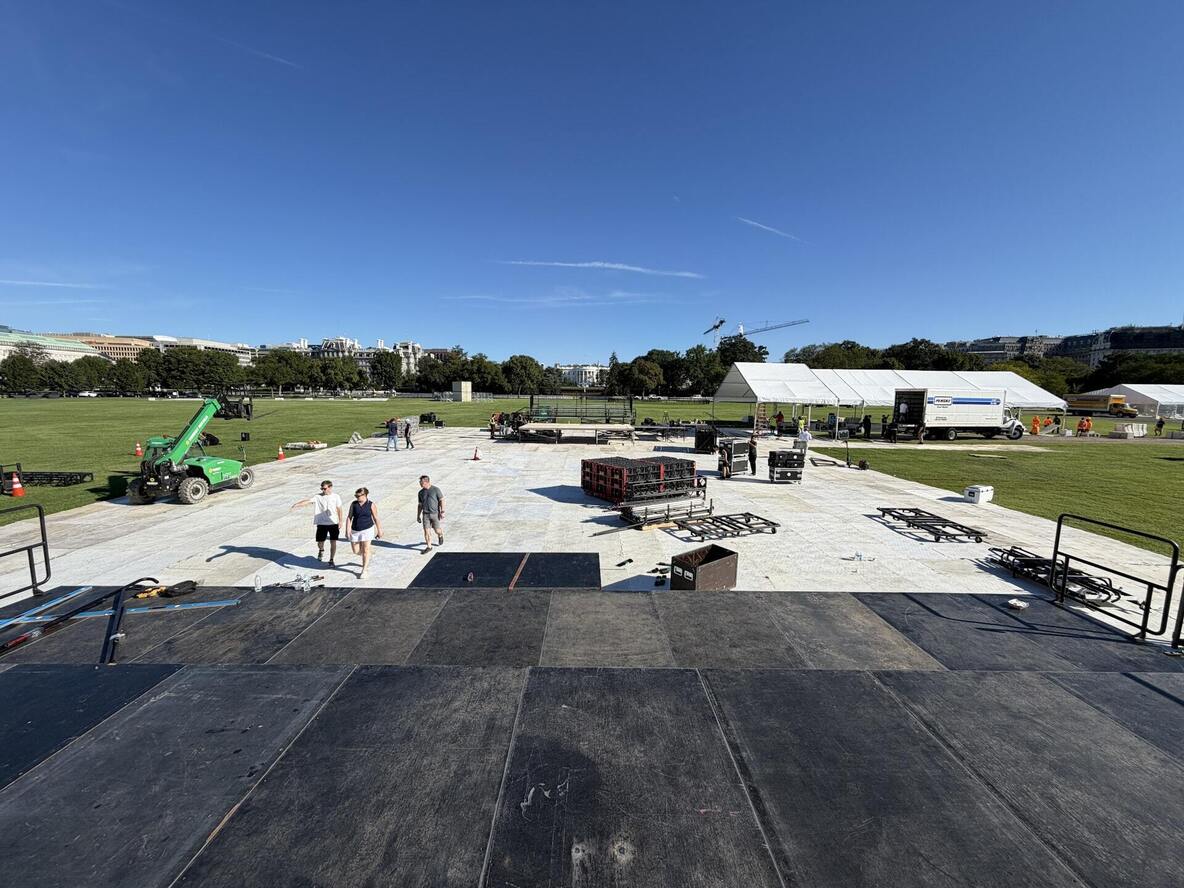
A venue starts with what it stands on. In a building, someone already answered the hard questions: how much the floor can carry, where the water goes when it rains, and how a truck gets to the stage door. On an open site, every one of those answers comes from the site walk.
- Grade. Almost no field is flat. PM1 uses laser-point elevation surveying on uneven terrain so decks, seating, and structures sit level from the first piece.
- Bearing. Soft ground, turf, sand, and asphalt all carry load differently. The structure is engineered to the surface, and stamped where the job requires.
- Water. Where it drains, and where it won't, decides where cable runs and where the crowd stands.
- Obstacles. Trees, light poles, columns, and fountains don't move. A deck can be cut and wrapped around them.
Get the ground wrong and everything above it inherits the problem. Get it right and the rest of the build has something to stand on.
Bring the Infrastructure a Venue Would Have
A building hides a lot of infrastructure. On an open site, every piece of it has to arrive on a truck and land in the right place on the drawing.
- Stage and structure: decks, roofs, towers, and truss, sized for the show and rated for the wind.
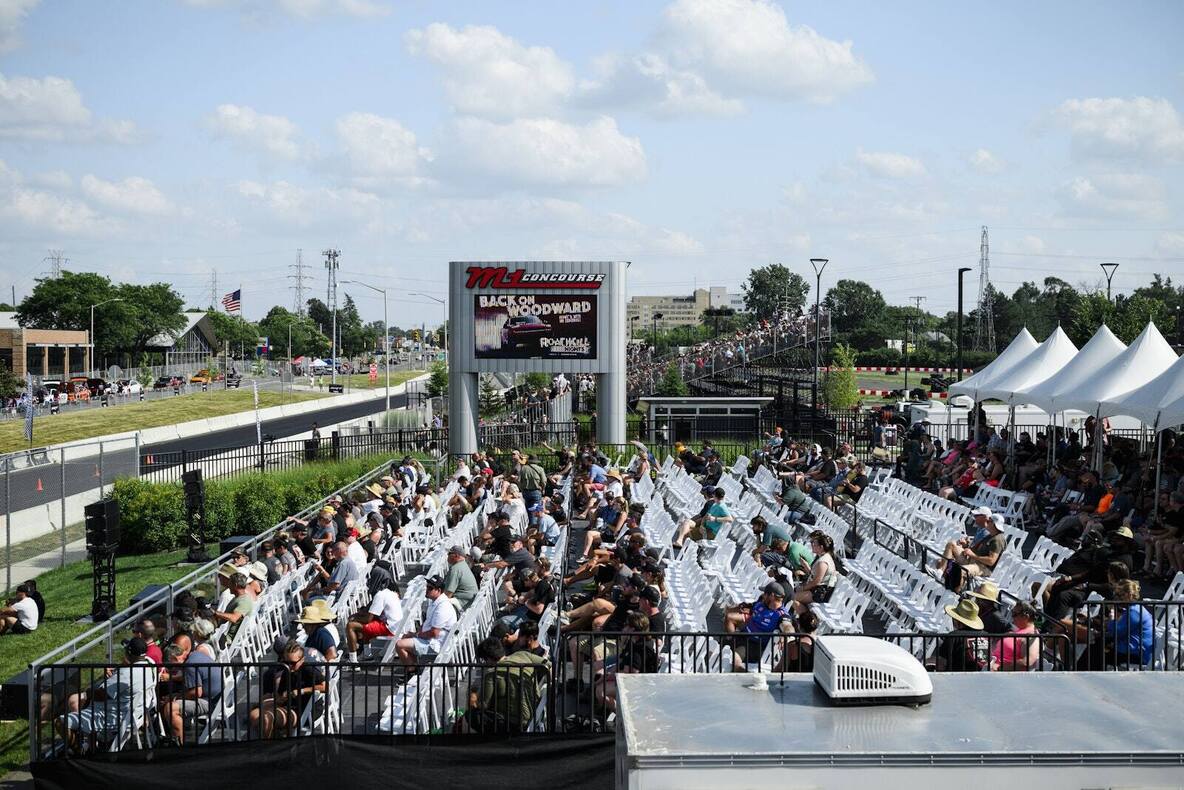
- Seating: bleachers, grandstands, and tiered risers, from one hundred seats to twenty-five thousand, with ADA platforms and ramps built in.
- Power: generators or a tie-in to local service, with a second source on standby for the systems the show can't lose.
- Access and egress: truck routes, crew paths, crowd lines, barricade, and the way out in an emergency.
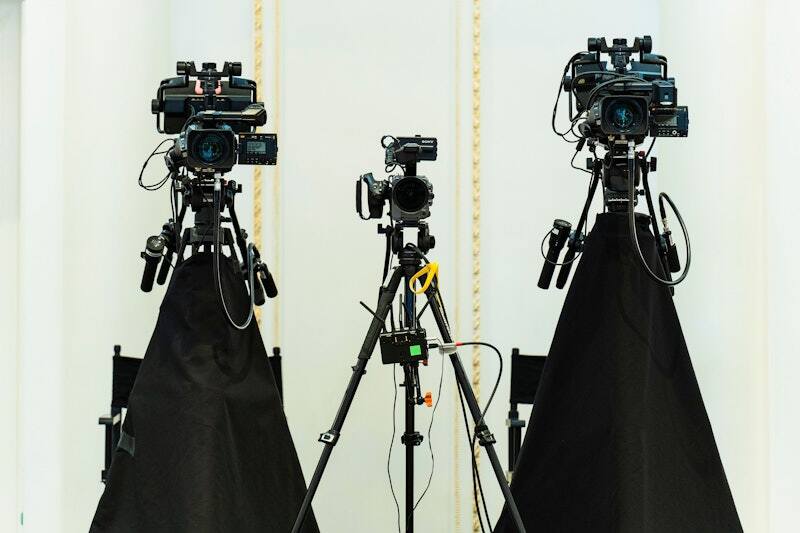
- Front of house and camera positions, drawn where they can see the stage without blocking anyone's view of it.
- Tents, shade, and back of house for talent, crew, and production.
All of it lives on one CAD layout. Move the stage ten feet and the plan shows what moves with it: the seating rake, the cable path, the camera line, and the truck turn.
Sites PM1 Has Turned Into Venues
A field into a concert venue
For Gary Sinise Foundation concerts, PM1 has turned open fields into full concert venues: stage, PA, lighting, video, and the infrastructure around them, with a crowd on the grass by dusk.
A wilderness site into a festival stage
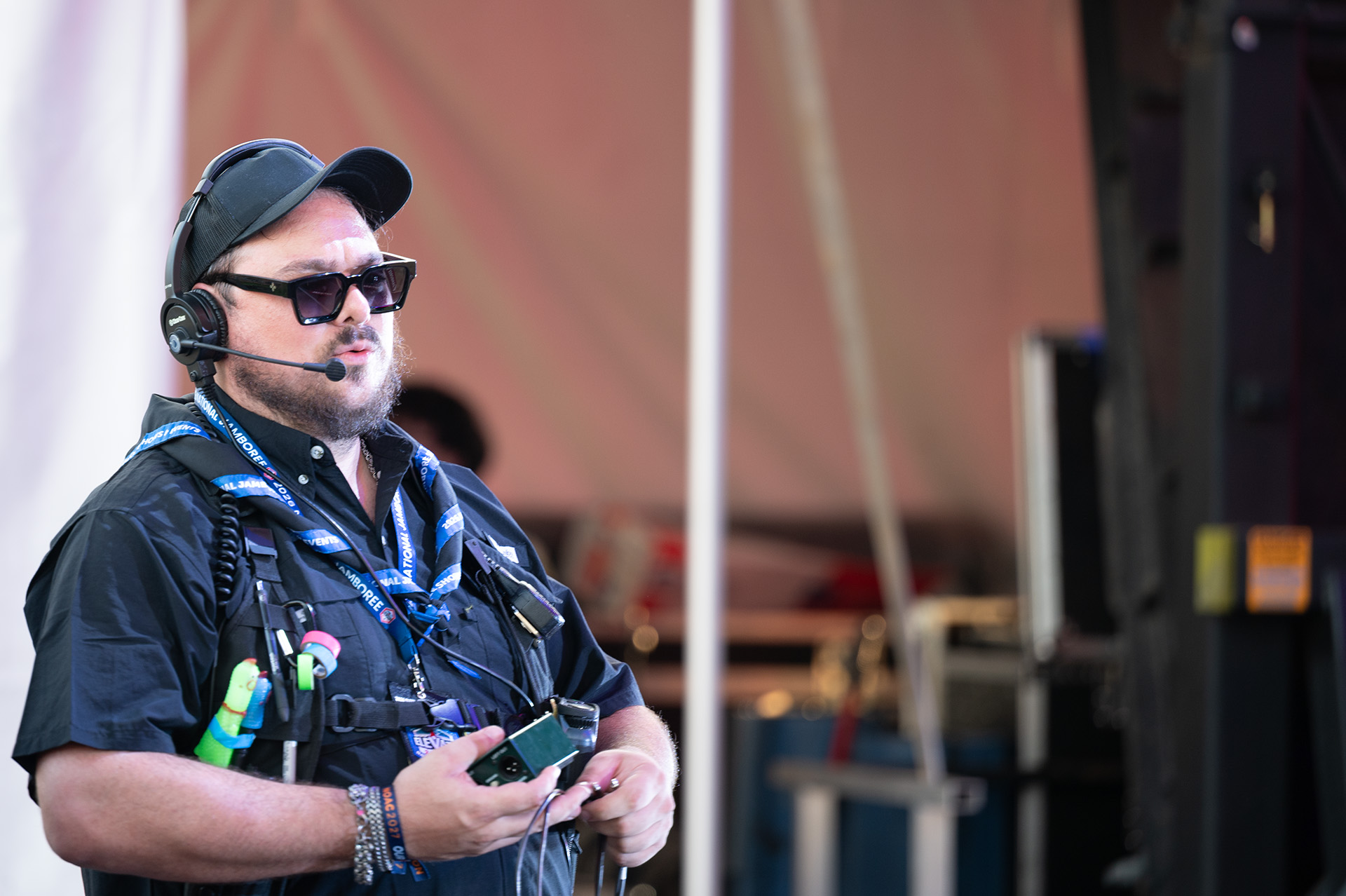
At the 2026 Scouting America National Jamboree, one PM1 infrastructure build carried musical productions, live entertainment, and speaker programs for 15,000 participants, with forest and lake behind the main stage.
An ice rink into a stadium
At Wollman Rink in Central Park, PM1 built a stadium for a professional pickleball tour on top of an ice rink. Seventy-two hours of continuous work made doors at noon on Friday and a live CBS broadcast on Sunday.
A pool into a trade show floor
At The Westin Diplomat in Fort Lauderdale, PM1 covered a pool and turned it into a trade show floor, with a custom vinyl logo on acrylic decks and outdoor carpet across the top.
A city street into a grandstand
For MotorTrend's Roadkill Nights on Woodward Avenue in Detroit, PM1 builds the spectator seating for one of the only sanctioned street drag races in the country. For The Parade Company's America's Thanksgiving Parade on the same avenue, PM1 has built thousands of bleacher seats, judging platforms, and an announcer stand every year since 2018, with most of the route cleared before the city opens for business on Monday.
Permits and Windows
Open sites usually belong to someone with rules: a city, a park service, a campus, a landlord. Permits decide what can be built, how high, how long it can stand, and when the site has to be clear.
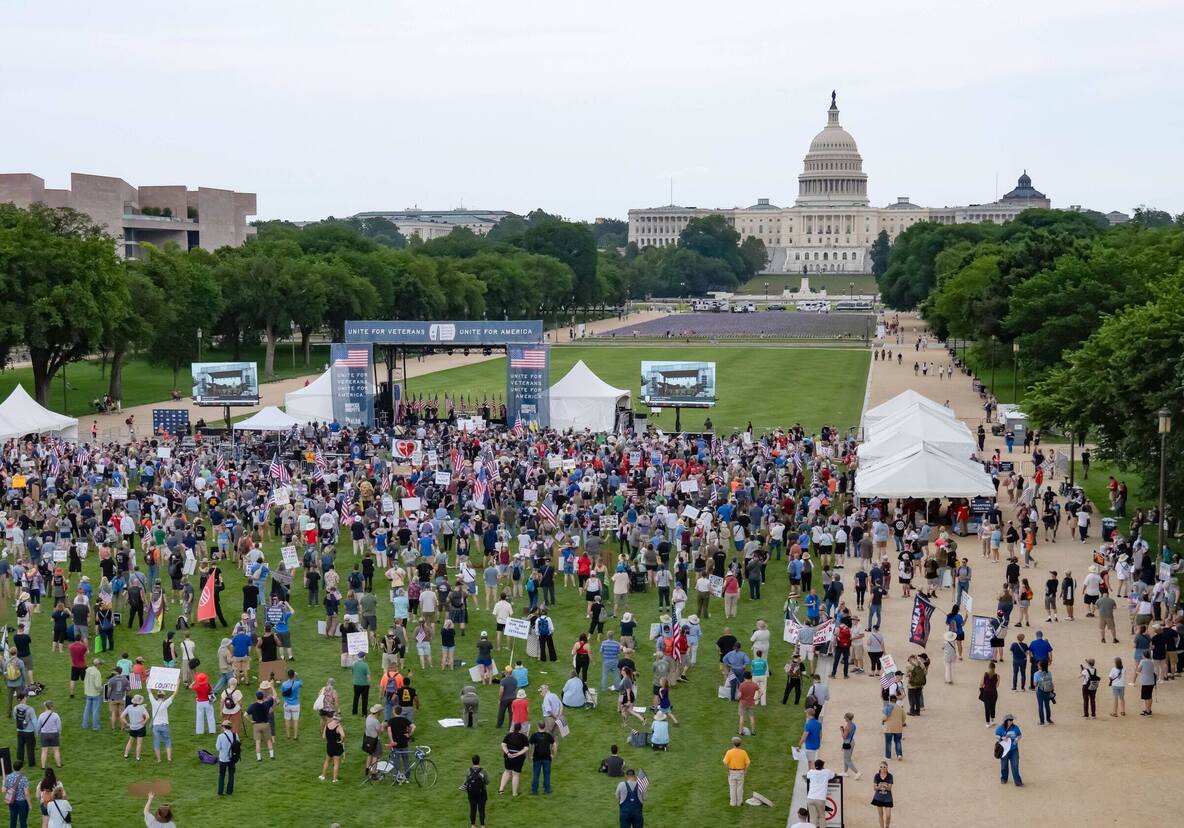
On the National Mall, the build, the show, and the strike all fit inside the window the National Park Service allows. In Central Park, there may be no on-site storage and no daytime load-in. On a city street, the road has to reopen. The schedule is built backward from those windows, and the drawing shows the permitting office exactly what will stand where.
Weather Is Part of the Plan
A building keeps the weather out. An open site doesn't. Wind ratings on roofs and screens, a hold plan for lightning, drainage for rain, and shade for heat all get decided before load-in. So does the call: who decides to hold the show, at what threshold, and how the crowd gets told.
Strike Is Half the Job
When the show ends, the site has to go back to what it was. A park has to be a park by morning. A street has to carry traffic. A field has to grow grass again. The strike gets planned with the same discipline as the build: the order things come down, the trucks that take them, and the walk at the end that proves the site is clean.