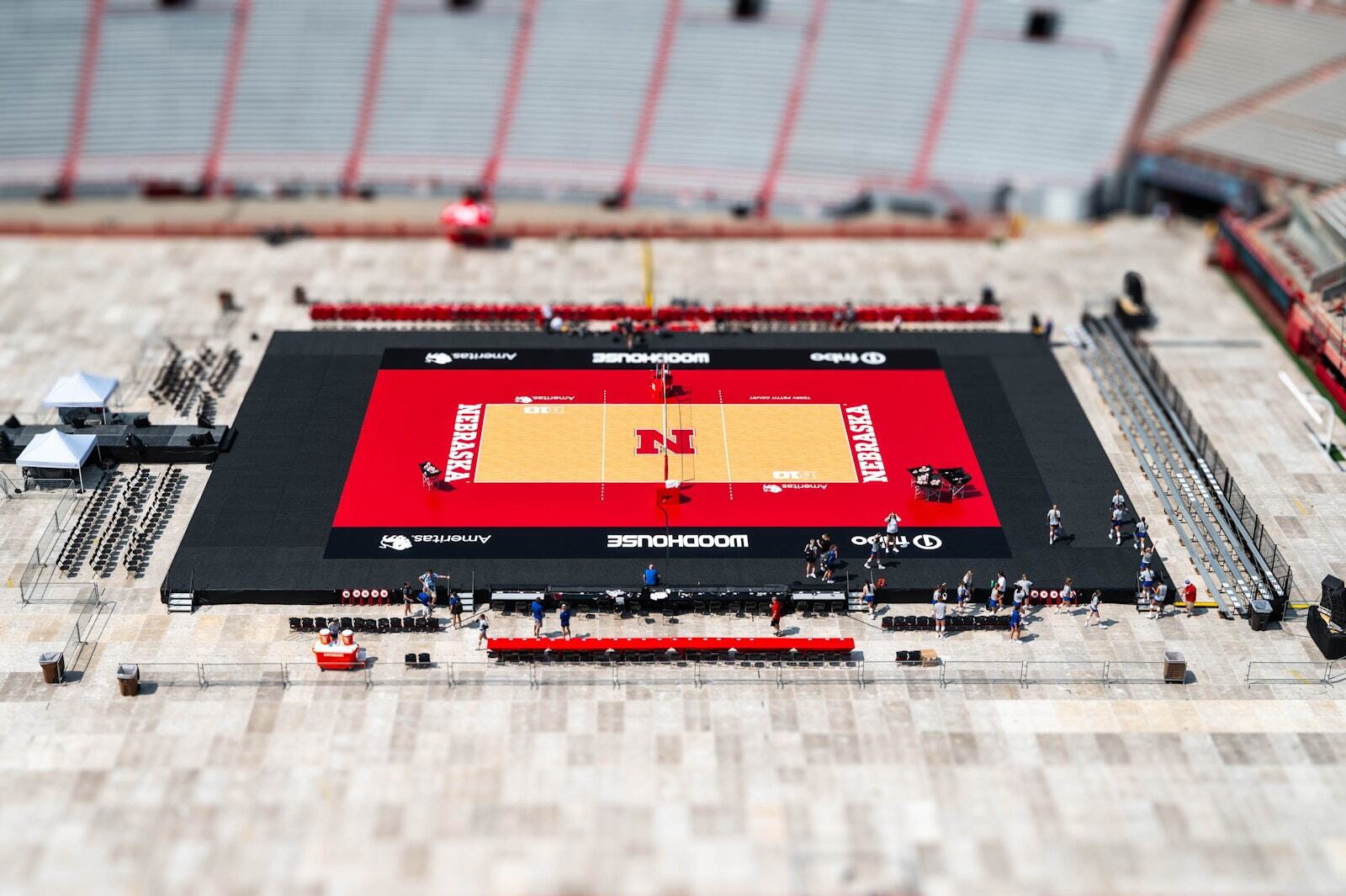
Stadium event production is everything it takes to put a show inside a venue made for a game: a stage on the field, seats on the floor, a PA that reaches the upper deck, screens the whole bowl can read, camera positions for the broadcast, and a crew that builds it all around the stadium's own schedule. A stadium has the crowd, the power, and the parking. What it doesn't have is a show.
Here's what changes when the venue is a stadium, and what a production partner should plan for before the first truck backs down the tunnel.
The Field Comes First
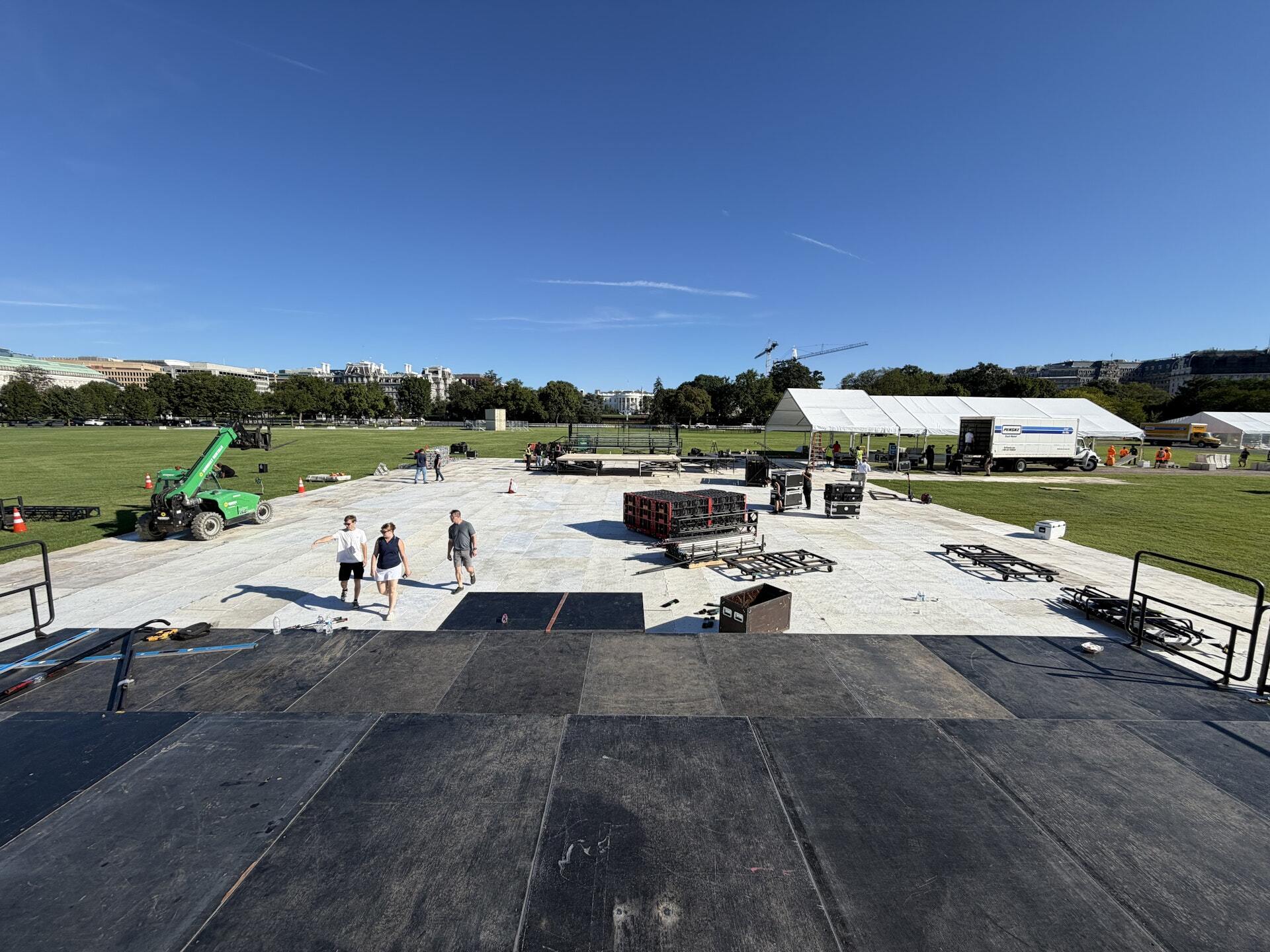
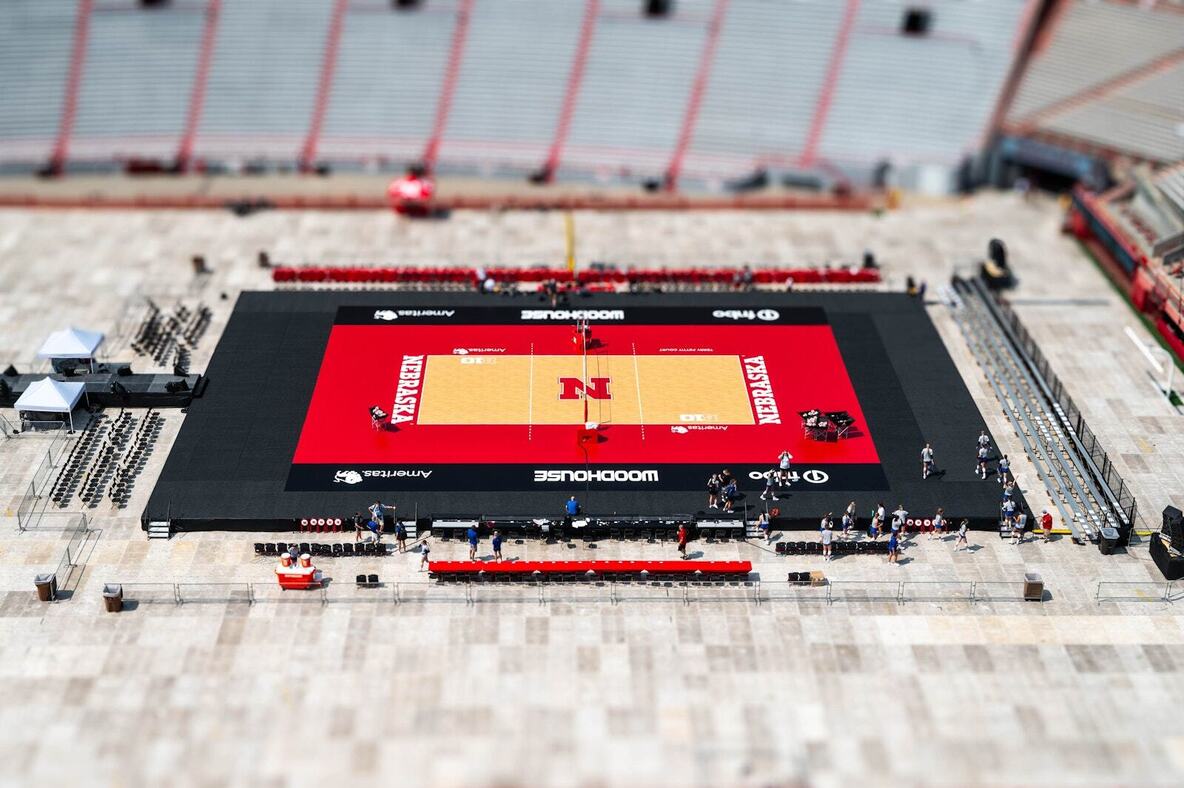
The playing surface is the most valuable thing in the building, and usually the first thing the stadium asks about. Natural grass, synthetic turf, and an arena floor each have rules for how much weight they can carry, how long they can be covered, and what has to sit under every deck, leg, and wheel.
- Field protection under the stage, the seating, and the crowd, to the stadium's spec.
- Load spread under structure, so point loads don't mark the surface.
- Vehicle paths for forklifts and trucks, planned with the field crew.
- Time on the surface, counted from the first cover down to the last one up.
The field crew and the production crew need to be working from the same drawing. When they are, the field is ready for the next game. When they aren't, someone gets a bill.
Stage Placement and the Bowl
Where the stage goes decides almost everything else: which seats can be sold, where the PA has to throw, how big the screens need to be, and where the cameras sit. An end-stage on the field opens the opposite end and the sides. A center stage opens the whole bowl but changes every sightline and every cable path.
That decision belongs on the CAD layout early, with the stadium's seating map underneath it. Move the stage twenty feet and the plan shows what moves with it: killed seats, the mix position, the delay towers, and the camera line.
Seats on the Floor
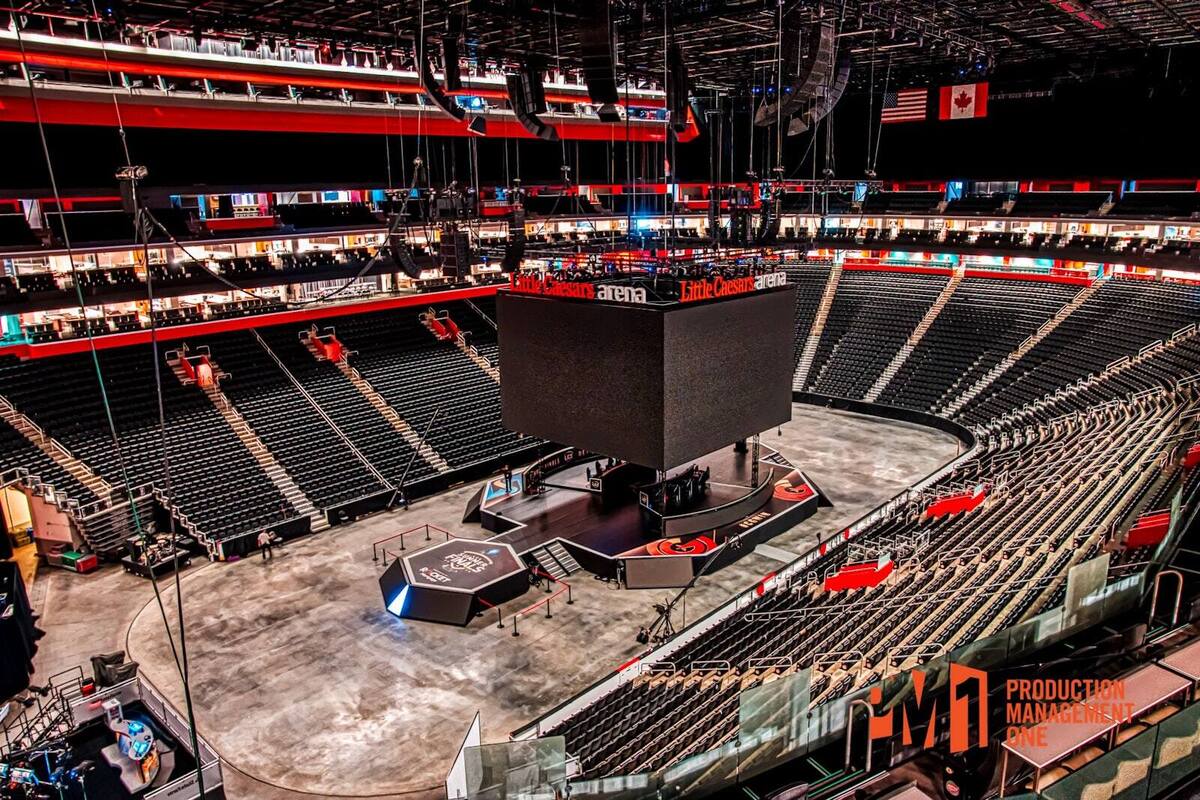
The best seats in a stadium show are often the ones that don't exist yet. Floor seating, tiered risers, VIP platforms, and grandstands on the field add capacity and premium inventory close to the stage. PM1 builds seating from one hundred seats to twenty-five thousand, with ADA platforms, ramps, and access built in, and the egress drawn to the stadium's life-safety plan.
Load-In Around the Stadium's Schedule
Stadiums are busy. There's a game before the show, a game after it, a field crew with its own work, and a building operations team with rules about every dock, tunnel, and elevator. The load-in schedule has to fit inside all of it.
That means knowing the tunnel height and the turn radius before the trucks are booked, sequencing crews so the stage goes in before the seating blocks the path to it, and planning the strike so the field is back to game condition on time. Speed matters on these jobs. The National Women's Soccer League put it plainly: "They crushed our goal of a 2.5-hour setup."
Built for the Broadcast
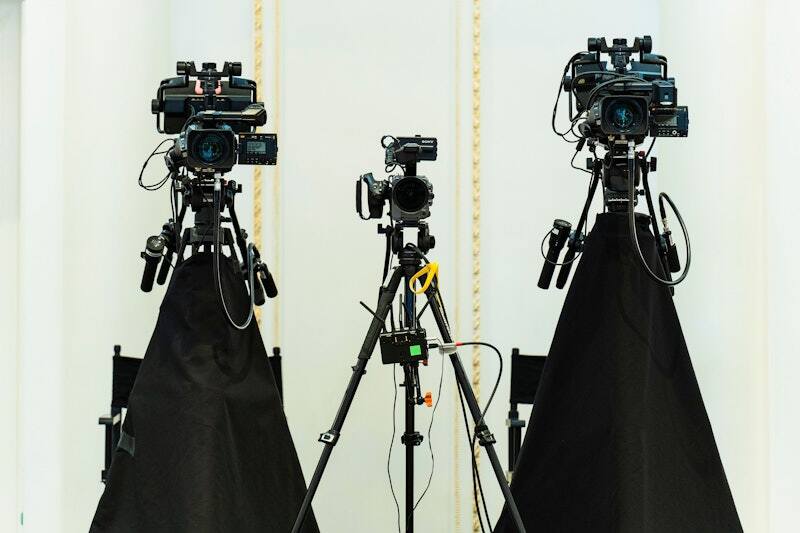
Stadium events are often built as much for the camera as for the crowd. Broadcast positions, press risers to network spec, camera cut risers, and cable paths to the truck all need room on the plan. Lighting has to work for the lens as the sun goes down. The stage and the screens get drawn to fill the frame.
Designing for the feed is as important as designing for the seat. As broadcast funding grows, it's often the bigger audience.
Working With the Stadium's Own Team
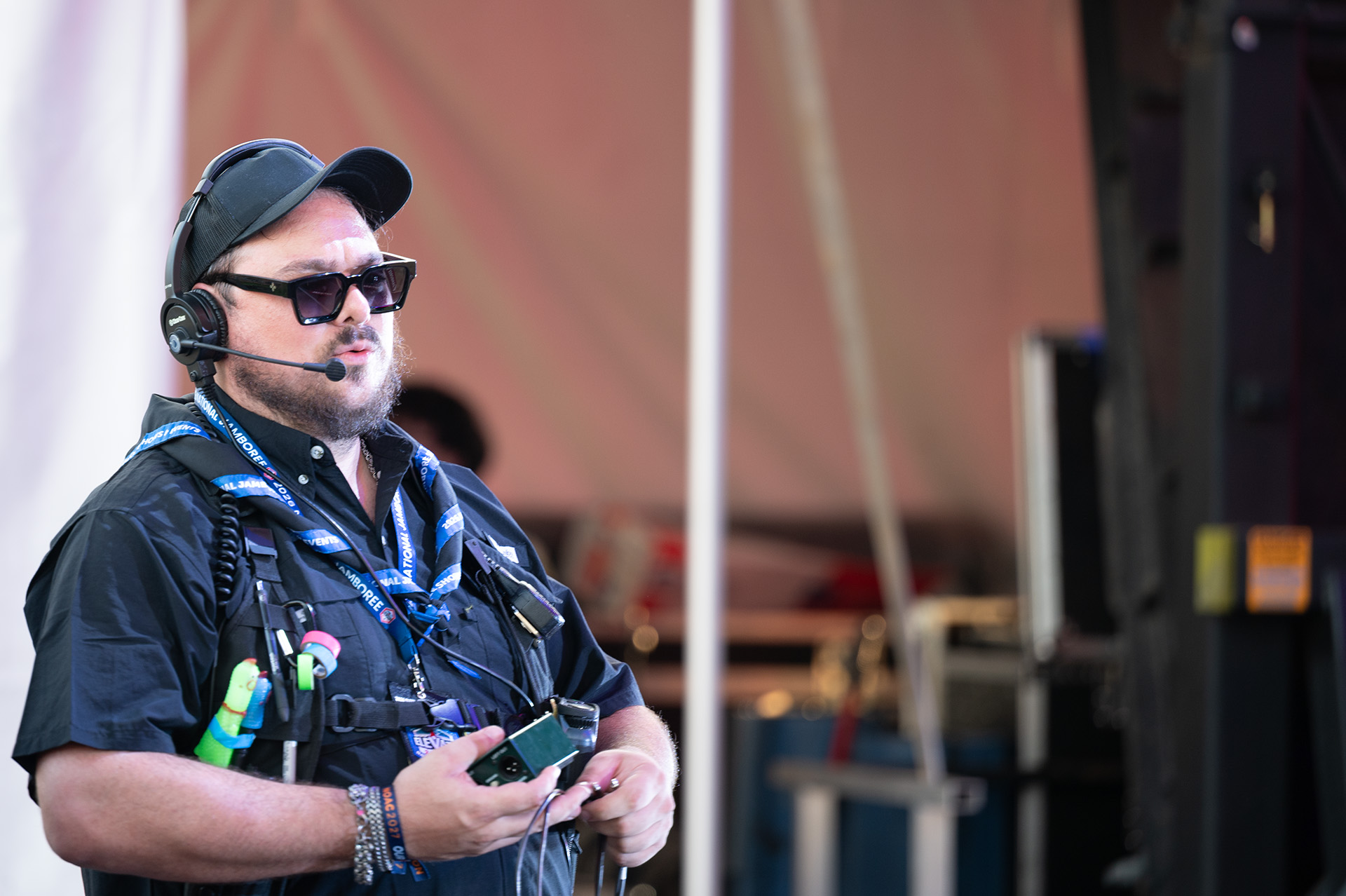
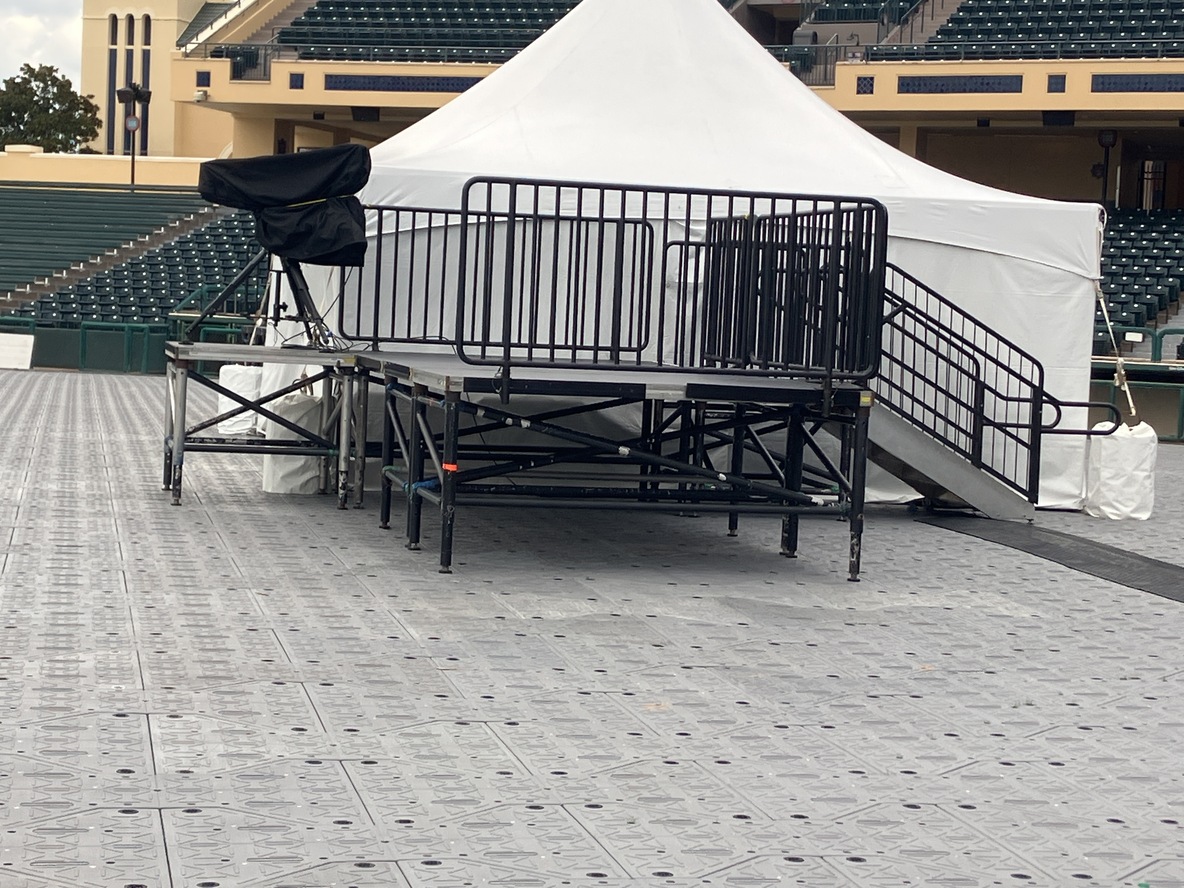
Every stadium has people who know the building better than anyone: operations, the field crew, security, guest services, and the in-house production team that runs the scoreboard and the PA on game day. A good production partner plans with them, not around them.
Venue coordination is part of the plan from the first layout, not a negotiation at load-in. Power tie-ins, rigging points, house screens, and the stadium PA all get sorted on the drawing, along with who owns each one during the show.
When There's No Stadium Yet
Sometimes the stadium has to be built. At Wollman Rink in Central Park, PM1 built a stadium for a professional pickleball tour on top of an ice rink. Seventy-two hours of continuous work made doors at noon on Friday and a live CBS broadcast on Sunday. The same thinking applies: the surface first, the seats with real sightlines, the broadcast designed in, and one plan holding all of it.