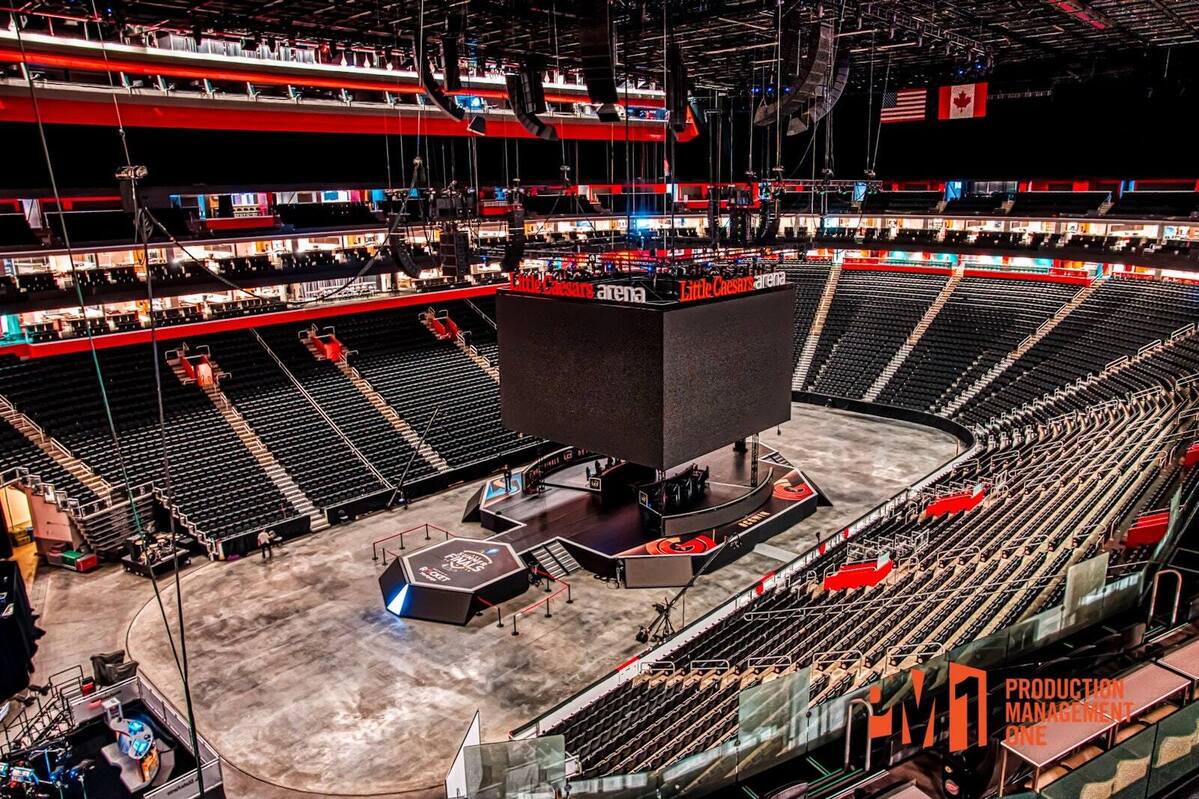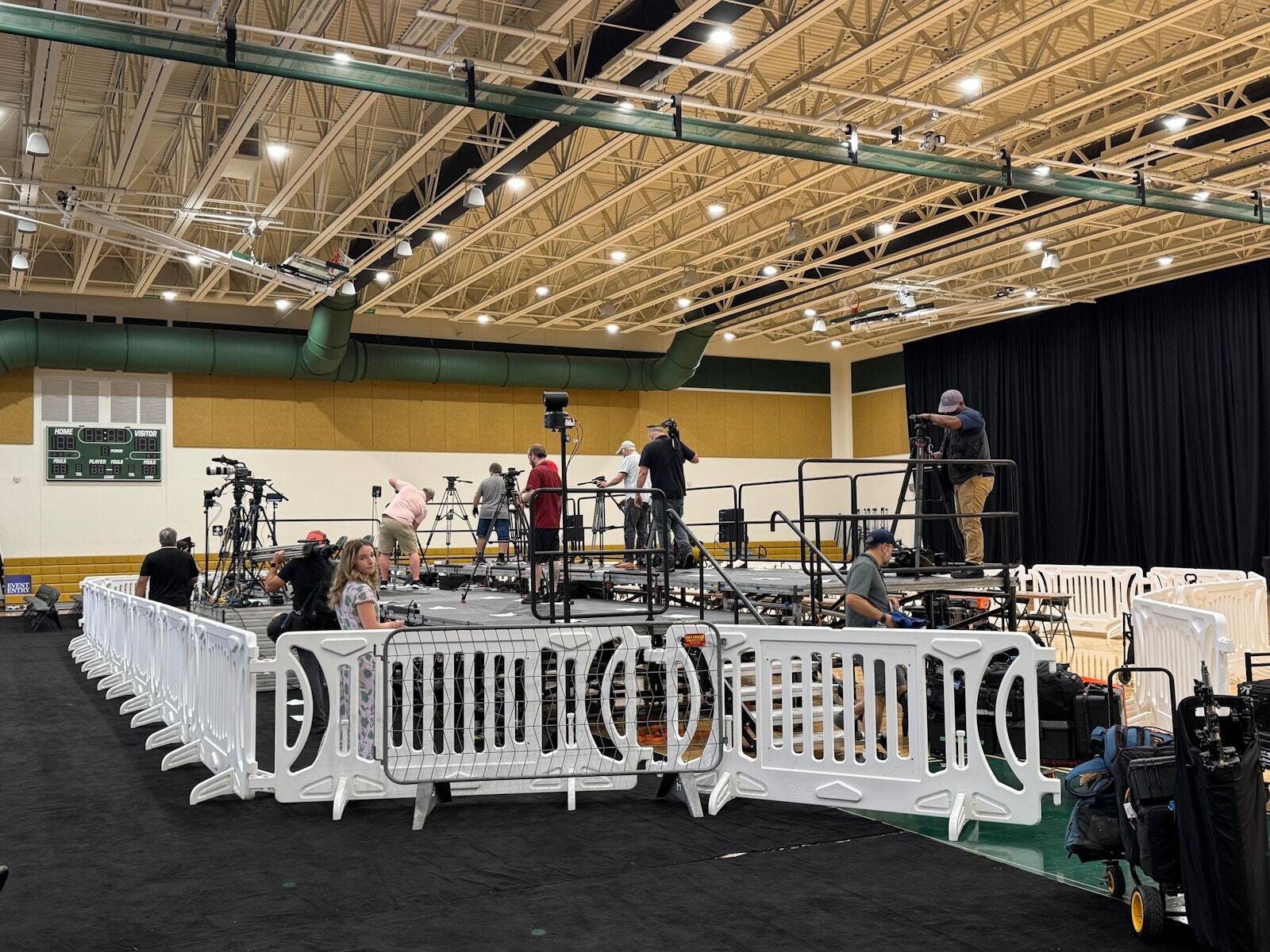
Political event production is the build and the show behind a rally, a ceremony, a campaign stop, or an official address: the stage, the press risers, the flags, the audio, lighting, and video, and the crew who call it. It runs on protocol and short notice, and it gets judged twice, once by the crowd and once by every camera pointed at the podium.
Political work sets the standard every PM1 build runs to: protocol, short notice, and a camera on every podium. Here is what political event production actually involves, and what to expect from the company you call.
What Political Event Production Covers
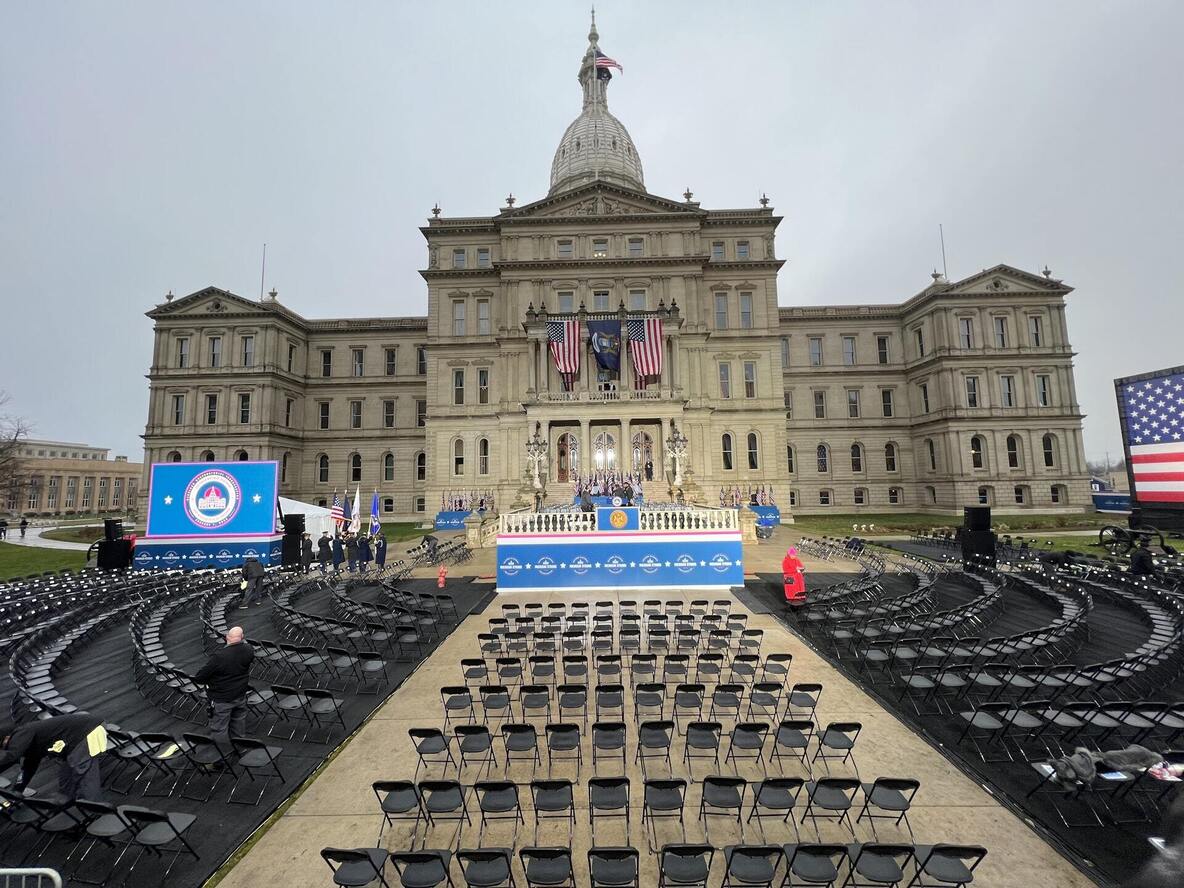
A political event looks simple from the crowd: a stage, a podium, a backdrop, a flag line. Behind it sits a full build that has to come together faster than almost any other kind of show.
- Staging for rallies, official ceremonies, galas, and fundraisers, sized to the principal, the speakers, and the shot.
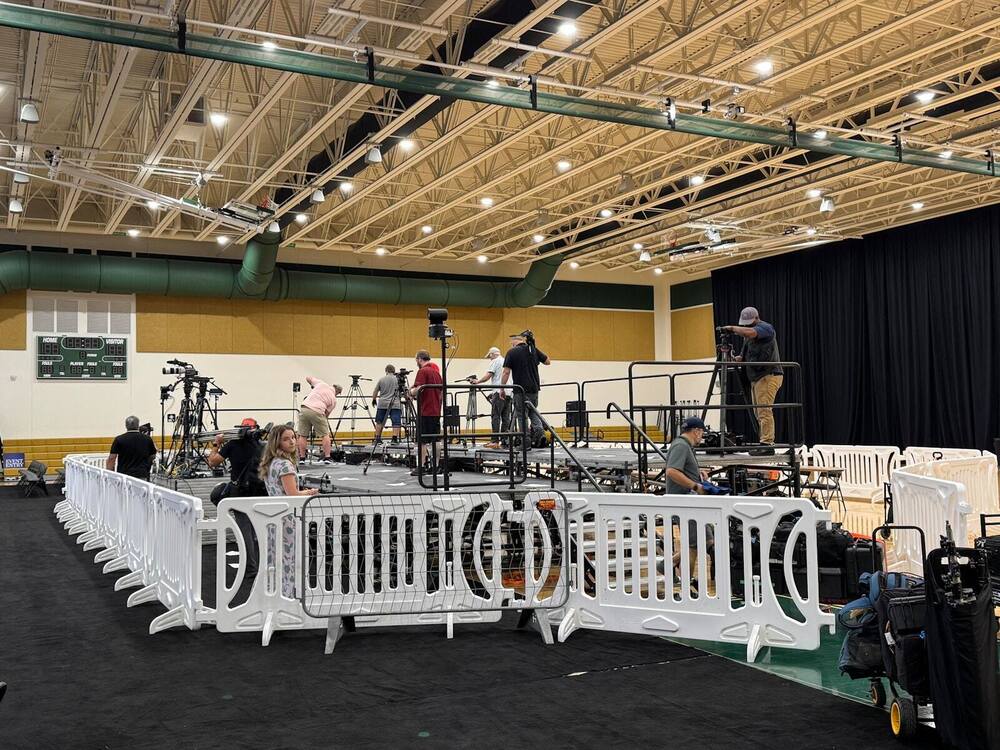
- Press risers, standard, tiered, and camera cut, placed where the press pool actually needs them.
- Audience seating and VIP and ADA viewing areas, with accessible ramps and sightlines that hold up on camera.
- Barricade and crowd lines drawn around the security perimeter and egress plan.
- Audio: the PA, podium mics, and a press mult so every outlet takes a clean feed, plus tie-ins to archival recording systems for the official record.
- Lighting: broadcast lighting, including HMI fixtures, that keeps the principal true on camera in daylight, at dusk, and under a tent, with the crowd lit for the reaction shot.
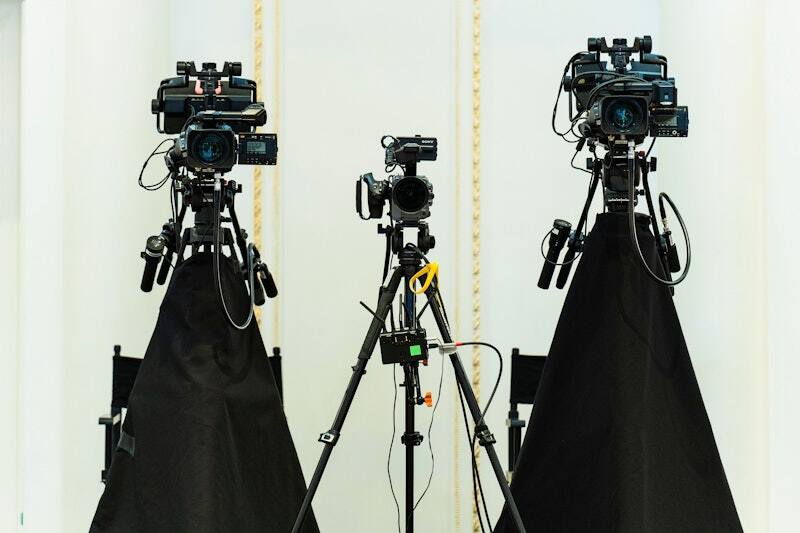
- Video: LED walls and IMAG, camera positions and switching, and teleprompter and confidence monitors for the principal.
- Livestream, where the event needs its own feed, encoded and delivered with a backup path.
- Power: generators or a tie-in to local service, sized with headroom so the podium never shares a circuit with the coffee.
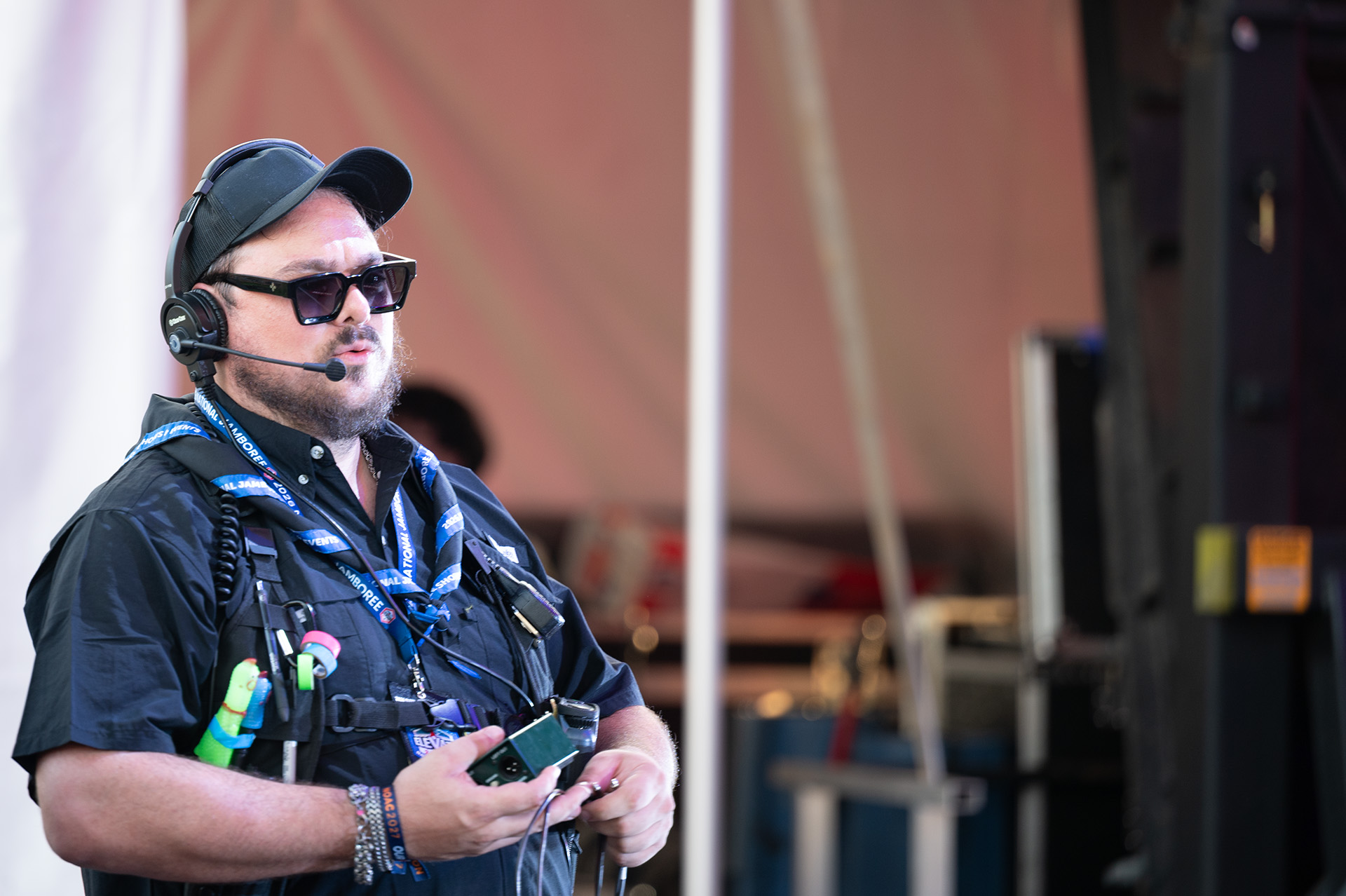
- Comms: radio and intercom that keep the crew, the advance team, and the show call on one channel.
- Flags and soft goods staged to protocol.
Or something else. Every site brings its own list, and the list usually changes after the first call.
Two of Everything That Matters
On a political event, nobody gets a second take. A dead podium mic or a dark generator doesn't end the show quietly. It ends up on the news. So redundancy isn't an upgrade on these builds. It's the plan.
- Audio runs a backup mic on the podium and a spare path for the press mult and the archival feed.
- Power has a second source on standby, whether that's another generator or a second service tie-in, for every critical system.
- Video and teleprompter carry a backup playback and a second operator position.
- Livestream encodes on a primary and a backup path, so a dropped connection doesn't drop the feed.
- Spares ride the truck: cable, fixtures, mics, and the parts that fail at the worst moment.
The question is never whether something will fail. It's whether anyone in the crowd or on the feed ever notices.
The 72-Hour Turn
Five days notice is generous. Seventy-two hours is common. Political schedules move with the news, and the build moves with them. A rally gets called, a site gets named, and the stage, risers, flags, and sound have to be standing before the first guest clears the gate.
A short timeline doesn't change what the build needs. It changes how fast the decisions get made. In practice, the turn runs in this order:
- The call. Site, date, expected crowd, the principal's requirements, and the press plan. The truck often starts loading before the drawing is finished.
- The layout. Stage, risers, crowd lines, camera positions, power, and truck access drawn onto one plan, around the security perimeter.
- The advance. Venue, security, and press office walk the plan. Changes go into the drawing, not onto a napkin at load-in.
- Load-in. Structure first, then the stage, the risers, and the systems on top.
- Doors. Sound check, camera check, and a crew standing by for the moment the schedule moves again.
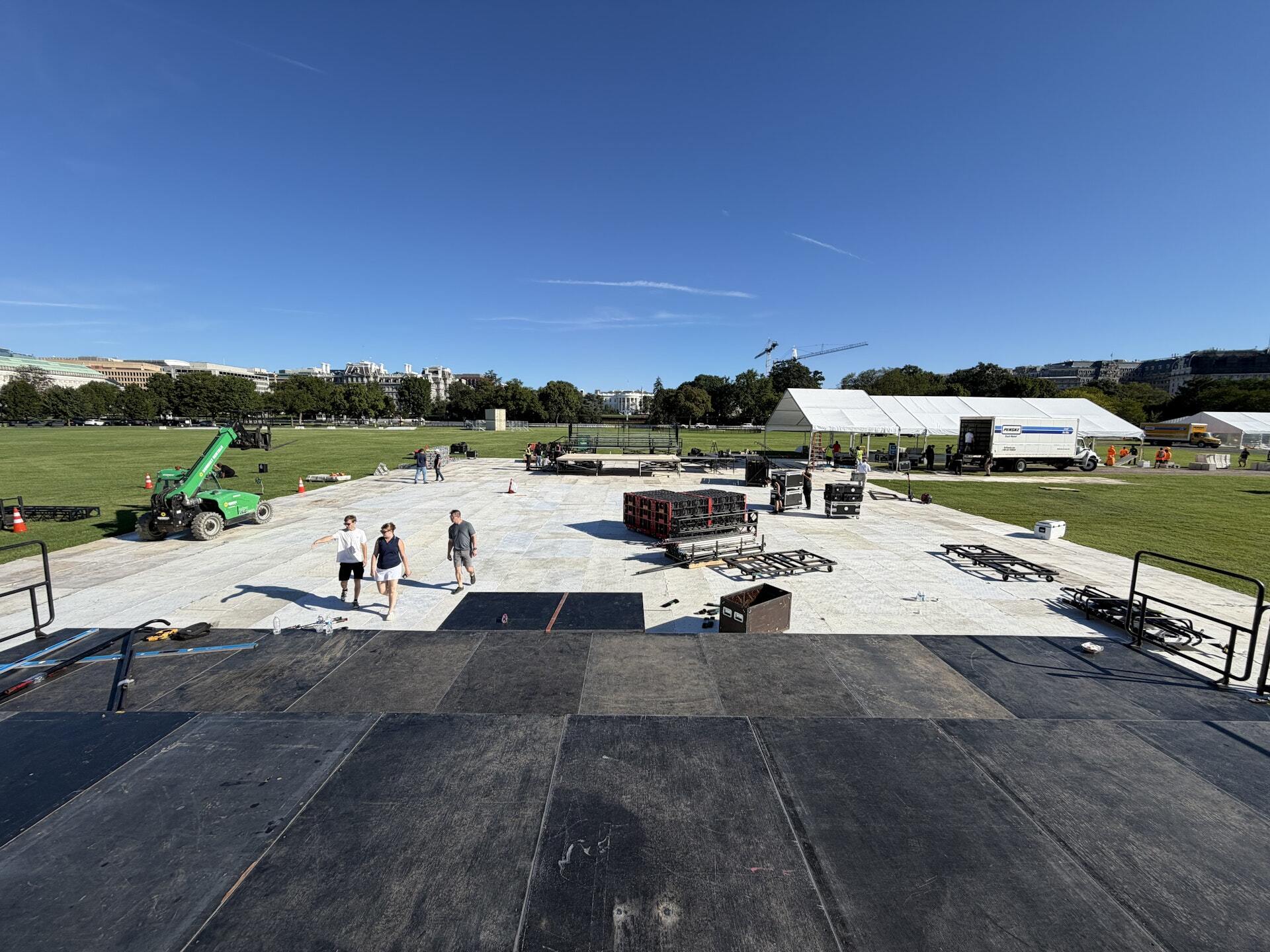
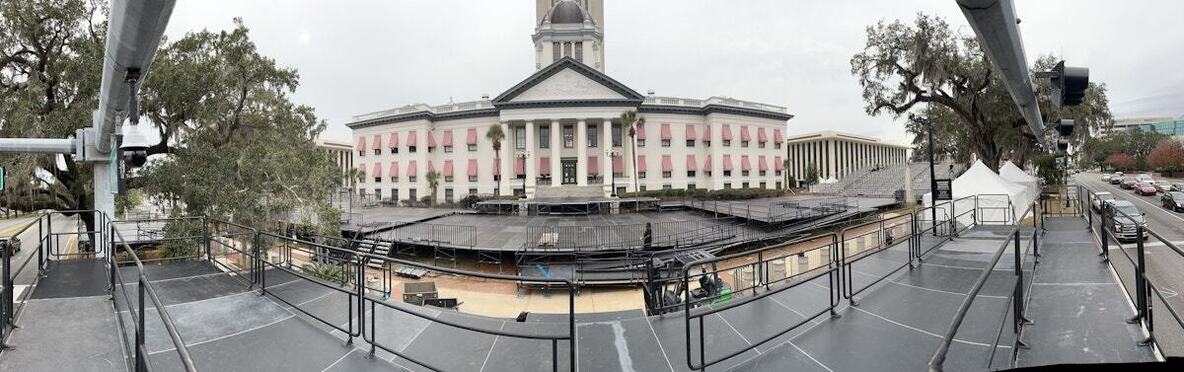
On federal land the window can be tighter still. On the National Mall, the build, the show, and the strike all have to fit inside the time the permit allows.
Built for the Press as Much as the Crowd
Most of a political event's audience is never on site. They see it through a camera. That makes the press riser one of the most important structures on the plan, and one of the easiest to get wrong.
The riser decides the shot. Its height sets the angle on the podium. Its distance sets the lens. Its position sets what fills the frame behind the principal: the crowd, the flag line, the backdrop, or a parking lot. PM1 builds press risers with a main camera bullnose and a cut riser, so the main camera gets a clean line and the cut camera gets the reaction.
The stage gets the same treatment. Backdrop, flag line, and crowd placement are drawn for the feed first and the room second, because the feed is the version most people will see. Broadcast lighting, HMI where daylight calls for it, gets the principal's face right on camera in daylight, at dusk, and under a tent.
Protocol Is Part of the Build
Protocol on a political event isn't decoration. It's a spec, and it's checked.
- Flags are staged in the correct order and position for the event and the principal.
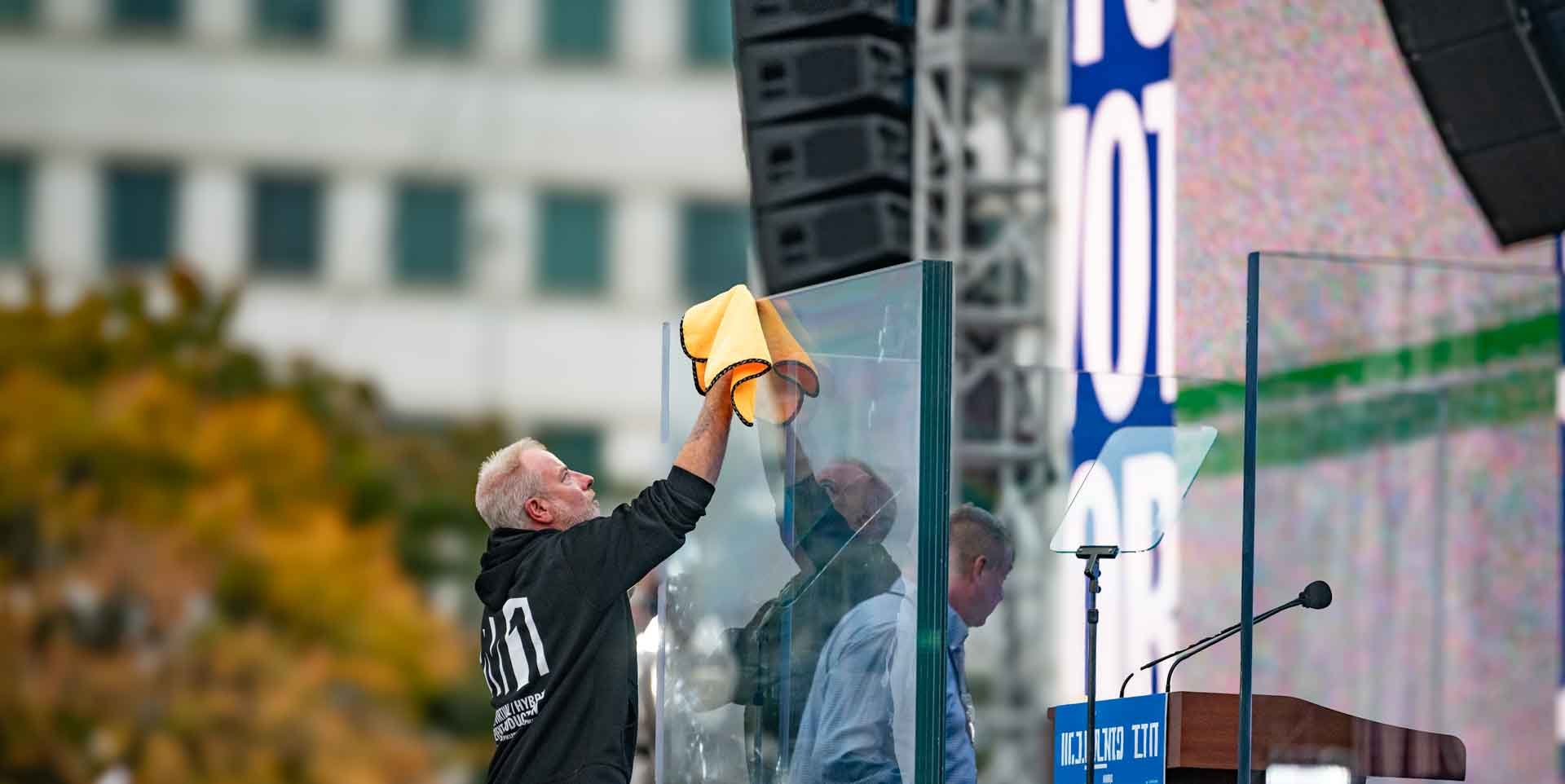
- The podium, teleprompter, and confidence monitors are set to the principal's marks and checked before doors.
- Layouts are drawn around the security perimeter, with egress and access routes the advance team can sign off on.
- Coordination with Secret Service, State Department advance, Capitol Police, military protocol, and municipal security happens without slowing the build.
Security protocols are handled, not discussed. Crew lists, credentials, sweeps, and holds run on the security team's schedule, and the build plan bends around them without anyone having to ask twice. The crew shows up credentialed and briefed. And nothing gets said off site that was seen on site. PM1 has built for both sides of the aisle, sometimes in the same week, with the same crew. That discretion is part of the service.
One Plan in Every City
Campaign work rarely stays in one place. A tour can hit four states in a week, and each stop needs the same standard on a different site.
On nationwide political work, PM1 runs the audio, video, and lighting crews in every city under one plan, whether the gear is ours or local. The layout, the riser spec, the flag protocol, and the run of show travel from stop to stop, so the press sees the same event in every city and the advance team makes one call instead of six. Crews were on the ground in 34 states last year.
On the Record: Unite for Veterans on the National Mall
Not every national-stage event is red or blue. Unite for Veterans brought a crowd to the National Mall with the U.S. Capitol behind the stage and the Dropkick Murphys headlining.
PM1 built the mobile stage, audio, lighting, two LED screens, and the press risers, and built, ran, and struck the whole show inside the 72-hour window the National Park Service allows. Same protocol, same press plan, same crew standard as any official event. The cause was different. The build wasn't.
What to Have Ready When You Call
You don't need a finished plan to start. These answers get the first drawing moving:
- The site, even if it's only an address or a pin on a map.
- The date, the doors time, and how firm both are.
- The expected crowd and how many need seats.
- Who is speaking, and what the principal's team requires.
- The press plan: pool size, live feeds, and camera positions.
If some of that is still moving, call anyway. Most political builds start before all of it is known.