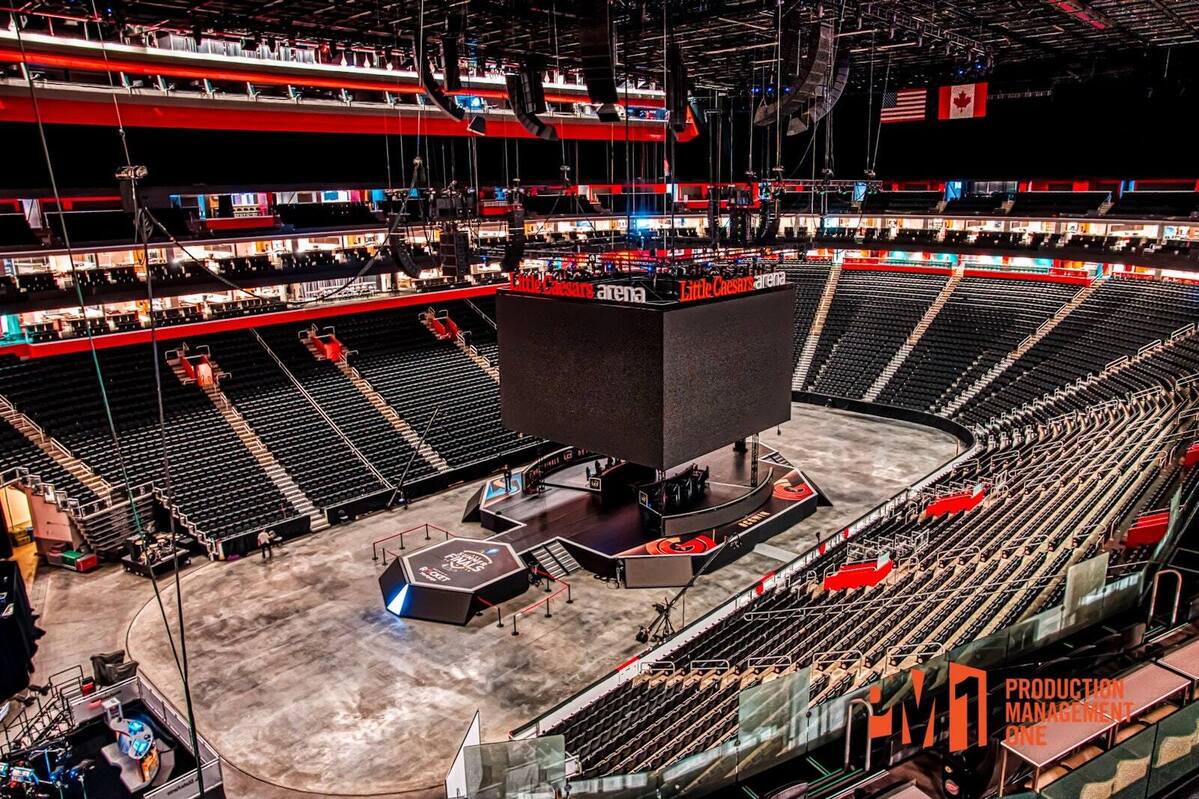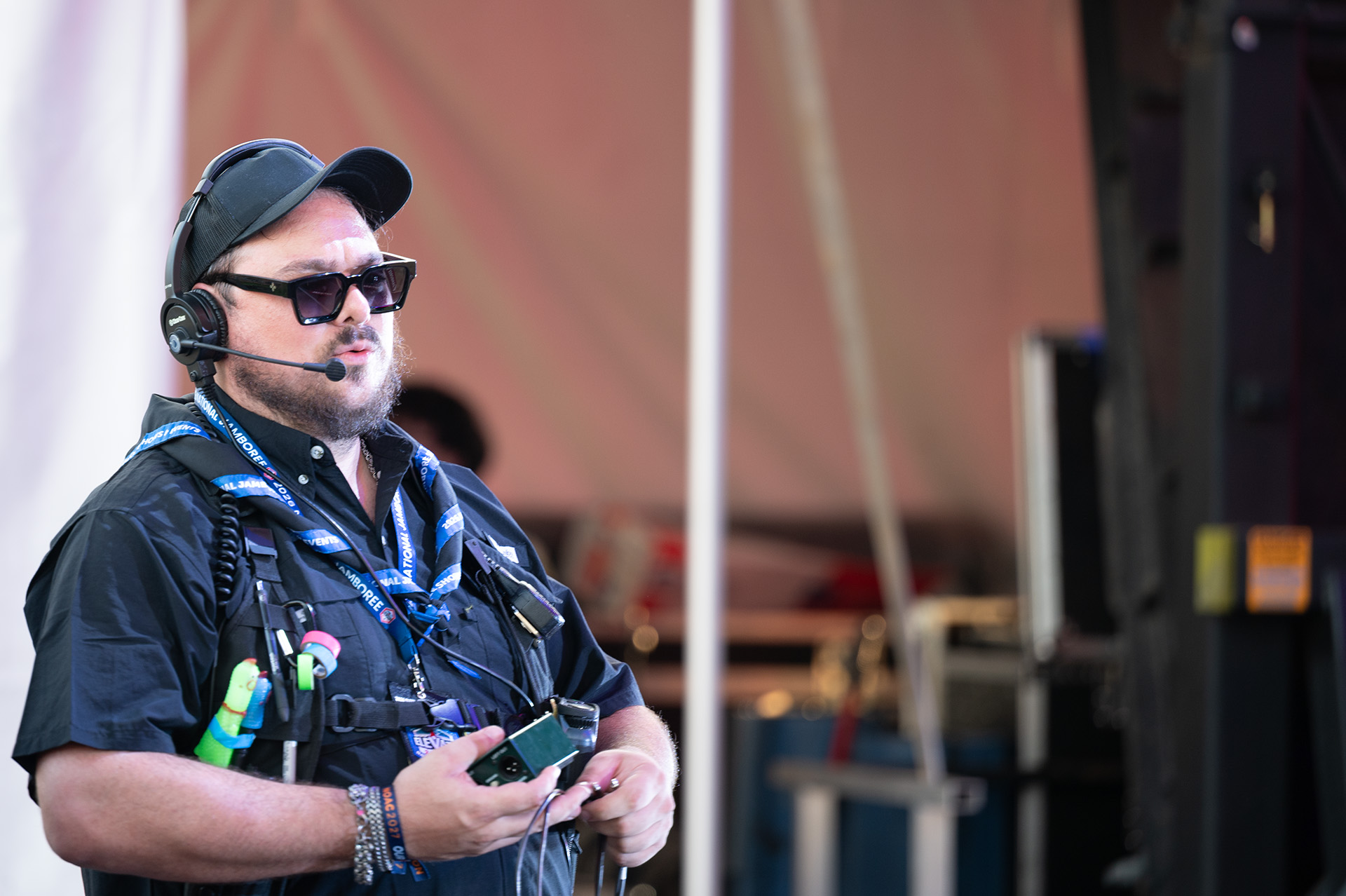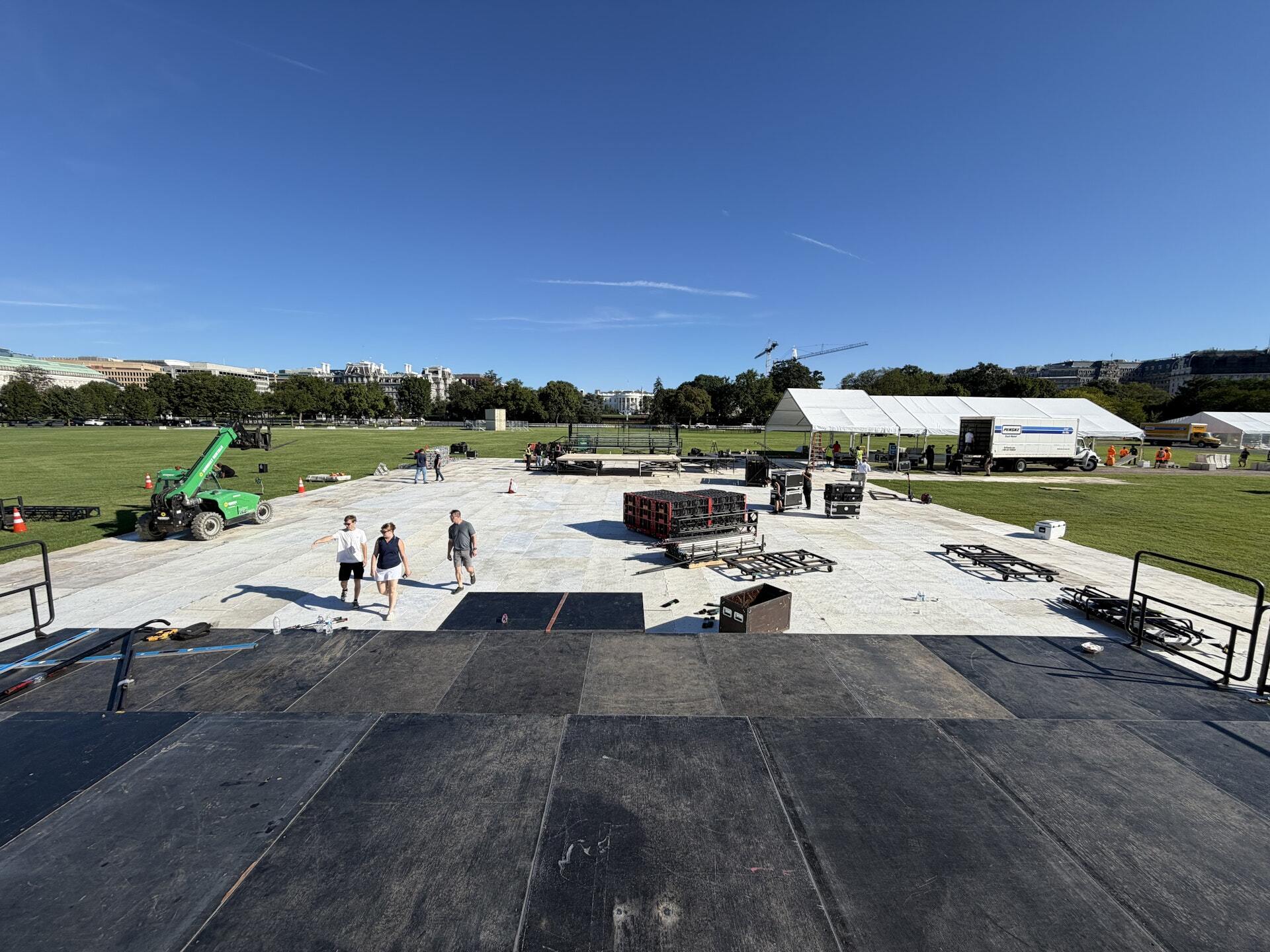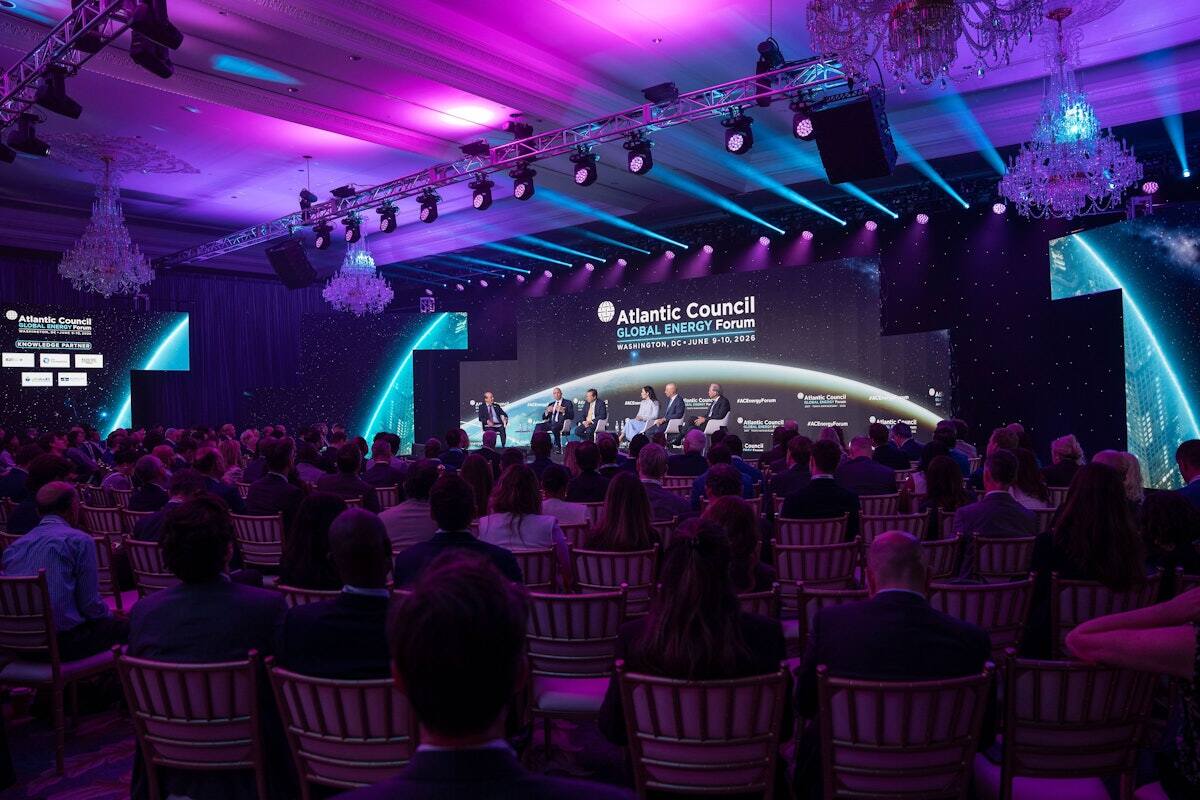
Corporate technical production is the staging, audio, lighting, video, and show call behind a summit, a product launch, a leadership meeting, or an awards night. It's everything that has to work when the room is full of the people who matter most to the business: the stage the speakers stand on, the screens the room reads, the feed the remote audience watches, and the crew who calls it all live.
Most corporate events start with the venue's in-house package. That covers a lot of rooms well. This is about what happens where that package ends, and what a production partner should own when it does.
Where the In-House Package Ends
A hotel or conference center package is built for the room's everyday use: a riser, a podium, a projector, a few wireless mics, and a tech on call. For a breakout session, that's often enough. For a general session with a principal on stage, a livestream, and a sponsor wall, it usually isn't.
The signs show up early:
- The stage needs to be bigger, taller, or shaped differently than the house riser.
- The program has a remote audience, and the stream needs its own cameras, its own mix, and a backup path.
- Speakers need teleprompter and confidence monitors, run by someone who has done it live.
- The scenic, the screens, or the lighting have to carry a brand, not just light a room.
- The event outgrows the room, or moves outside it: a rooftop, a parking lot, a tent, a field.
Most rooms come with an AV package. PM1 is what gets added when the program needs more than the room was built for. None of that means replacing the venue's team. On most corporate jobs, PM1 works alongside them. The venue knows its rigging points, its power, and its loading dock. PM1 brings the production that the event needs on top of what the room already has.
What Corporate Technical Production Covers
- Staging and scenic: stages built to the program, from standard decks to thrusts, curves, and runways, with a surface scenic can be built on.
- Audio: a PA tuned to the room, wireless plans coordinated before load-in, a clean mix for the stream, and a backup mic at the lectern.
- Lighting: speakers lit for the camera as well as the room, with the audience lit for the reaction shot and the scenic lit to read.
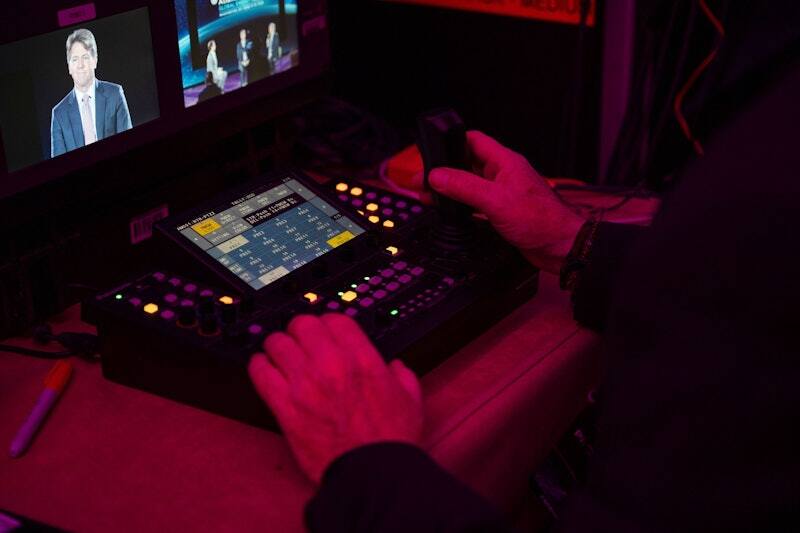
- Video: LED walls and IMAG, camera positions, switching, playback, and records.
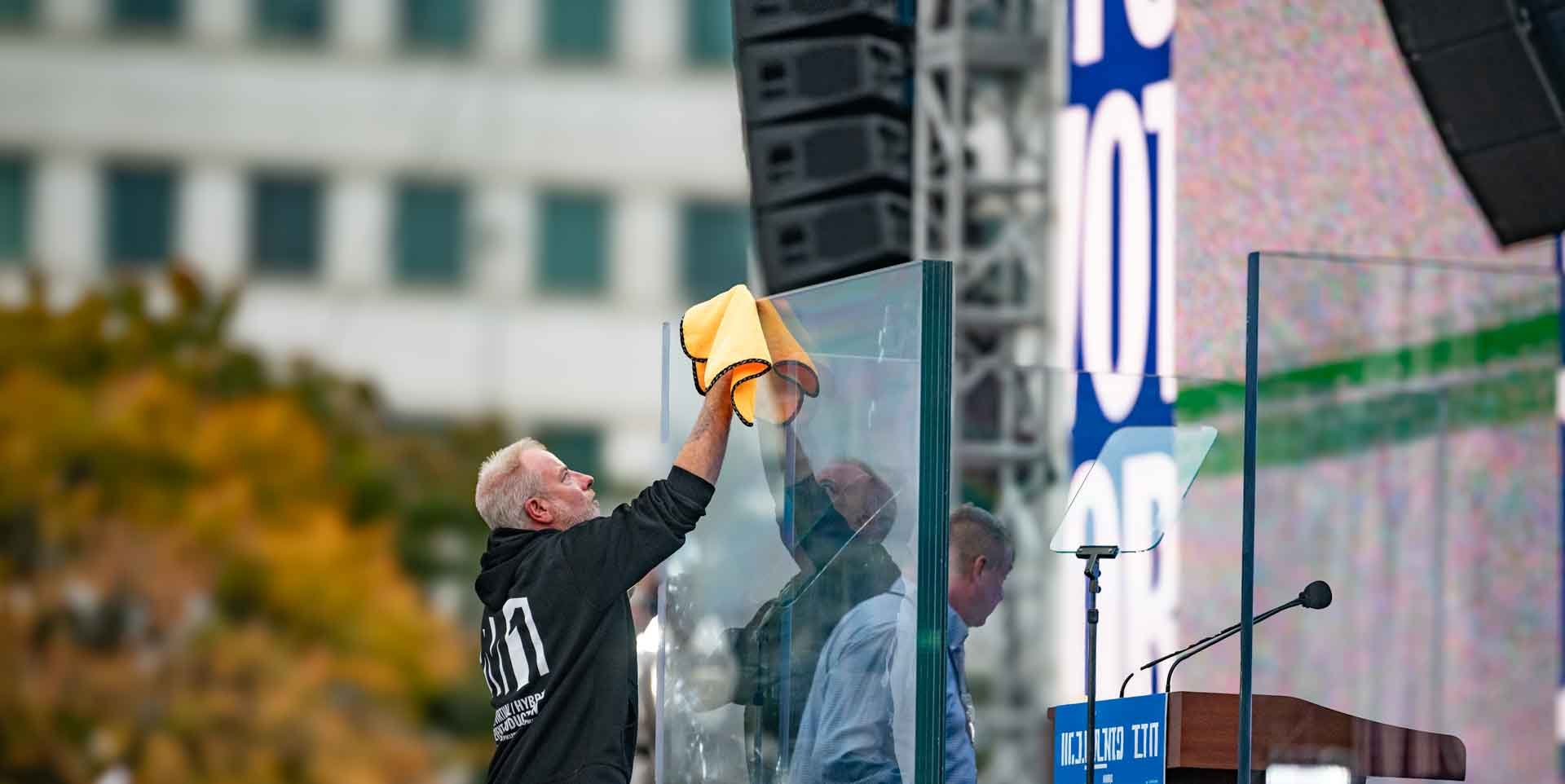
- Teleprompter and confidence monitoring: presidential-style glass at the lectern, or large-scale LED screens the speaker reads from the stage, set to each speaker's marks and checked before doors. Which one fits depends on the client, the event, and the speaker, so it gets settled in the advance.
- Livestream, encoded and delivered on a primary and a backup path.
- Power and comms, designed into the plan, not borrowed from whatever outlet is closest.
- Technical direction and show calling: one voice on comms calling every department from one show file.
Design for the Room and the Feed
A corporate audience sits closer and watches longer than a festival crowd. They notice a dark face, a late slide, and a mic that pops. And on most programs now, a second audience is watching on a screen somewhere else.
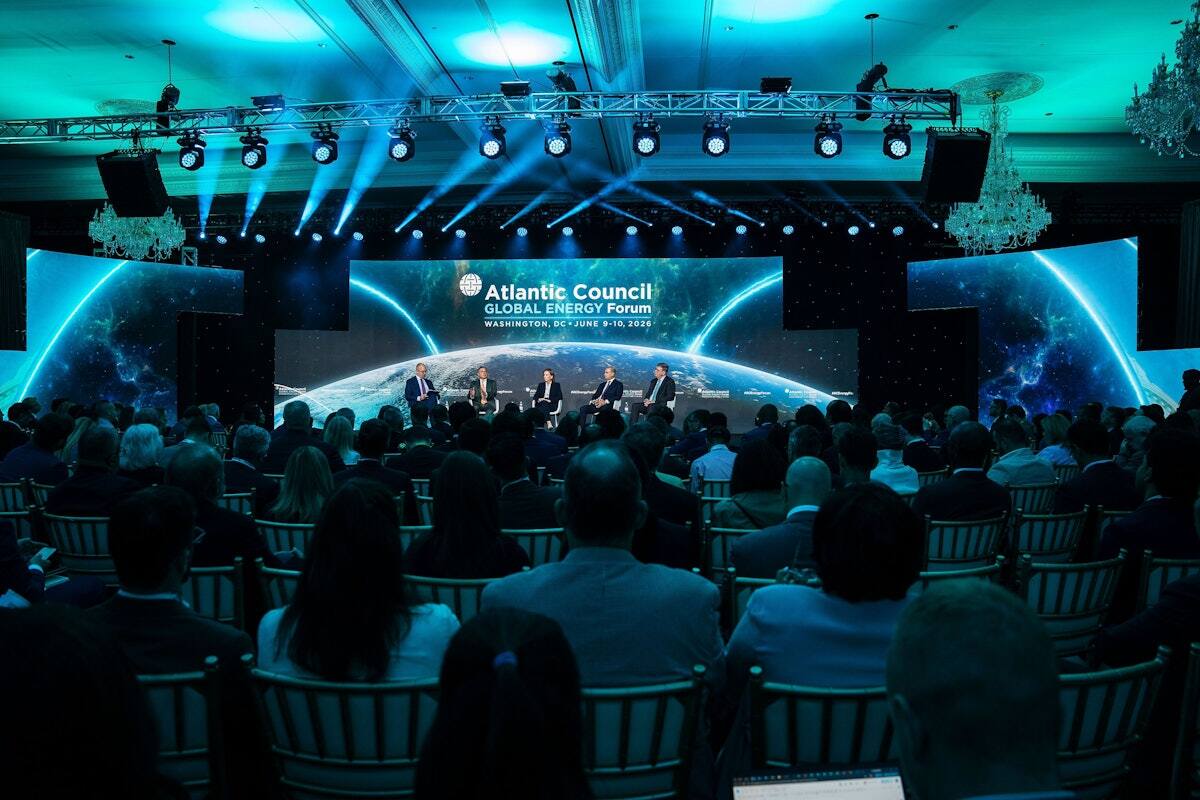
That second audience changes the plan. Camera positions get drawn into the first layout, so a camera riser doesn't land in the middle of an aisle on show day. The lighting gets balanced so the speaker looks right on the stream and in the room at the same time. The stage set is built to fill the frame, not just the front of the ballroom. Designing for the feed is as important as designing for the seat, and on a lot of corporate programs it's the bigger audience.
Historic and Restricted Venues
Some of the most important rooms in the country were never built for a show. Historic buildings, government halls, and landmark venues come with rules: no penetrations, strict load limits, protected floors and finishes, and narrow load-in windows.
For a NATO Summit at the Mellon Auditorium in Washington, DC, where the original North Atlantic Treaty was signed in 1949, PM1 built the main stage, press risers, broadcast-grade audio and lighting, and exterior architectural uplighting inside the restrictions of a federal historic property. Nothing gets screwed into a building like that. The build has to stand on its own, carry its own load, and leave without a trace.
That kind of room is where the drawing does the most work. Every load, every cable path, and every piece of structure gets planned before the first case comes off the truck.
When the Program Changes Mid-Show
Corporate programs move. A session overflows, a speaker's flight lands late, a breakout becomes a second general session. The production has to move with it.
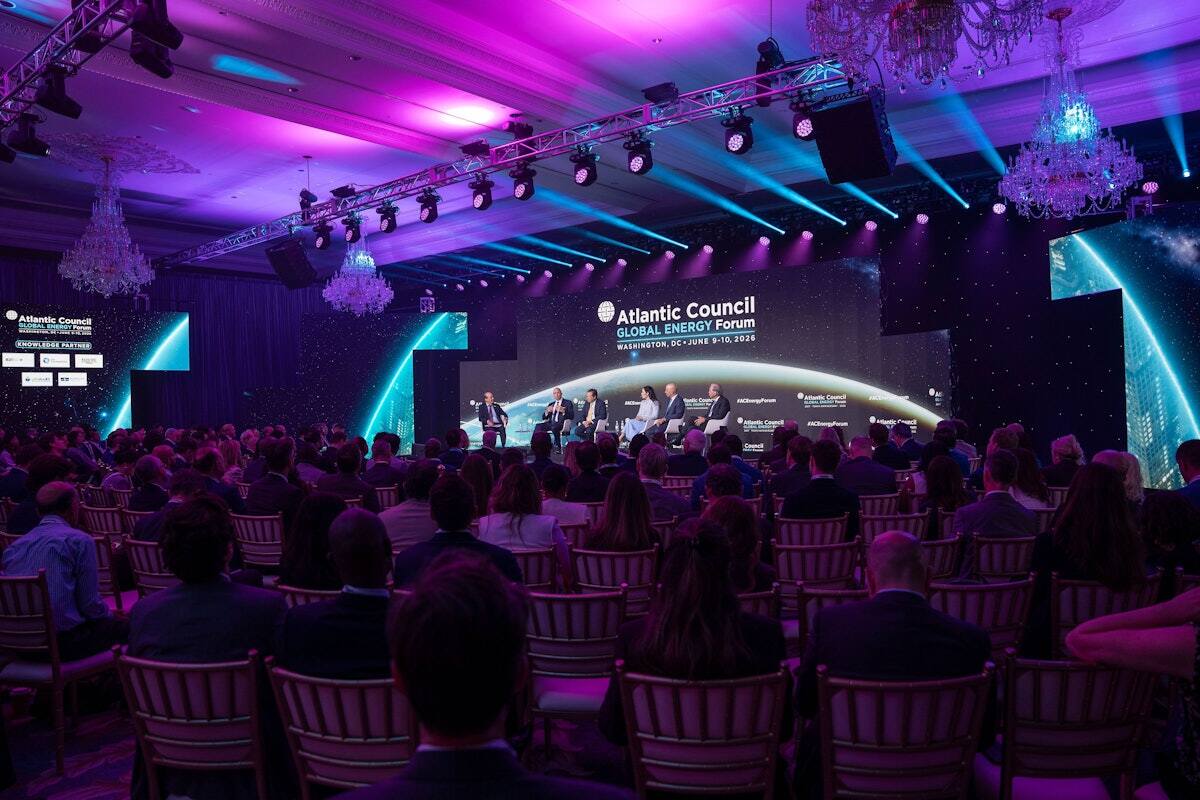
At the Atlantic Council Global Energy Forum at the Waldorf Astoria in Washington, DC, PM1 ran technical direction across the main ballroom and stood up a secondary ballroom in the middle of the program when the event called for it. It was PM1's second year on the Forum. That kind of change is only fast when the crew, the gear, and the plan are already in the building, and someone owns the call.
Custom Looks Without a Custom Build
Corporate stages are often asked to look like scenic pieces built from scratch, on a budget and a timeline that don't allow for one. Good design closes that gap with standard systems used well.
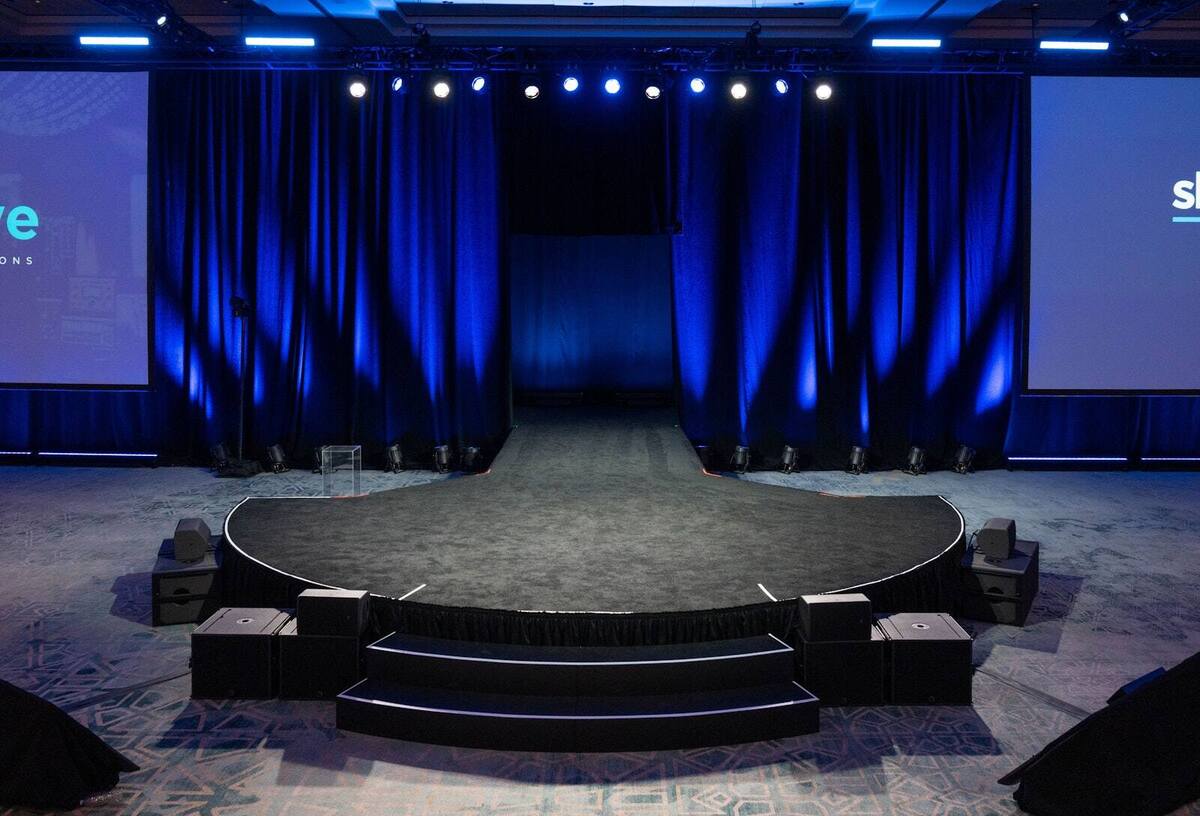
For producer Team ThirdEye at the Gaylord resort in Orlando, PM1 built a half-round proscenium thrust with custom steps and 45-degree angles out of standard staging. The result delivered ninety percent of a true custom scenic build for a fraction of the cost. PM1 designs to spec, and often drafts the spec itself when a client knows the look they want but not yet what it takes to build it.
Redundancy Without Drama
A corporate audience shouldn't see the backup plan, but it should always be there.
- A second mic at the lectern and a spare handheld at the stage manager's position.
- Backup playback for every video cue, so a frozen laptop doesn't stop the program.
- A second encode path for the stream.
- A second power source on standby for the systems the program can't run without.
- Spares on the truck for the parts that fail at the worst moment.
What to Have Ready When You Call
- The venue, and whether the in-house team is staying on the job.
- The program: general sessions, breakouts, awards, and anything outdoors.
- The audience size in the room, and whether there's a remote audience.
- Speaker needs: teleprompter, confidence monitors, walk-on music, and video roll-ins.
- Brand and scenic requirements, even if it's only a reference image.
If the space has never hosted a show, that's fine too. PM1 builds the venue first.