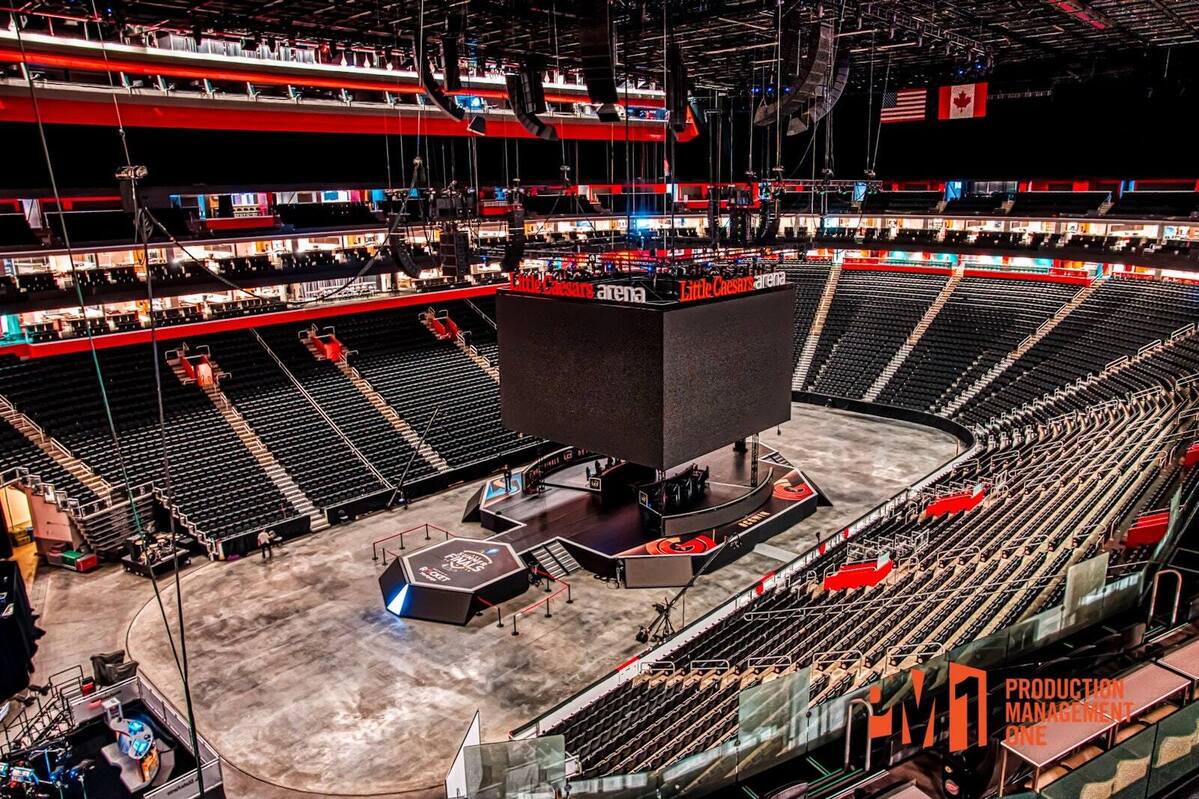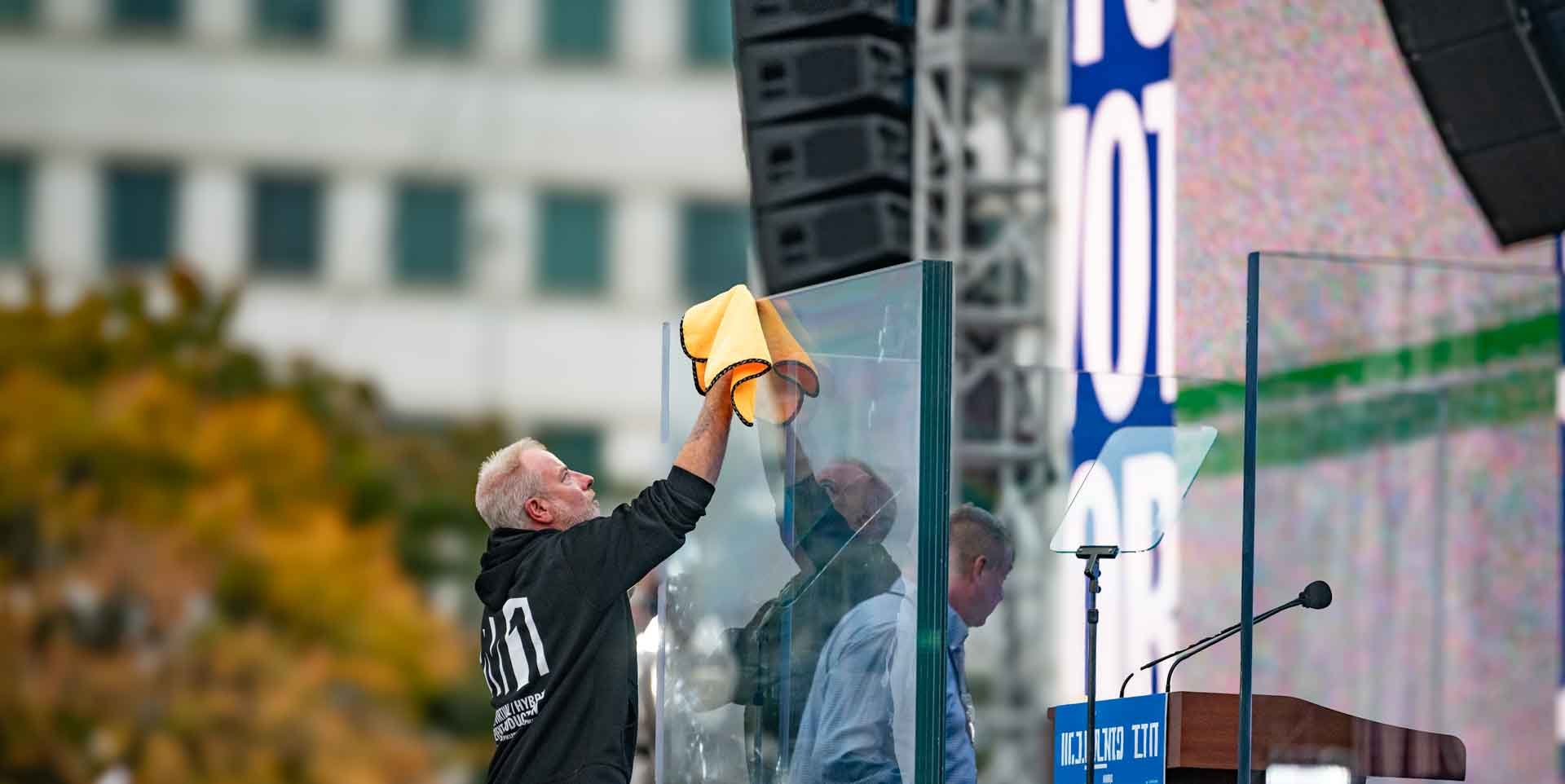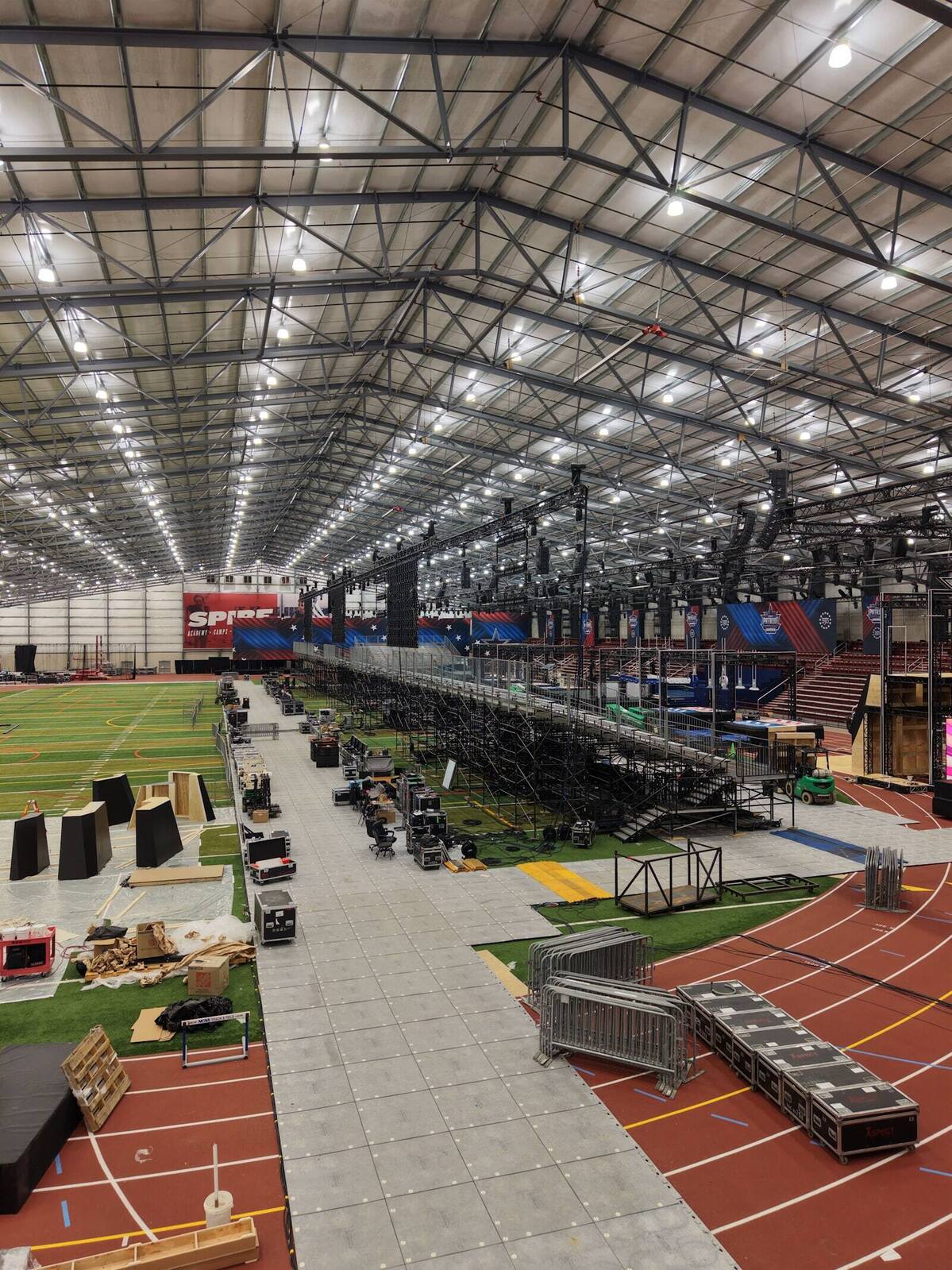
Event production management is the layer that holds the whole physical plan of a live event. It covers the stage, the seats, the structure, the power, the sound, the lights, the picture, the comms, and the call, across every crew on the site, from the first drawing to the last truck. It doesn't own the content, the talent, or the ticket. It owns the plan that gets everything they stand on built and run as one system.
Most events that go wrong on show day went wrong weeks earlier, on paper. Here's what event production management actually covers, step by step, and what breaks when nobody owns it.
Producer, Production Manager, and the Layer Above
The titles blur, so it helps to separate them.
- The producer owns the content: the program, the talent, the assets, the substance of what the event is.
- A production manager makes sure the production elements needed to present that content get built. On many events there's one for audio, one for staging, and one for video.
- Event production management is the layer above them. It makes sure every one of those scopes fits into one plan, in one sequence, on one site.
If you have three production managers, you have three people protecting three scopes. Event production management is the seat all three are waiting on, and the one your producer calls when the plan and the site disagree.
What It Covers, Step by Step
Every PM1 job moves through The PM1 Way: Discover, Design, Plan, Produce, and Review. Here's what gets decided at each step, and what happens when nobody owns it.
1. Discover: Scope, Budget, and Constraints
The job starts with two questions: what is being built, and what is it worth? Scope, venue, goals, timeline, and constraints all get defined here, along with the budget. If either the scope or the budget is still fuzzy, everything downstream is a guess.
Bill Lowery, PM1's Director of Production, puts it plainly: "Without a review of scope and plan, any one of a million things could stop your show."
When nobody owns it: the event gets quoted three different ways by three different companies, and none of the quotes describe the same show.
2. Design: The Site Walk and the Drawing
The site walk turns an address into a plan. Ground conditions, access routes, power availability, sightlines, and egress get measured, not assumed. Then it all goes onto one CAD layout: camera positions, cable paths, truck access, ADA routes, the crowd line, the stage, and the seating.
Engineering happens here too, stamped where the job requires, along with permit coordination with the venue, the city, or the agency that owns the land.
"Room drawings and past layouts can save hours of back-and-forth," says Ryan Adams, PM1's Lead Designer. "The more we know up front, the faster we can make it happen."
Good design also catches cost before it lands. On one plan that called for non-standard truss sizing, adjusting the scale by a few inches kept the same look while eliminating a custom build. Faster sourcing, lower cost, same show.
When nobody owns it: the camera riser lands in the egress path, the cable run crosses the ADA route, and the stage gets placed where the trucks need to turn.
3. Plan: The Advance, the Schedule, and the Labor
The advance is where the job is won. The plan gets read the way an experienced production manager reads it: looking for the thing that isn't there. A missed labor call. Heavy equipment nobody ordered. A load-in gate on the drawing that isn't on the site.
The output is a load-in schedule people can actually use: call times for every crew, who owns each task, what has to be ready before each crew starts, and who can approve a change.
Labor sequencing lives here, and it's where budgets quietly leak. David Baudier of PM1 has a simple rule for it: don't bring the stage in at 8 a.m. when every other crew is loading in. Bring it in after rigging if you can. Otherwise you're paying crews to sit for hours until they can work.
Redundancy gets planned here as well: a second power source on standby, backup paths for audio, video, and the livestream, and spares on the truck. Backups decided on show day are usually too late.
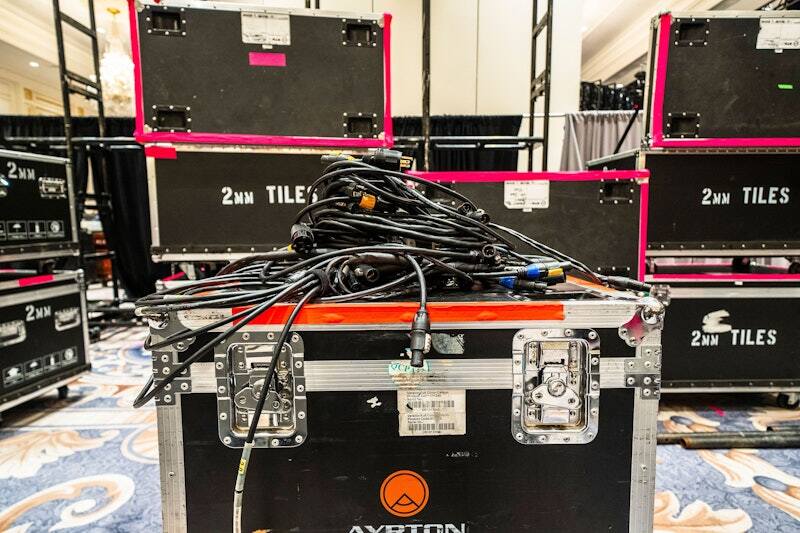
Tom Baclawski of PM1 sums up the step: "Jobs are won and lost in pre-production."
When nobody owns it: five crews arrive at 8 a.m., four of them wait, and everyone gets paid to stand around.
4. Produce: Load-In, the Call, and Load-Out
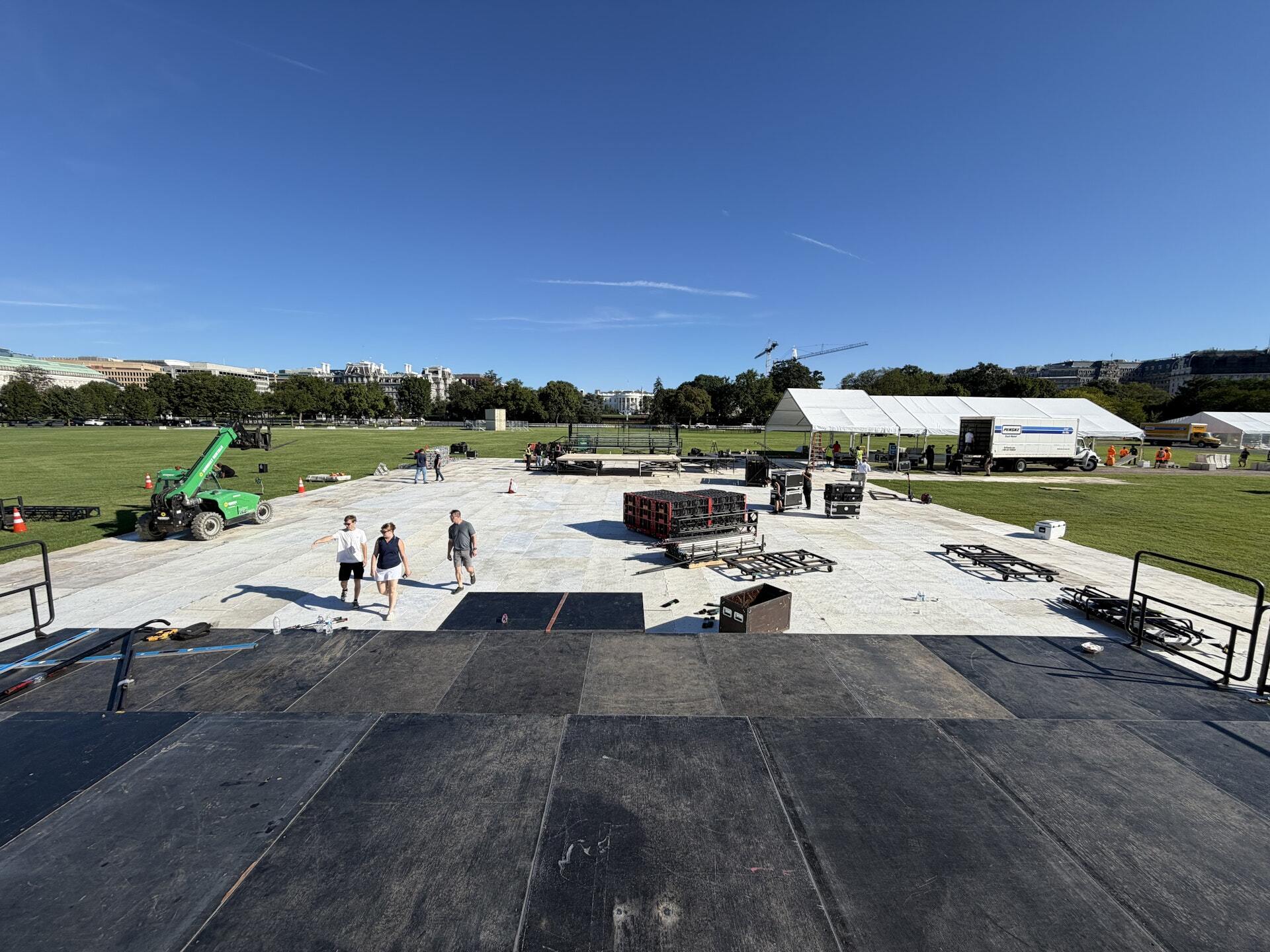
On site, separate scopes become one production, and the order of the work matters as much as the work. A standard sequence runs structure first, then power, then everything on the stage, then the infrastructure around it, and front of house last.
The order holds until the site says otherwise. When it does, event production management re-sequences the day instead of stopping it. Progress gets checked against the plan roughly every two hours, because a delay found at noon has options and the same delay found at four doesn't.
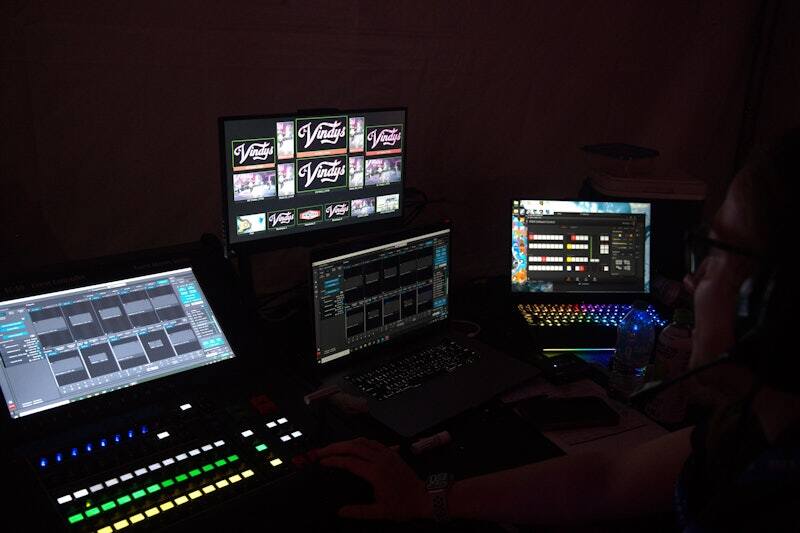
Before doors, every technical element gets signed off: what's being checked, what it depends on, what proves it works, and who confirms it. Then the show caller takes over. One voice on comms, one show file, across every department. When there's a broadcast, the call is cued to air with the broadcast director.
Load-out is the build in reverse, with the same discipline, because the venue's next event is already waiting.
When nobody owns it: three people give directions on the same channel, and nobody knows whose call it is.
5. Review: Closing the Loop
The job isn't over when the last truck leaves. The project gets reviewed with the same discipline as the build: what held, what moved, and what the next event on that site needs to know. The financial review closes the account.
When nobody owns it: the same problem shows up at next year's event, at the same gate, at the same hour.
Lead Time Is a Production Decision
Event production management works best when it starts early. Brought in at the concept stage, it can align the vision with what the site and the budget can actually support, before designs lock and costs climb. Site surveys find the obstacles while they're still cheap. Gear gets sourced before it's scarce.
That said, five days notice is generous and seventy-two hours is common. Short timelines don't skip the steps. They compress them, which is exactly when someone needs to be holding the whole plan.
Own Crews or Local Crews, Same Layer
Event production management doesn't depend on whose trucks are on site. On PM1's nationwide political work, audio, video, lighting, and sometimes staging come from other companies in each city, and PM1 runs them all under one plan. Crews were on the ground in 34 states last year.
What stays the same is the structure: clear communication, a defined chain of command, and everyone knowing who's calling the shots. For the client, there's one number to call.
On a Real Build: The 2026 National Jamboree
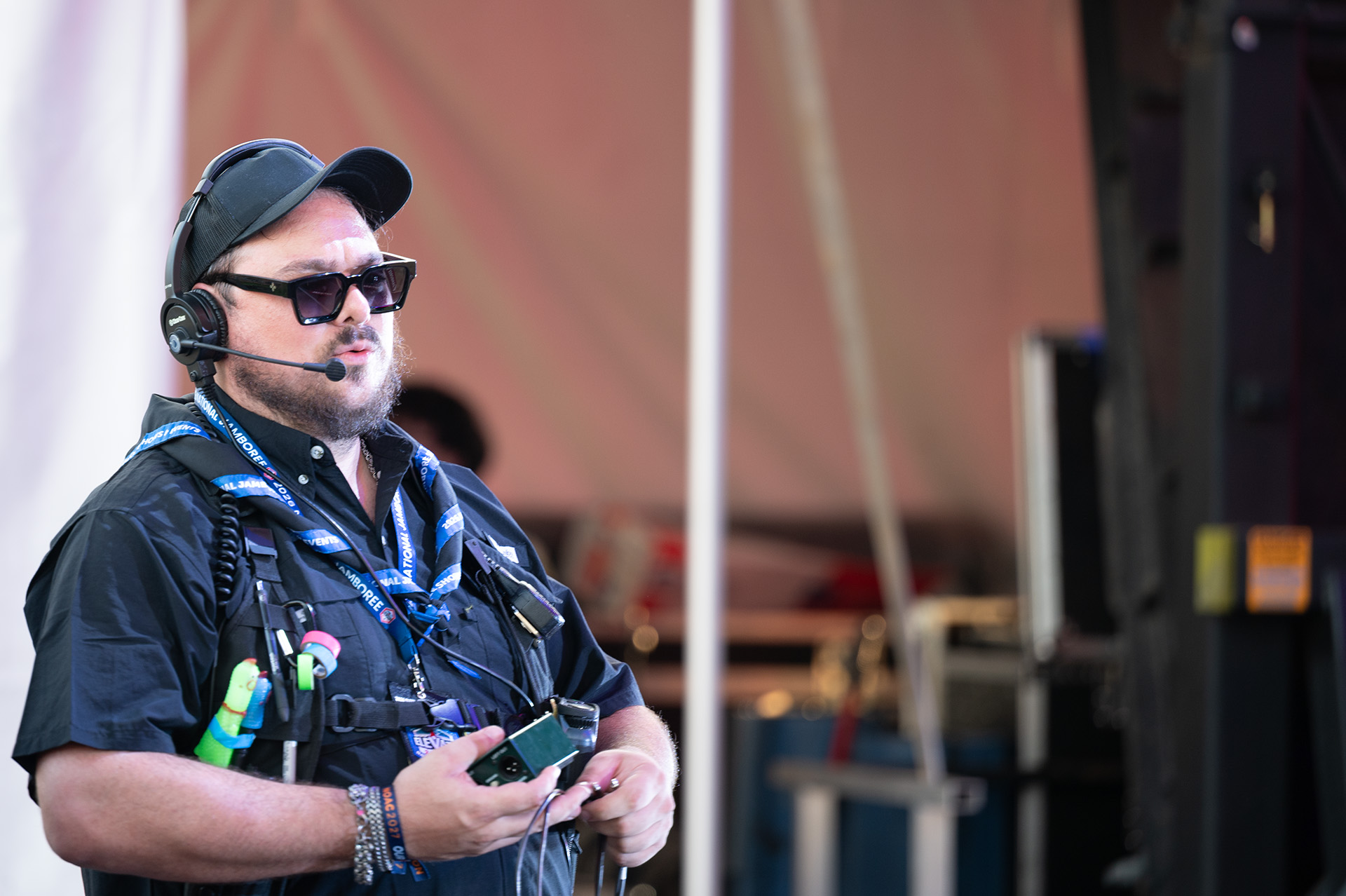
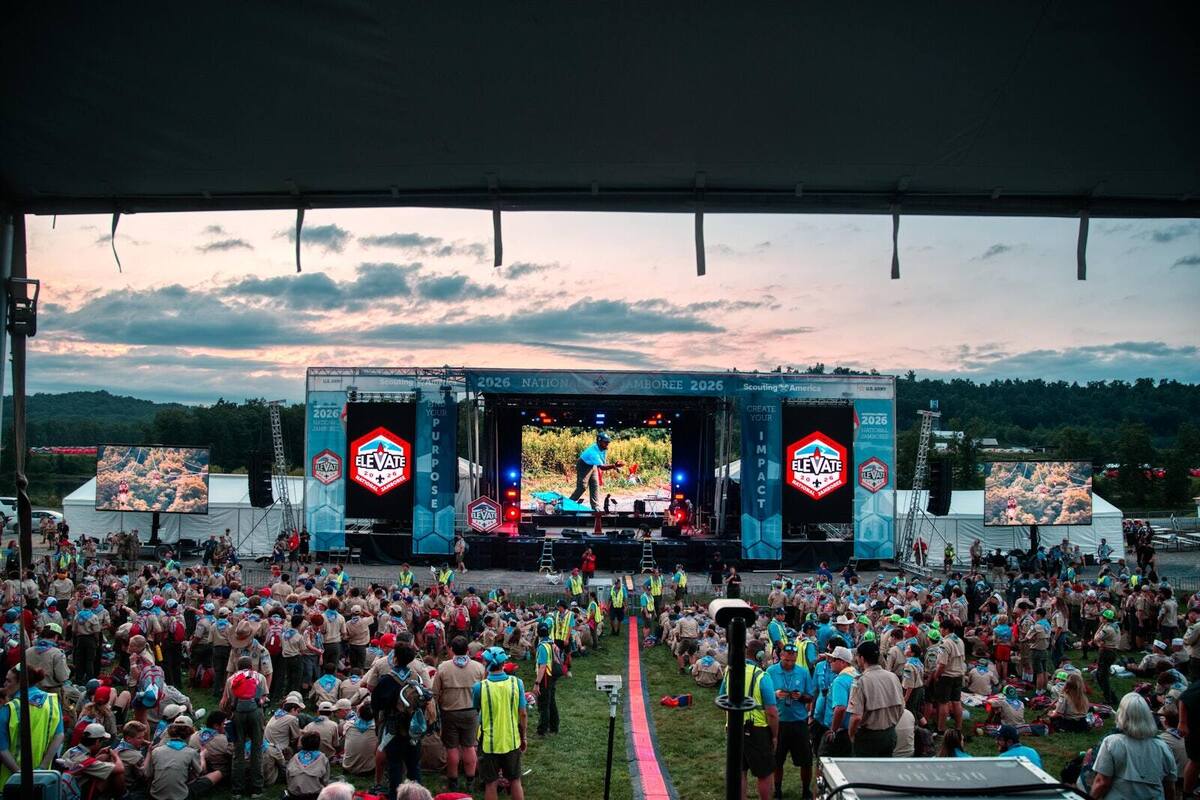
At the 2026 Scouting America National Jamboree, one PM1 infrastructure build carried musical productions, live entertainment, and speaker programs for 15,000 participants. Two drone shows, fireworks, and armed forces parachute drops were coordinated by the same team. That only works with one plan and one show caller holding it.
Signs Your Event Needs Production Management
- More than two companies will be on site at the same time.
- The site isn't a venue yet: a field, a lot, a plaza, or a stadium floor.
- There's a broadcast, a livestream, or a press pool.
- The timeline is short, or the date can't move.
- Failure would be visible: a principal, a sponsor, a headliner, or a camera.
If two or more of those are true, someone should be holding the whole plan. If nobody is named, that's the gap.