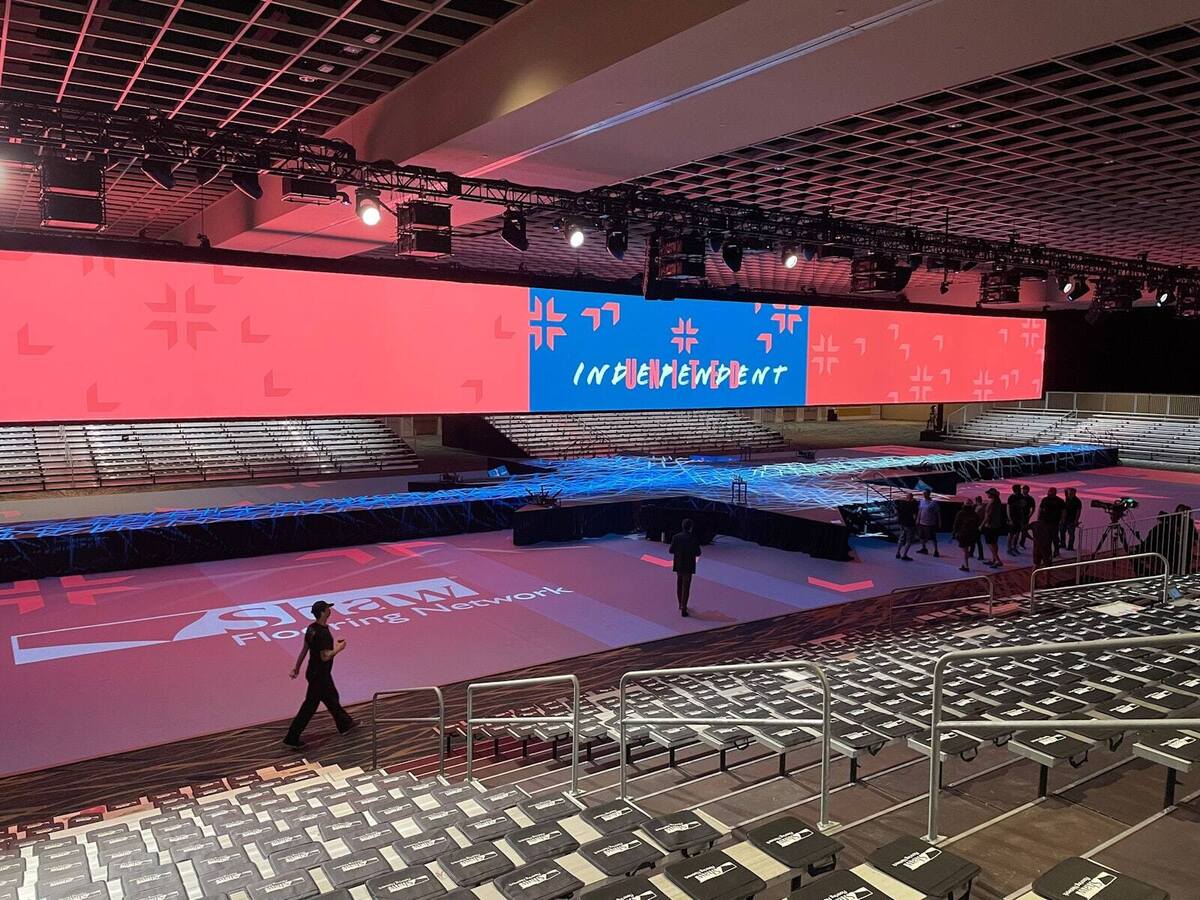
Event scenic design is everything the audience sees that isn't the people on stage: the backdrop, the stage shape, the branded deck, the risers that hold a product, and the way the whole environment frames the program. It starts as a concept rendering and ends as a built set that has to stand up, light well, fit through the loading dock, and survive the strike.
Here's how a scenic idea becomes a built environment, and where most designs run into trouble.
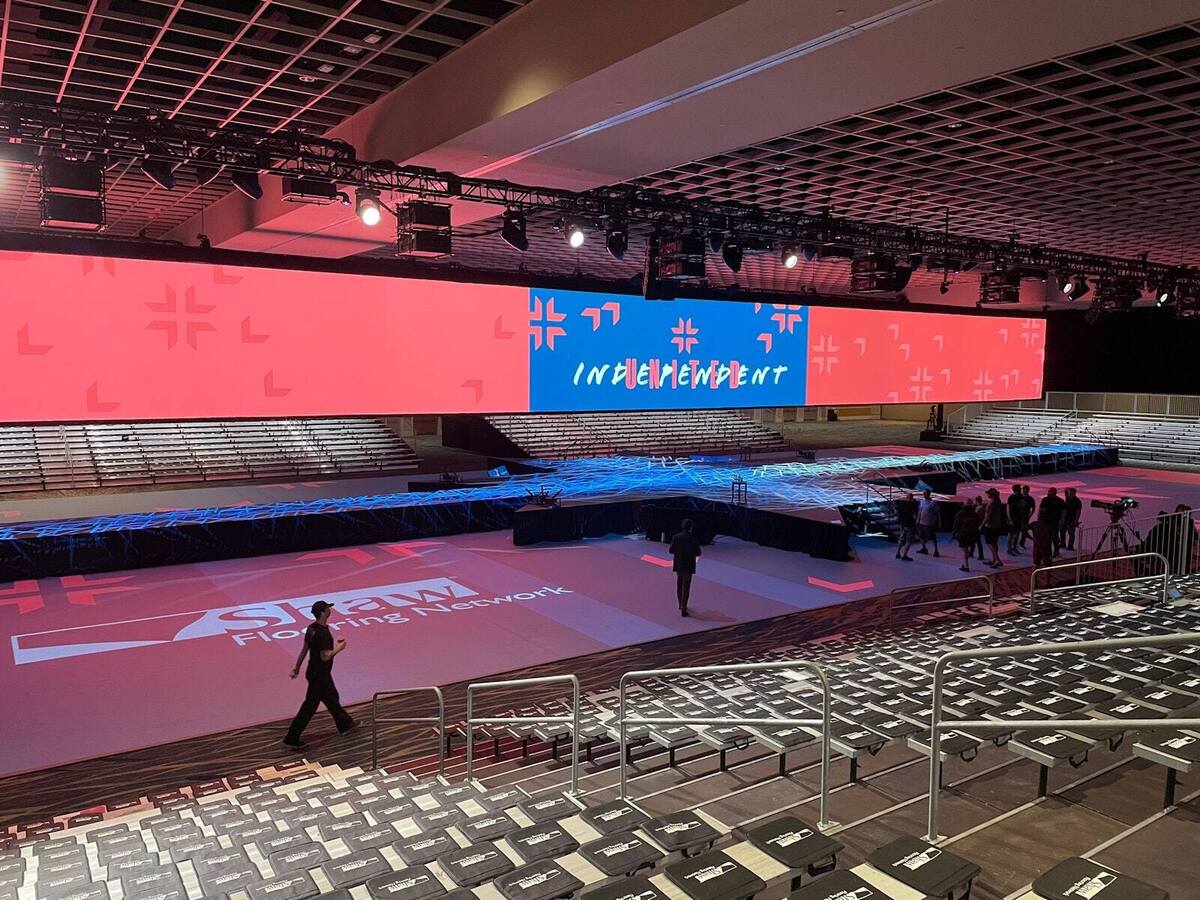
Start With the Program, Not the Picture
Good scenic design answers what happens on stage before it decides what the stage looks like. A panel needs sightlines between chairs and a screen everyone can read. A product reveal needs a riser, a path, and a moment. A concert needs room for backline and a roof for the rig. The rendering comes after the program is clear, so the look serves the show instead of fighting it.
Renderings Sell the Idea. Drawings Build It.
A concept rendering shows the client the feeling of the room. A drawing package shows the crew how to build it: dimensions, materials, weights, how the pieces connect, and where the cable runs. The step between the two is where good designs either become buildable or start to slip.
That step means asking hard questions early:
- What does each piece weigh, and what is it standing on?
- Does the backdrop clear the lighting and the LED wall, or fight them?
- Do the pieces fit through the venue's doors and elevators?
- How long does it take to build, and does that fit the load-in window?
- Where do the cameras sit, and does the set fill the frame from there?
Drawings change as the program changes. On PM1's grandstand build at Wollman Rink in Central Park, the drawing went through 18 revisions as camera positions moved and the seating moved with them. Scenic works the same way: the drawing keeps up with the show until the show is locked.
Custom Look, Standard Parts
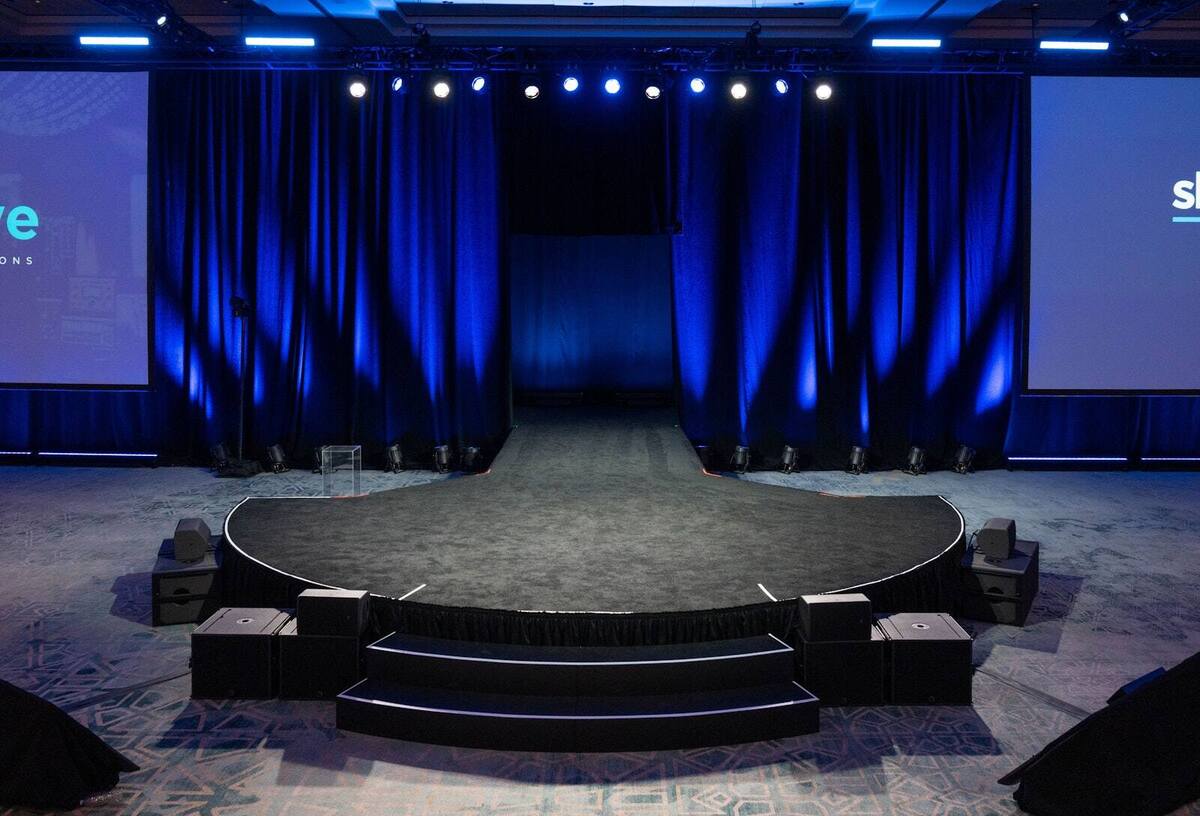
Not every set needs to be carpentry built from scratch. Standard stage decks can be shaped into curves, wedges, thrusts, runways, and circles, then skinned with fascia, branded deck covers, and graphics. Done well, it reads as a custom scenic build for a fraction of the cost and the build time, and the parts go back on the truck when the show is over.
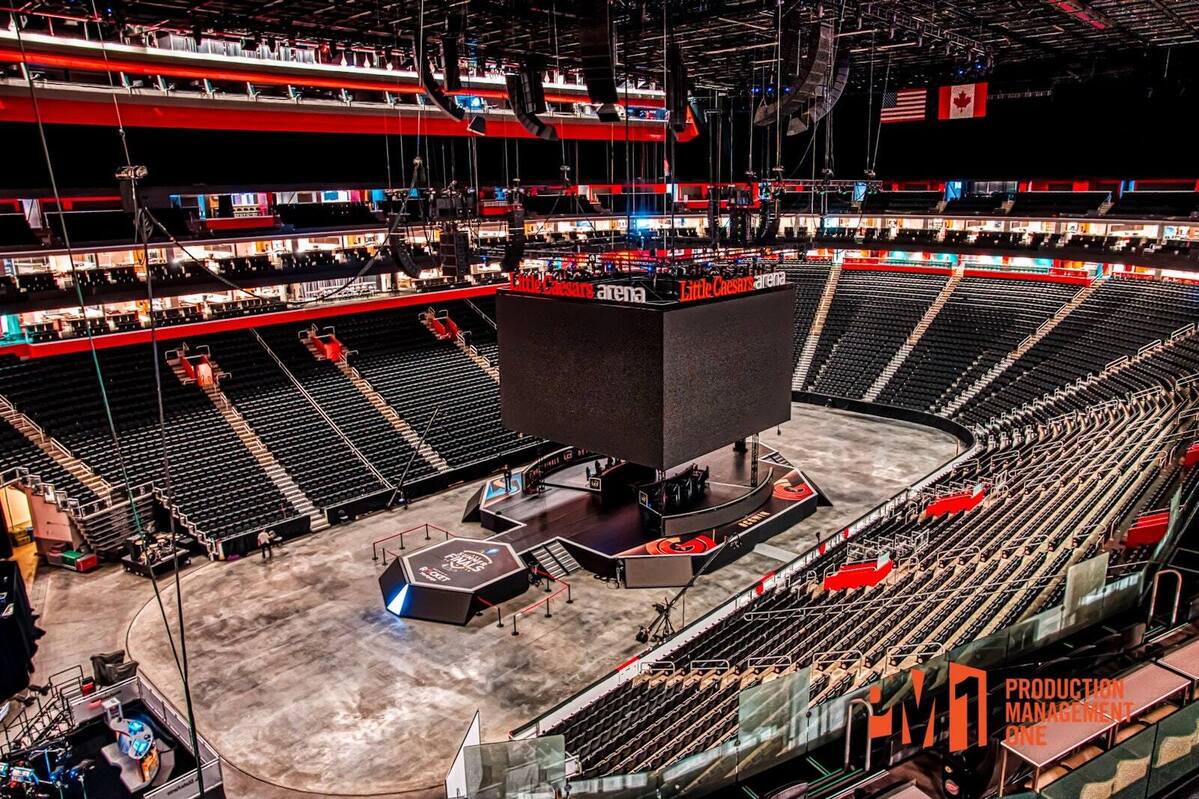
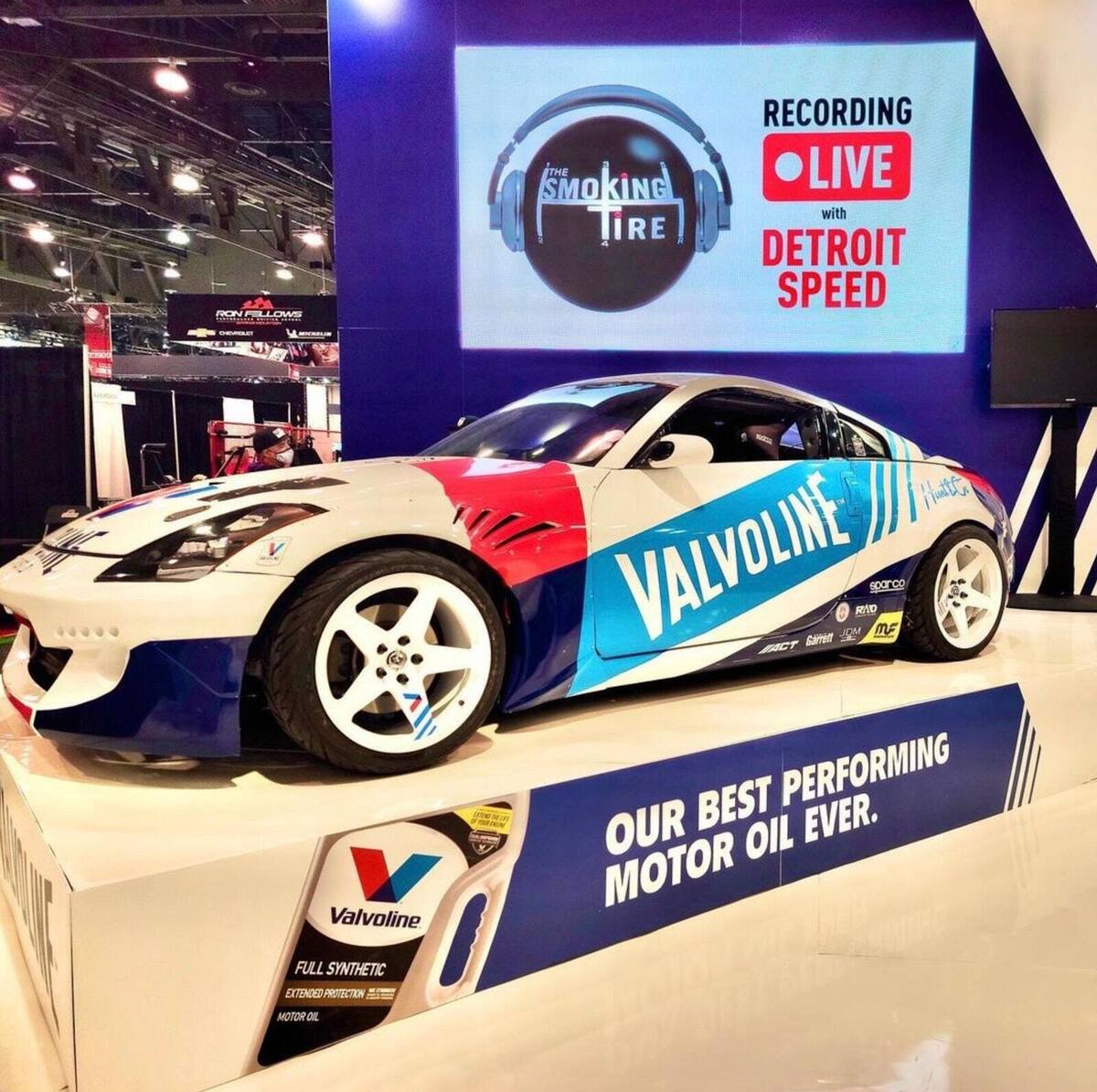
PM1 builds 22-foot circular stages for ballrooms, curved runways for fashion and product shows, hexagonal platforms like the one for Riot Games' LCS at Little Caesars Arena, and custom risers like the one that put a Valvoline race car in front of an LED screen.
Scenic and the Rest of the Production
Scenic doesn't stand alone. Lighting makes it read or makes it disappear. LED walls are part of the set, and so are the speakers if nobody plans where they go. Cameras decide which parts of it the online audience sees. Every scenic decision affects another department, which is why it belongs in the same show file as audio, lighting, video, and staging.
Protocol Is Part of the Design
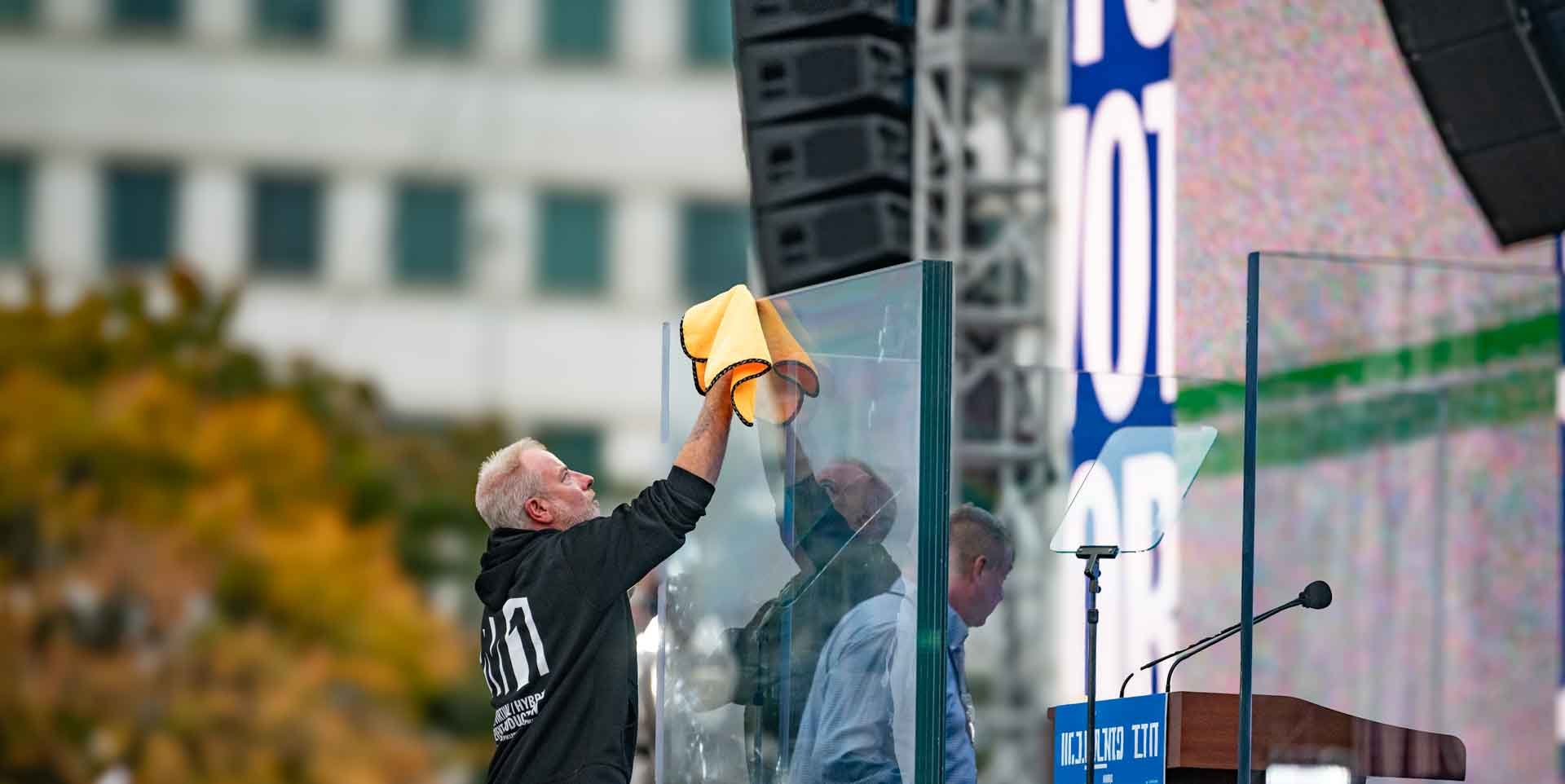
On political and ceremonial events, some of the design isn't up to the designer. Flags are staged to protocol, the podium sits on marks set for the camera, and the press riser decides the shot the public sees. Scenic for these events is built around those rules, not decorated over them.
Built to Strike
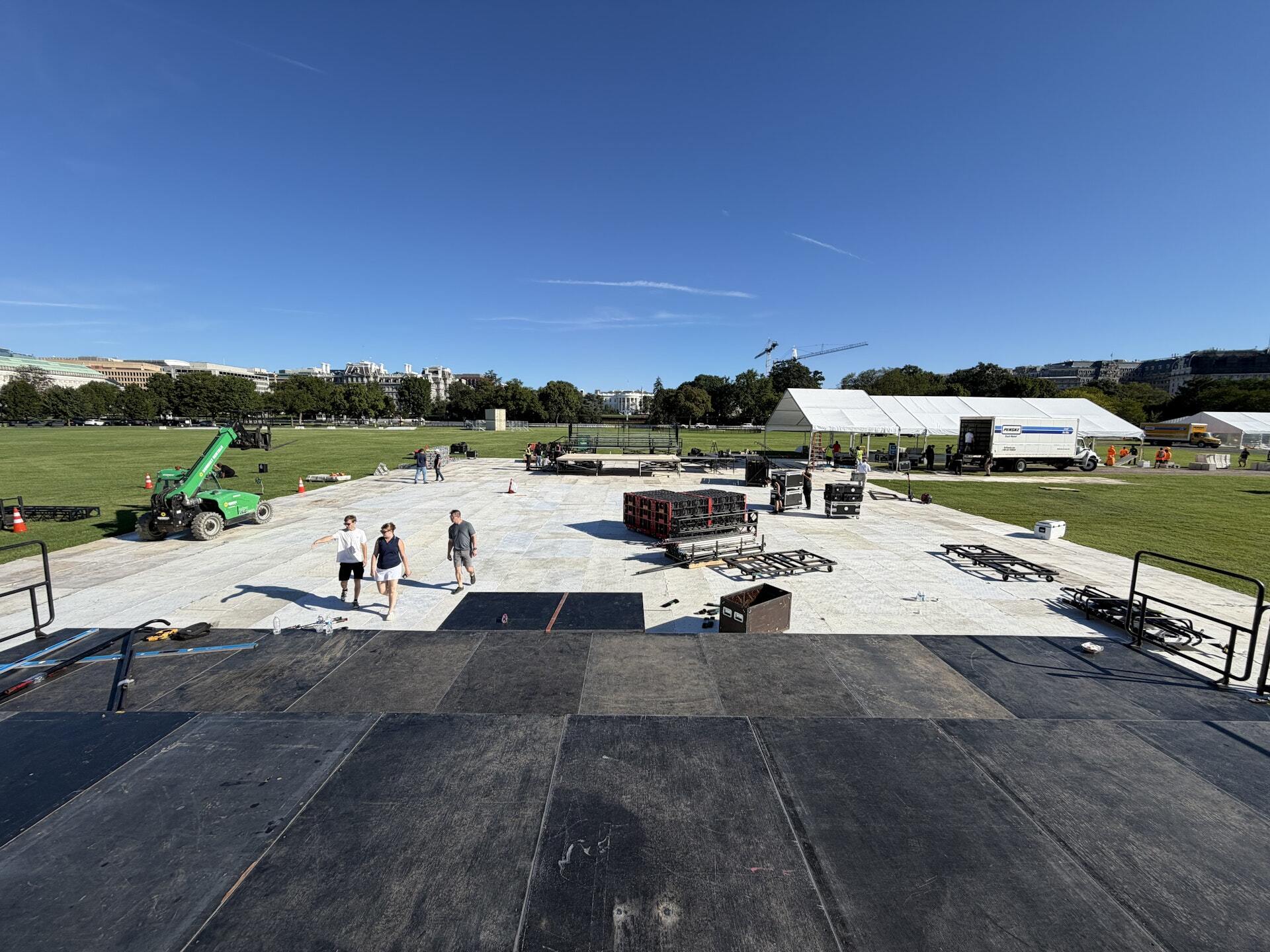
Everything that goes up comes down, often overnight. Scenic that's designed for the strike comes apart in the order it went together, packs into labeled cases, and leaves the venue in the condition it was found. Historic rooms that can't take a scratch get protection drawn in from the start.