A deck stage is built from platforms to the size and shape the show needs, indoors or out. A mobile stage arrives on a trailer and unfolds with its own roof and wings. The crowd, the site, the wind, the rig, and the build window decide which one fits.
Neither is better. They solve different problems, and plenty of shows use both. Here's how each system works and how to choose between them.
What a Deck Stage Is
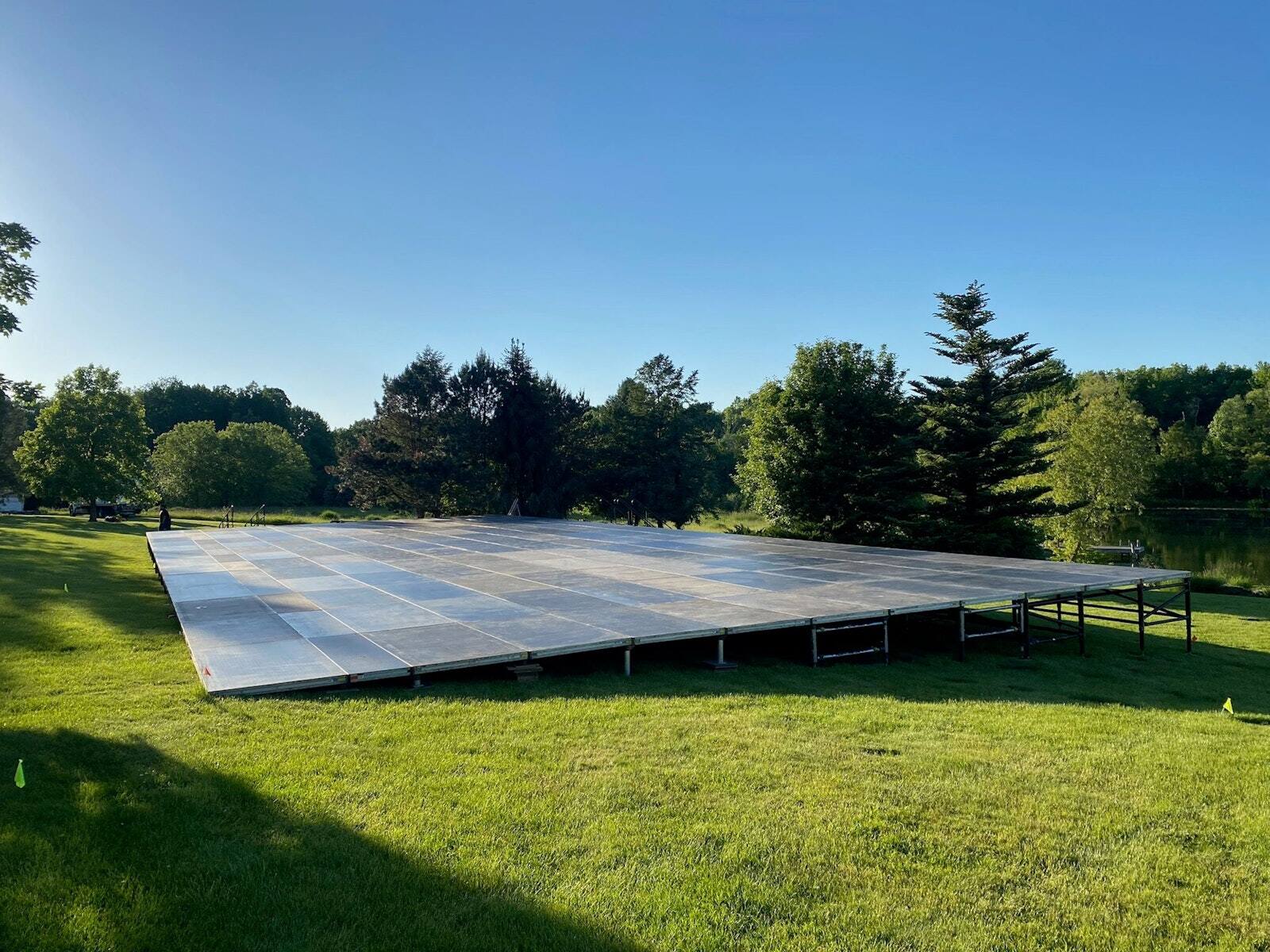
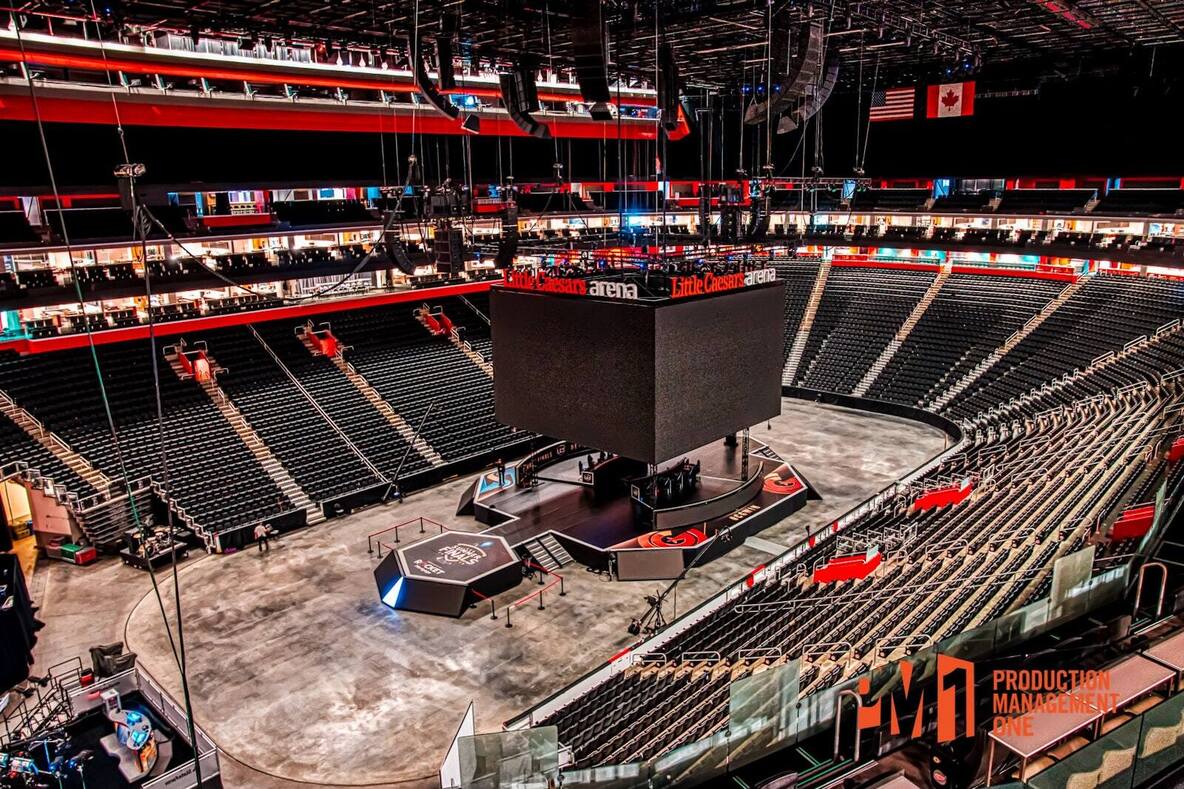
A deck stage is assembled from standard 4' x 8' StageRight decks on an understructure set to the height the show needs. Because it's built piece by piece, it can take almost any shape: curves, wedges, thrusts, runways, rounds, and tiers.
What holds it up depends on the height and the ground:
- Stub tubes and pads. Short, load-bearing points or wood pads for very low decks.
- Stage legs. Above about 12 inches, decks go on engineered leg systems, fixed-height for low stages and adjustable for taller ones. One adjustable leg can carry up to four decks where their corners meet on a four-way top plate.
- Scaffold. For tall stages and uneven ground, a scaffold understructure levels the deck over hillsides, lakeshores, and grades.
Deck surfaces come in grey carpet, black textured fiberglass, or plywood. Heavy loads like LED walls and vehicles get a load path checked all the way to the ground. A deck stage has no roof of its own. When the show needs one, it's a separate structure drawn with the stage.
What a Mobile Stage Is
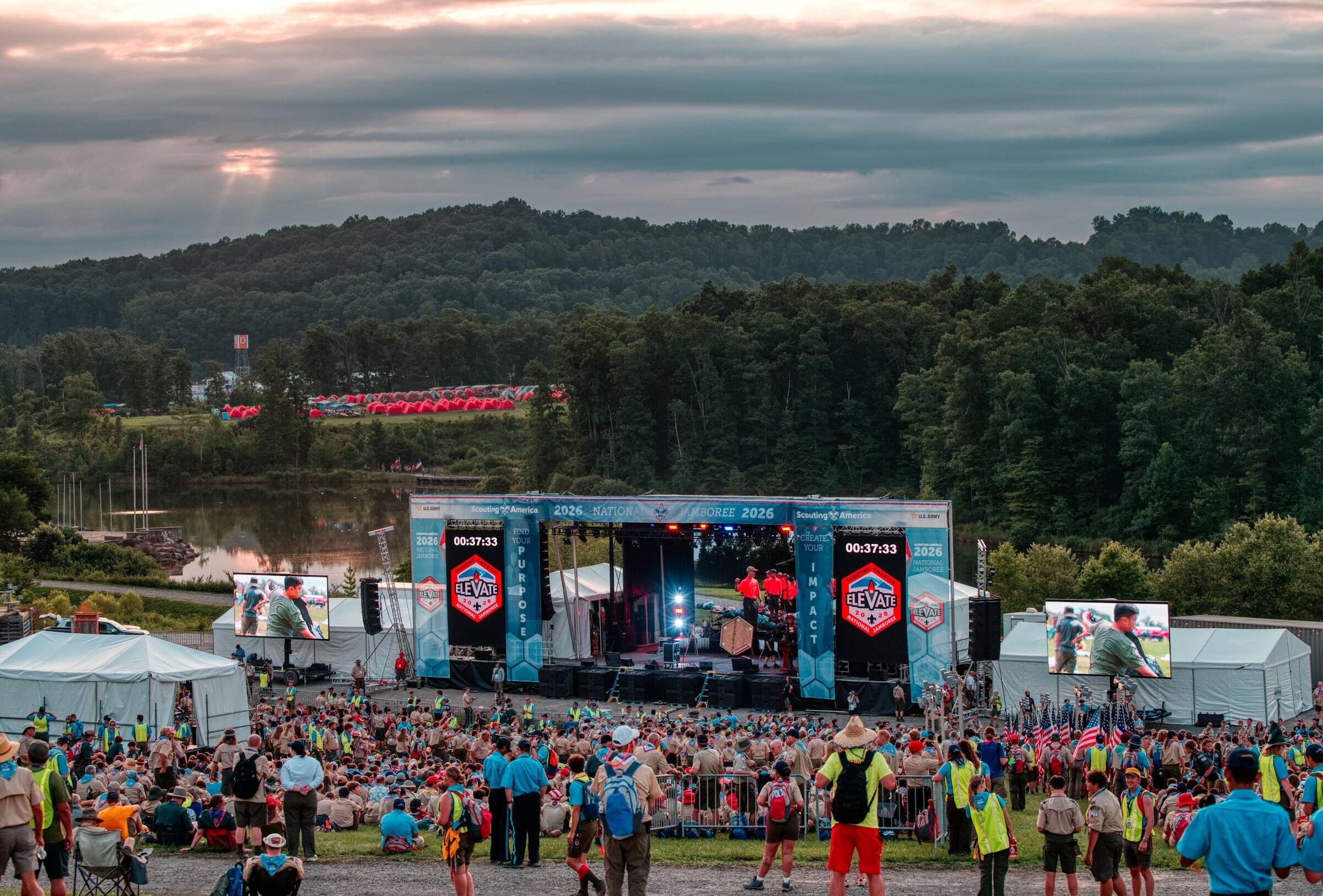
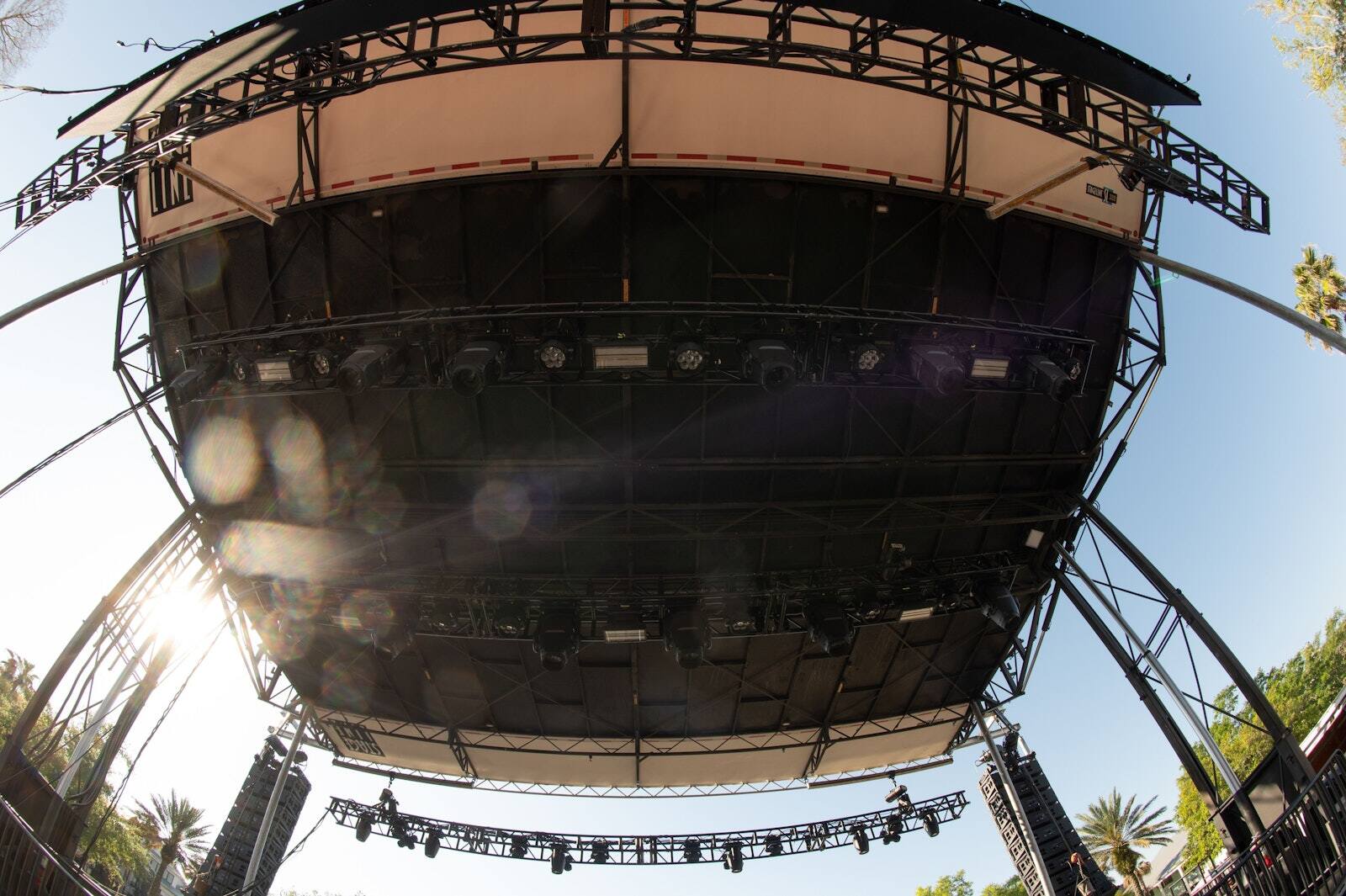
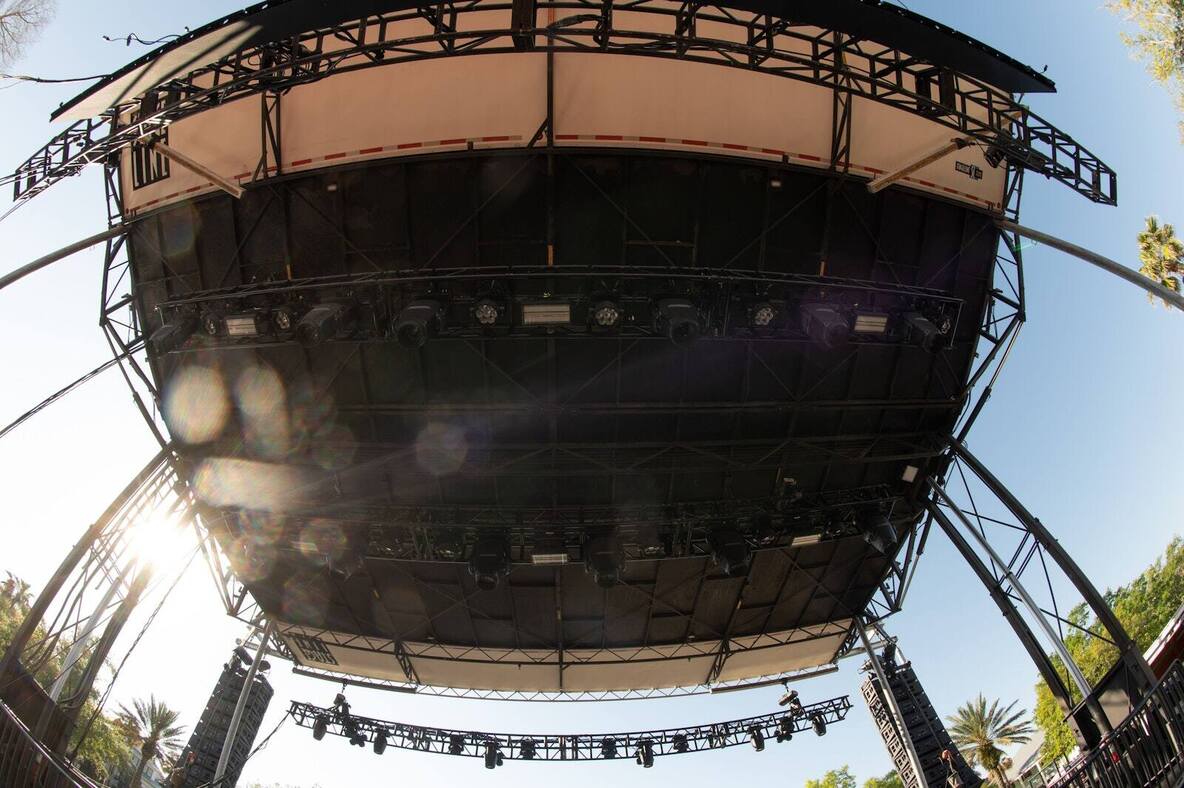
A mobile stage is a stage, roof, and wings built onto a trailer. On site, it levels on hydraulic cylinders and screw feet, unfolds, and lifts its roof. The roof arrives with a rigging plot, so the lighting, the speakers, and sometimes the LED wall have a place to hang.
PM1 fields mobile stage systems from SL50s through SAM 555s and larger, deployed from Detroit and Orlando. Custom loading docks, wings, thrusts, and access get drawn onto them like any other stage. PM1 offers mobile stages as part of full production, not as standalone units dropped on a field.
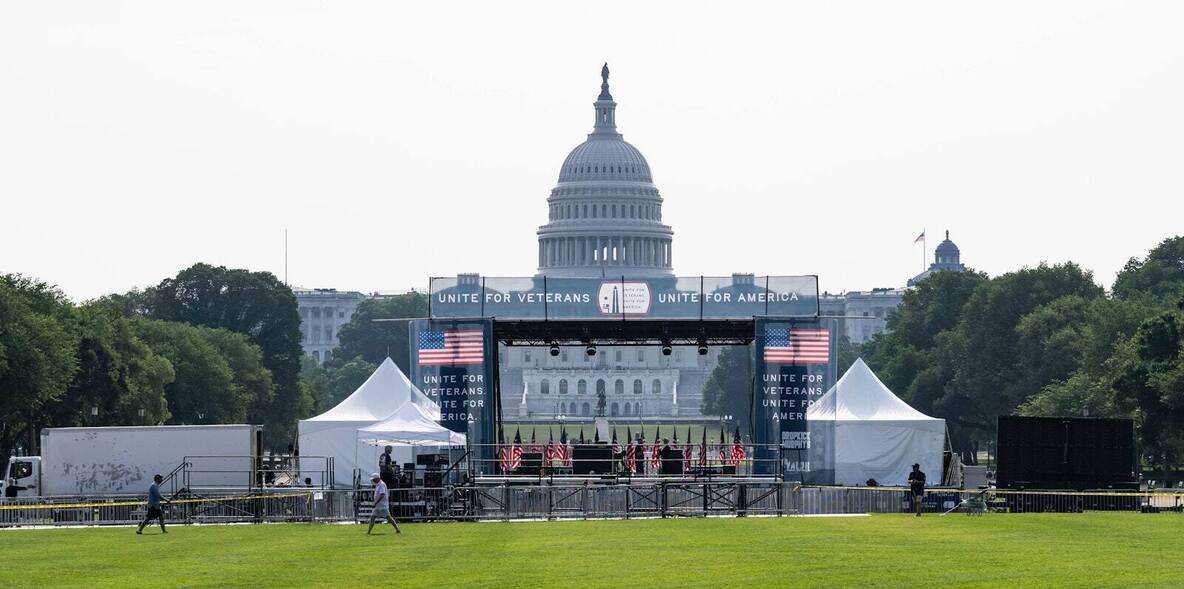
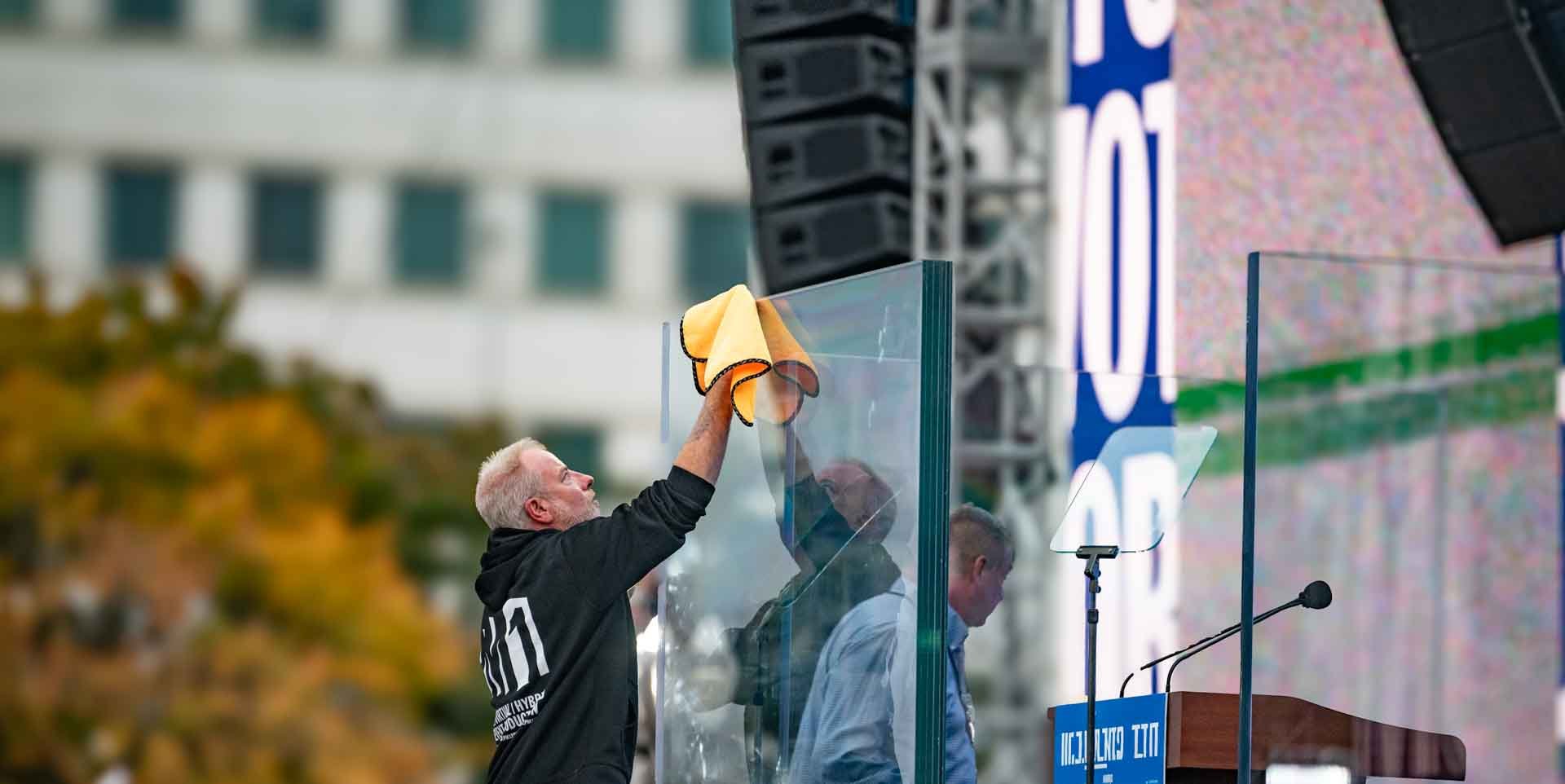
At Unite for Veterans on the National Mall, a PM1 mobile stage carried the show with the U.S. Capitol behind it. At a Gary Sinise Foundation concert in Tampa, the roof of a mobile stage carried the lighting rig.
How to Choose the System
The crowd
An outdoor concert or festival crowd needs a roof that carries the show. That points to a mobile stage. A ballroom, a convention hall, or an arena floor usually points to decks.
The site
A mobile stage needs a truck path and a pad big enough to deploy on. A deck stage goes wherever the decks can be carried, and levels to slopes and odd footprints a trailer can't reach.
The wind
Every roof has wind limits. On an open, exposed site, the system gets selected to the wind as much as to the show.
The rig
What hangs overhead sets the roof. If the rig outgrows a mobile stage roof, the show needs a larger system.
The build window
A mobile stage deploys as one unit. A deck stage goes in piece by piece, and its build time grows with its size and height. On a short window, that difference can decide the system. Thirty days is ideal, and some jurisdictions require 30 days from permit submittal to event date. PM1 can deliver inside five days when it has to, but that isn't the plan to start from.
The shape
A round stage, a long runway, or a hexagon on an arena floor is a deck stage. A mobile stage has a fixed footprint, with thrusts and wings added to it.
Using Both
Many builds mix them. A mobile stage carries the main show, and decks build the thrust, the loading dock, the stairs, and the risers around it. A smaller mobile stage can serve as a covered FOH position. One drawing holds the whole thing, and one crew builds it.