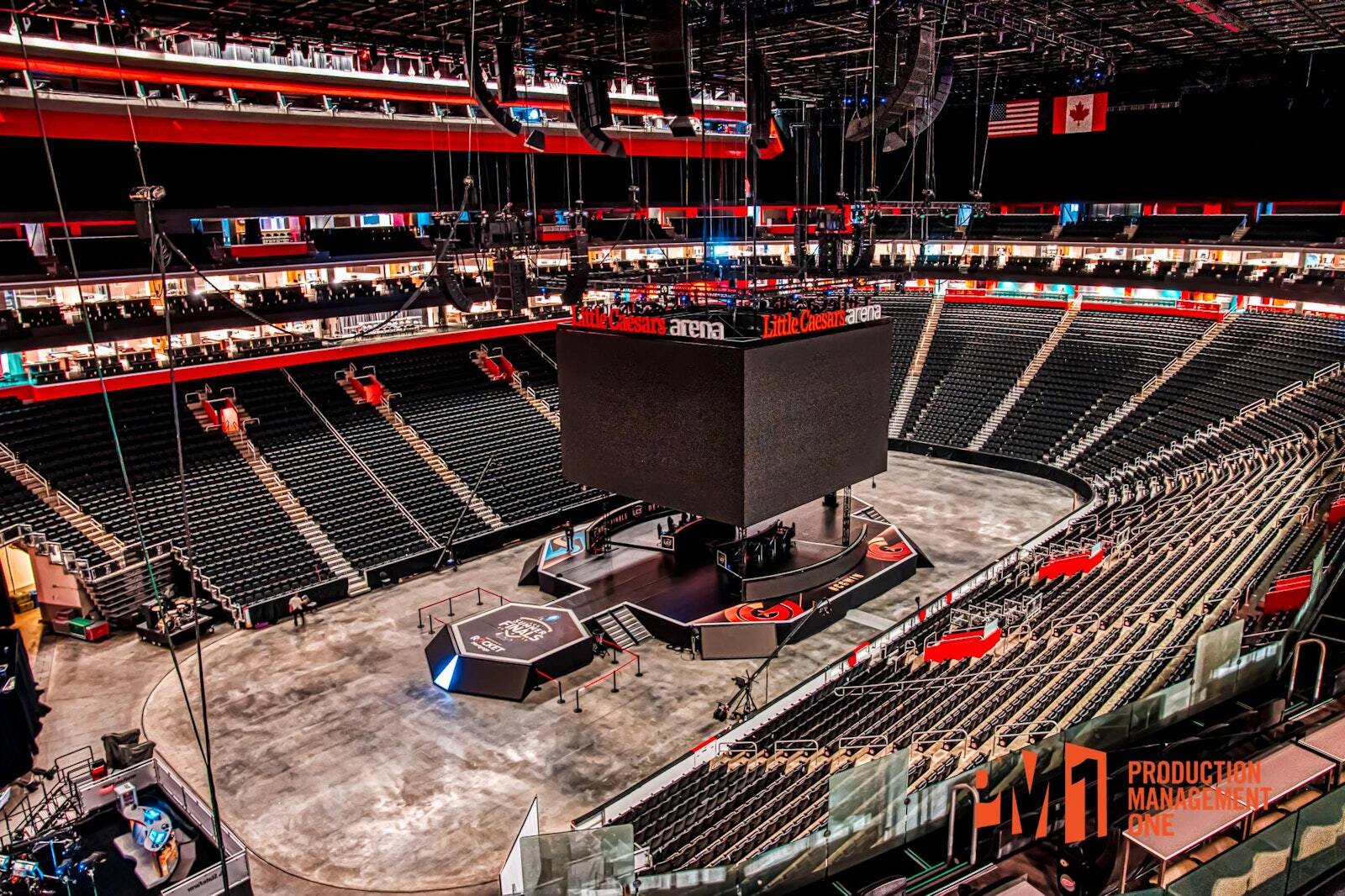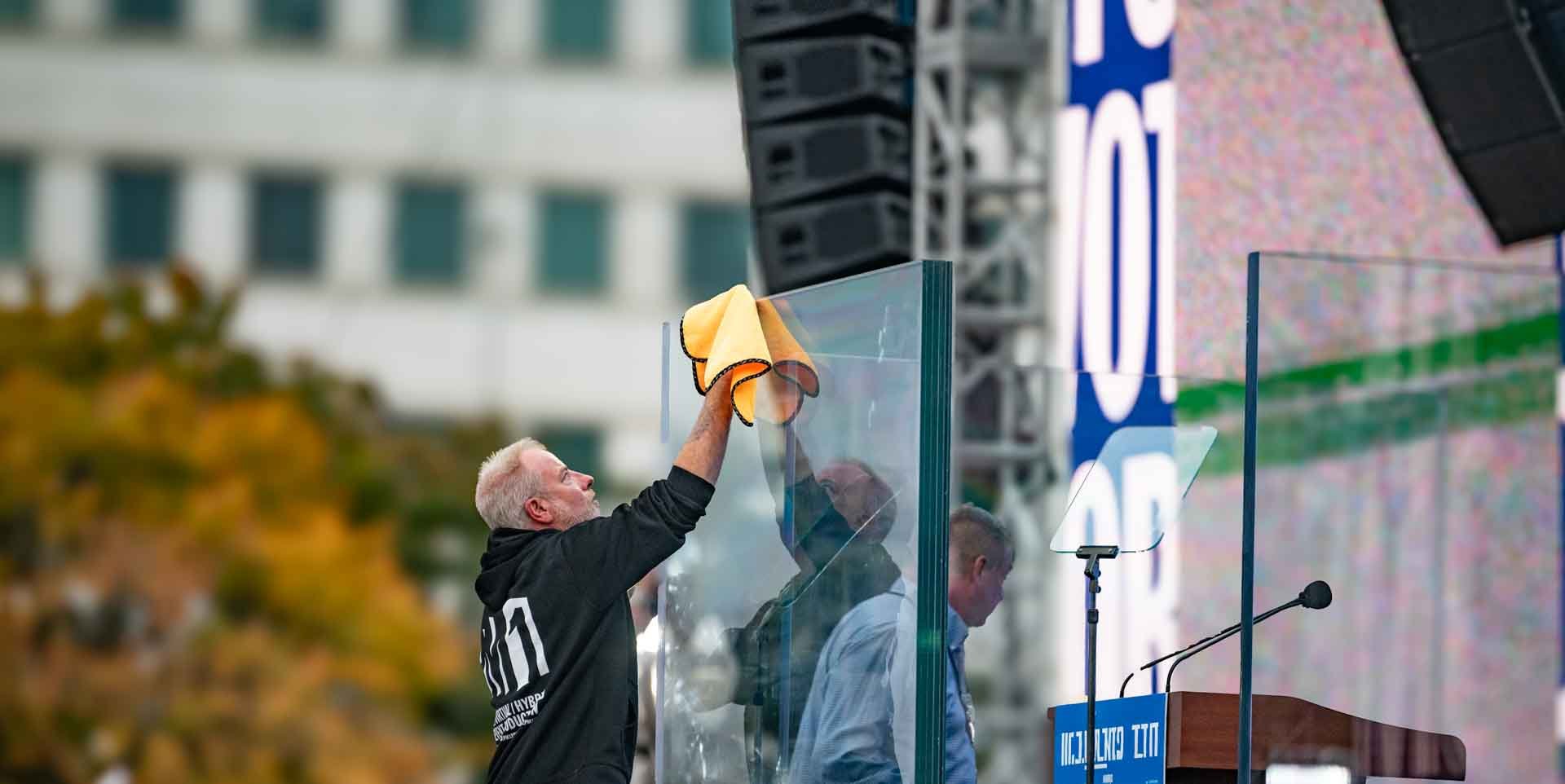
A concert stage is sized to the stage plot and the rider: the band, the backline, the changeovers, and everything that hangs over them. On a field or a plaza, that means a stage, a roof, wings, and a FOH position drawn together. On an arena floor, it means a deck built to the floor and the rig.
This post stays on the stage itself. For running the show on top of it, read Concert Production: What It Takes to Build a Show.
Start With the Rider and the Stage Plot
The rider tells you what the artist needs. The stage plot shows where it goes. Together they set the concert stage size.
- The band. Where each player stands, and how much room they need to move.
- The backline. Amps, drums, keys, and monitors, with room to reach them.
- Risers. Rolling drum risers in 8' x 8' and 8' x 12' let a band set up off stage and roll on.
- Changeovers. Wing space for the next act's gear on a multi-act bill.
Stage plots change. The stage is drawn from the latest one, and the drawing shows what moves when the plot does.
The Roof Is the Rig
Outdoors, the concert stage roof is where the lighting, the speakers, and sometimes the LED wall hang. It's a load calculation, not shade. What the show wants to fly decides the roof it needs.
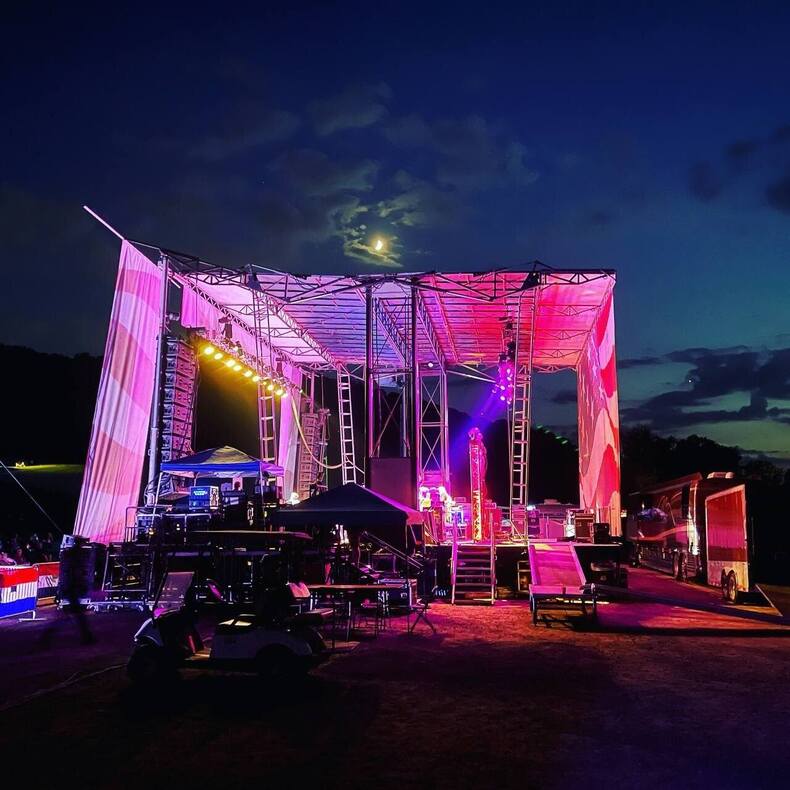
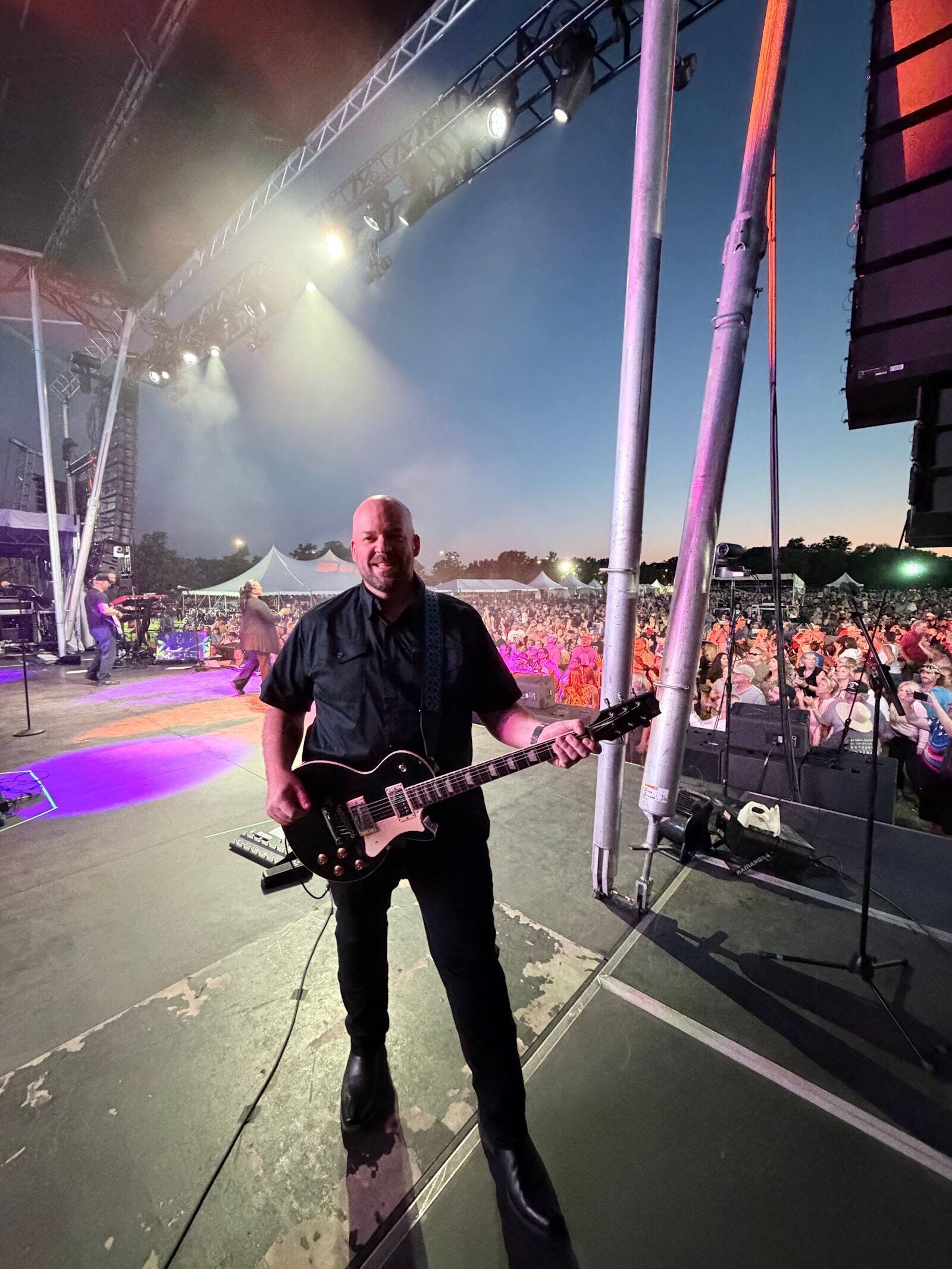
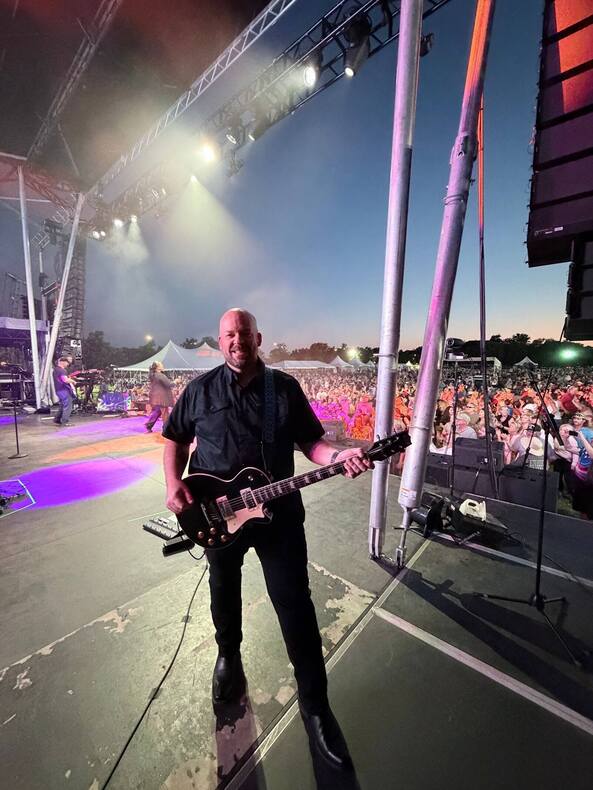
Mobile stage systems from an SL50 through a SAM 555 or larger arrive with a roof, wings, and a rigging plot, selected to the crowd, the site, and the wind. Every roof has wind limits, and the plan names who calls a hold. At a Gary Sinise Foundation concert in Tampa, the round roof of a mobile stage carried the lighting rig.

Wings, Loading Docks, and Access
The deck the audience sees is only part of the stage. The rest of it works out of view.
- Wings hold backline, monitor world, and the next act.
- Loading docks get drawn with the stage, so gear rolls from the truck to the deck without a staircase in the way.
- Thrusts push the artist into the crowd when the show calls for it.
- Stairs and rails give artists and crew a safe way on and off, on the path they actually walk.
FOH and the Camera
Front of house needs a clean line to the stage, centered on the audience it mixes for. PM1 builds raised FOH and control platforms with room for the consoles and the crew and stairs to get on and off, and a smaller mobile stage can serve as a covered FOH. Camera risers go on the same drawing, so the shot and the mix don't fight over the same ground. Cable paths from the stage to front of house, power, and video get drawn to stay out of the egress routes.
The stage height works with both. High enough that the back of a standing crowd sees the band, and high enough for the camera, without cutting the artist off from the front rows.
Festival Stages and Big Fields
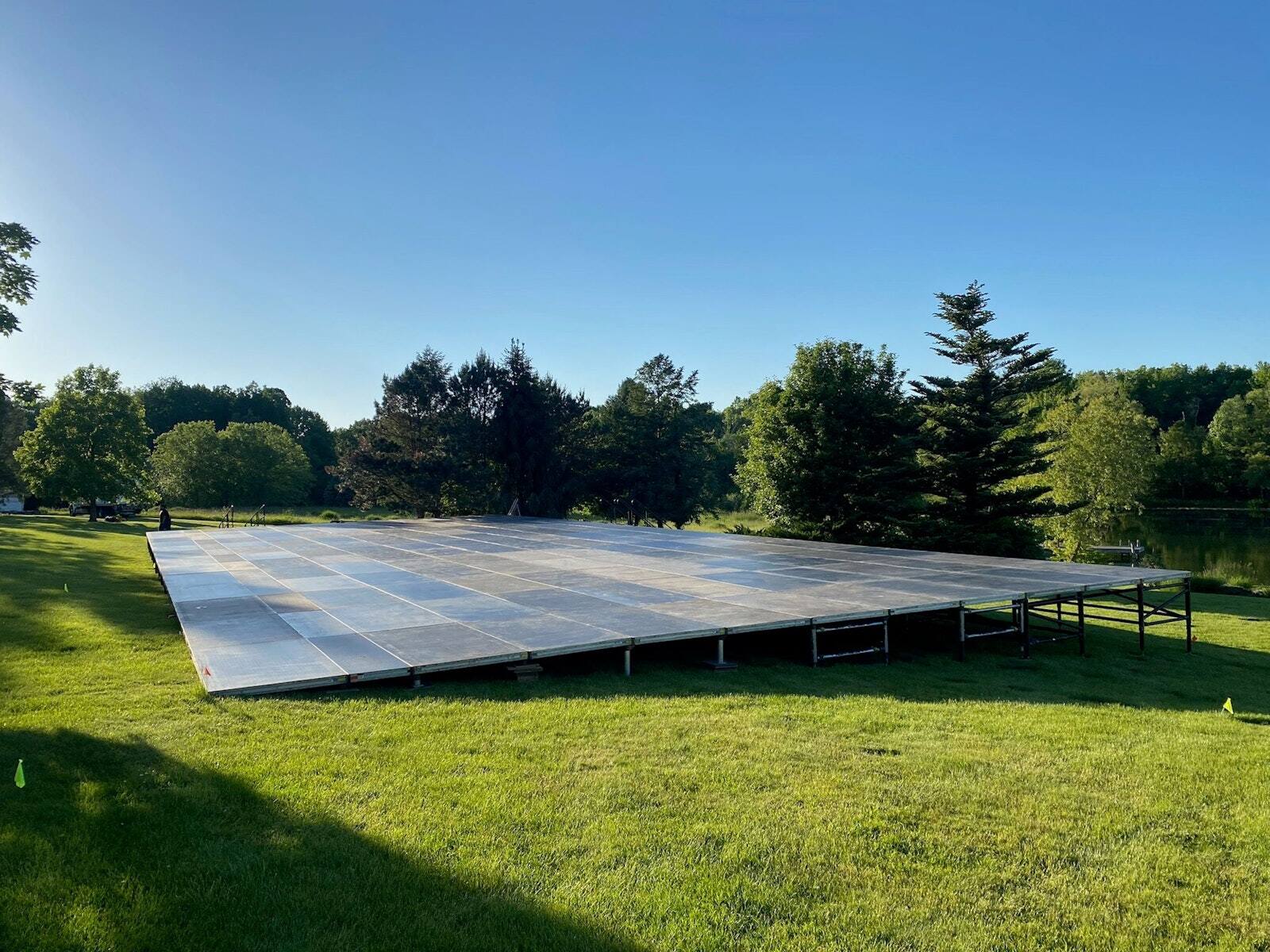
A festival stage has to handle a long day, a changing bill, and a crowd that comes and goes. The ground, the wind, and the build window matter as much as the stage plot. Soft ground gets modular ground cover and turf gets protected. The stage is the first thing built and the last thing struck, so its build time sets the load-in for every other department.
At the 2026 Scouting America National Jamboree, the PM1 main stage played to a crowd of scouts, with forest and a lake behind it and a video screen for the crowd. The 2026 Gary Sinise Foundation concert put a PM1 stage on a grass field, with the crowd spread across the lawn at dusk. Thirty days is ideal, and some jurisdictions require 30 days from permit submittal to event date. PM1 can deliver inside five days when it has to, but that isn't the plan to start from.