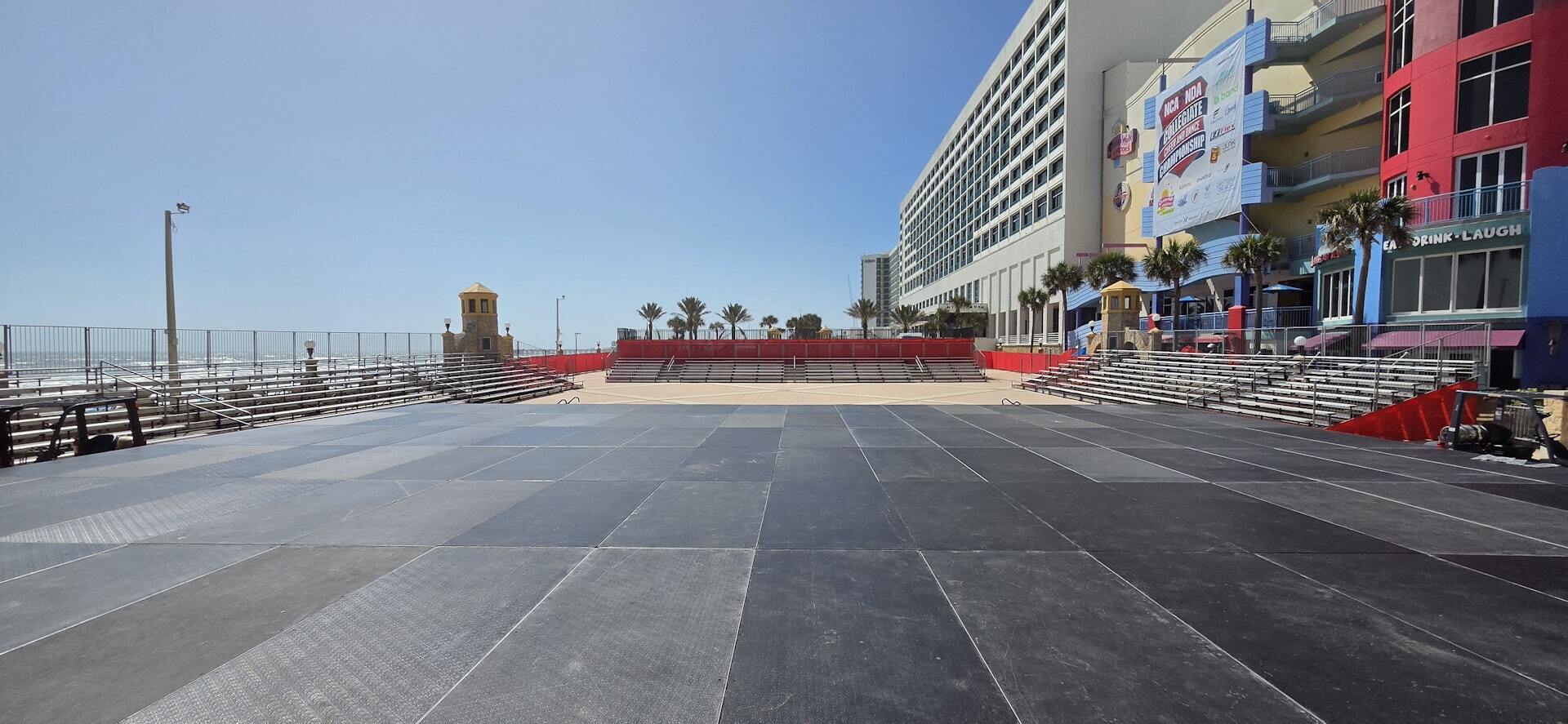
The deck is the cheapest part of a stage. The labor, the site, the transport, and the show around it are what set the number. PM1 prices all-in, and PM1 projects start at a $10,000 investment.
A price per square foot tells you almost nothing. Two stages with the same footprint can land thousands of dollars apart. One goes up on a ballroom floor in an afternoon. The other gets leveled across a sloped field, roofed, and inspected before the first act walks on. Same deck. Different build.
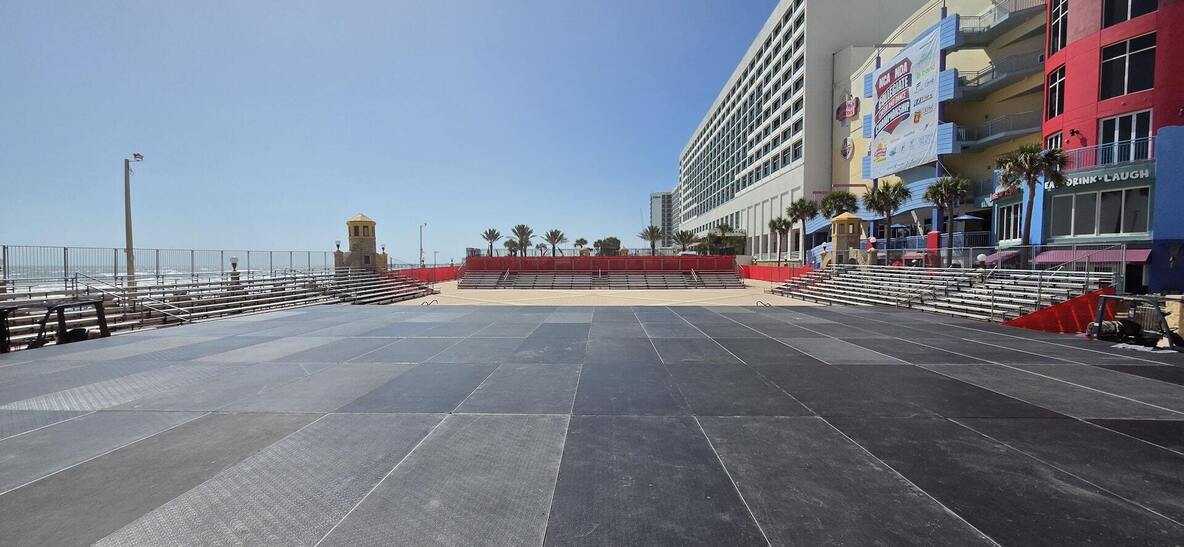
All-In, Not Line Items
PM1 prices all-in. Decking, legs, stairs, skirting, crew, site supervision, transport, and the load-in and strike windows, in one number.
Line-item quotes look smaller. Then labor shows up as a separate charge, overtime lands after the strike runs late, and access and railings turn out to be extras. All-in pricing is how you compare a real build to a real build.
PM1 projects start at $10,000 all-in. On most events the stage is one part of that number. Seating, platforms, barricade, and press risers usually share the same build and the same crew.
Labor and Site Supervision
The biggest variable is the crew, not the deck.
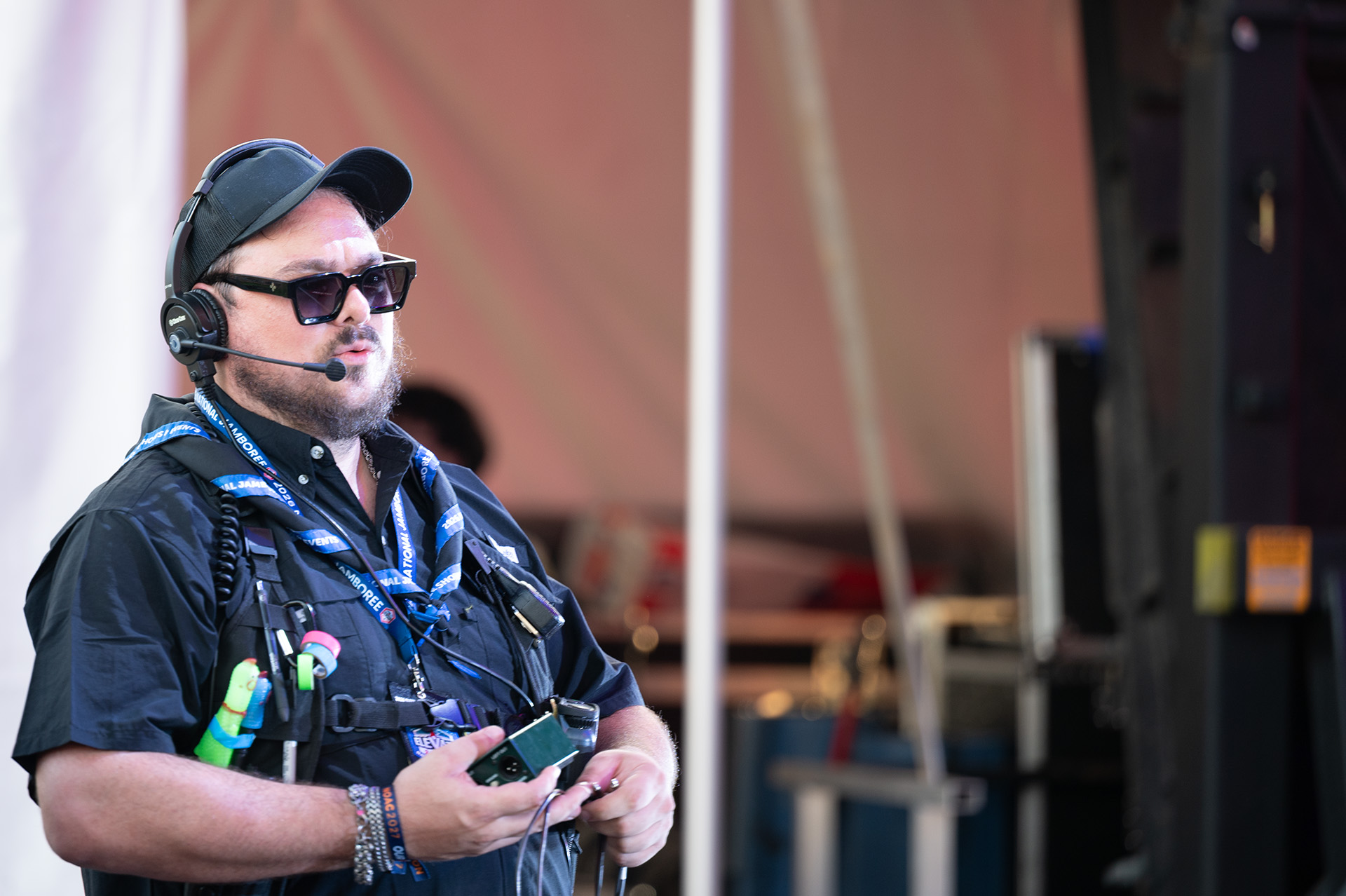
A stage is a structure people stand on. It needs a crew that builds it level and safe, and a supervisor on site who owns it from first layout to load-out. That supervisor coordinates with the venue, the production team, and whoever hangs the lights. When something changes at 2 a.m. before doors, that is the person who solves it.
This is the line that gets cut first on a budget quote, and it is the one that matters most when the show is on.
Concert Stages Are Not Conference Stages
The event type sets the build.
- Conference and general session. Lower decks, clean sightlines, camera positions, and tight turnarounds inside a hotel or convention center. Load-in often happens overnight between sessions.
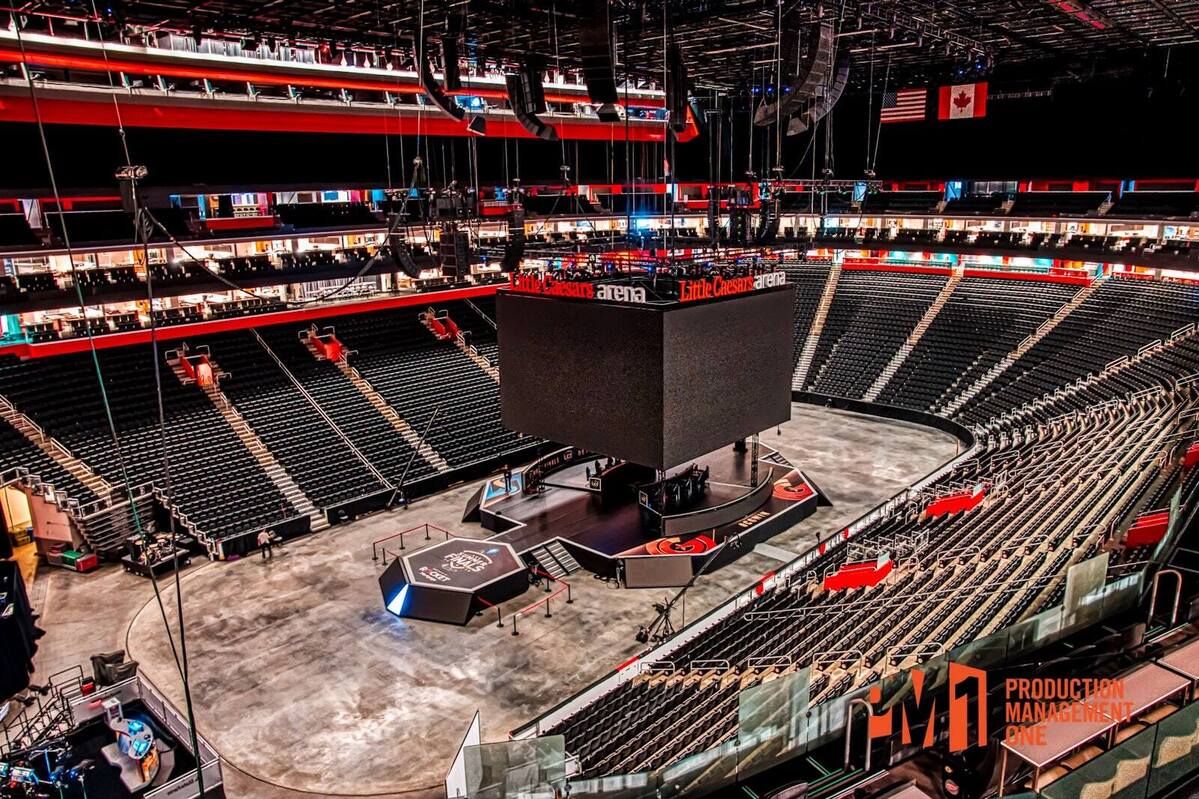
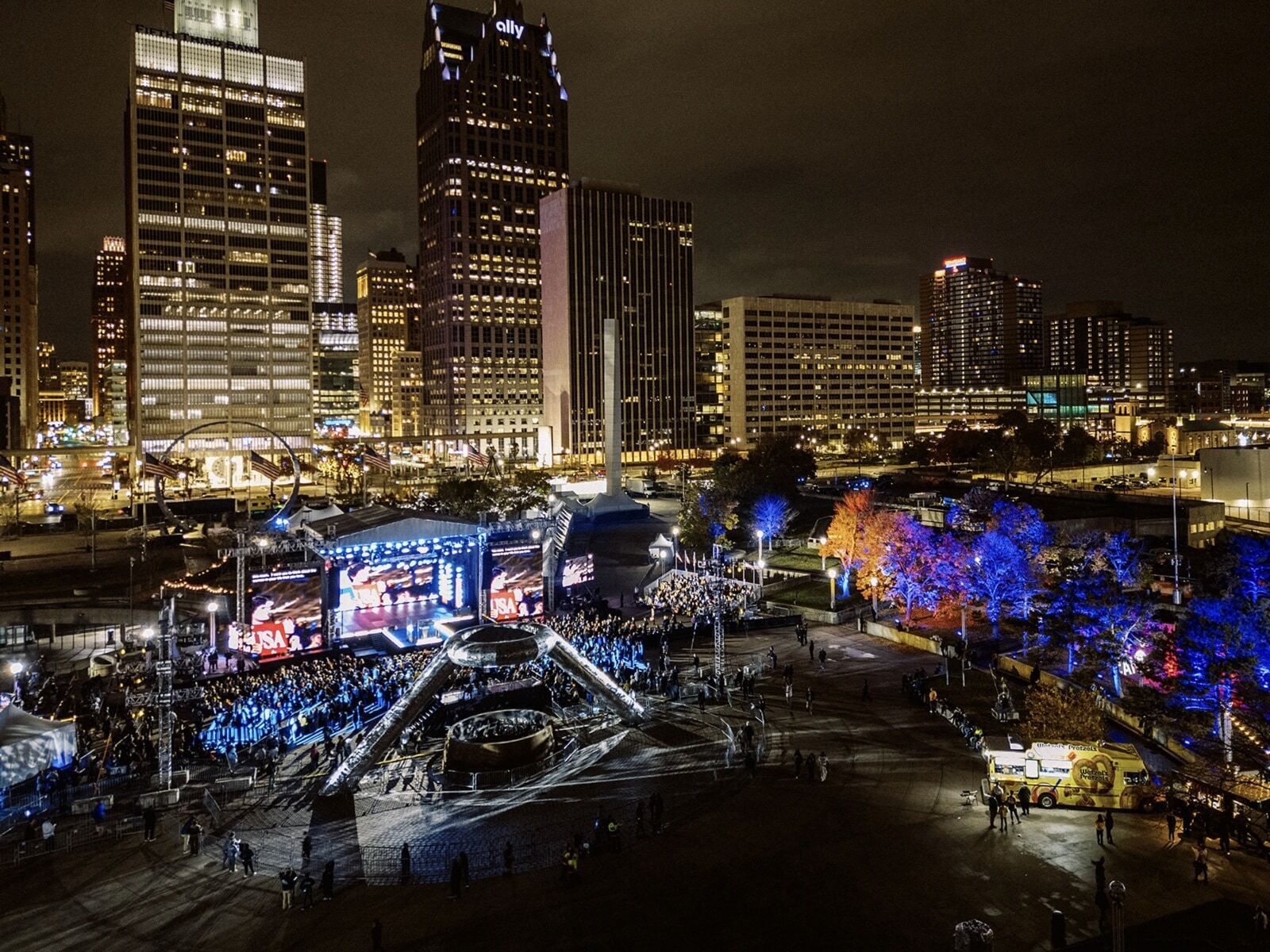
- Concert and festival. Higher decks, heavier loads, roof and rigging coordination, wings, thrusts, and barricade out front. Longer load-in and strike windows, and more crew to hit them. More on that in concert and festival stages.
- Rally and press event. Fast builds, press risers set to the shot, and protocol around who stands where. Seventy-two hours is common.
- Or something else. Tell us what you're building.
Indoors Goes Faster Than Uneven Ground
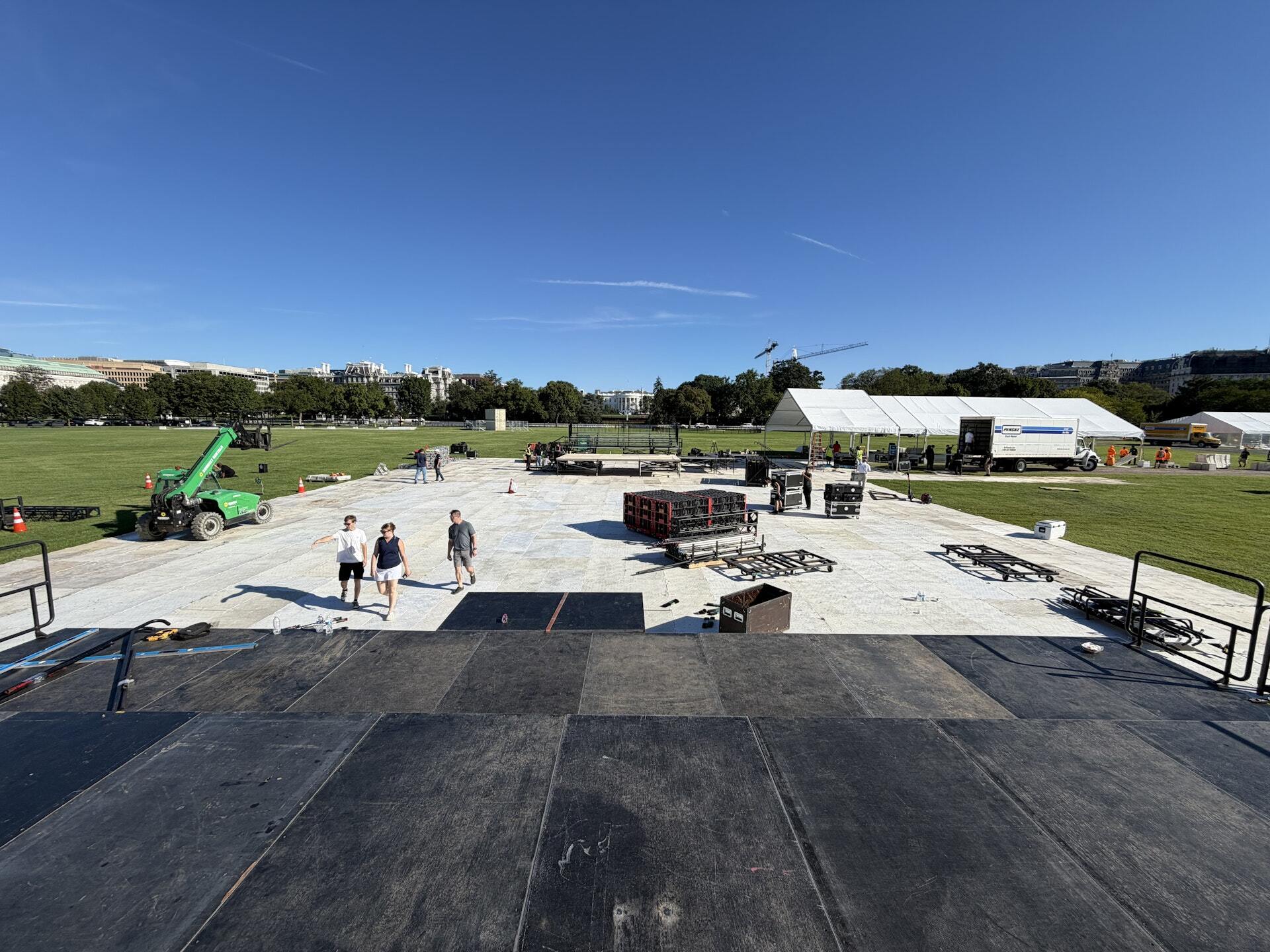
A stage on a flat ballroom floor goes up quickly. A stage on grass, gravel, or a sloped lot has to be leveled first, leg by leg, and that takes time and crew.
Outdoor builds also carry weather, ground conditions, power runs, and access for trucks and lifts. A site walk is how PM1 finds those before the quote, not after the load-in. The post on outdoor stages covers ground, roof, wind, and permits.
Transport
Where the gear starts sets part of the price. PM1 owned inventory lives in Detroit, DC, and Orlando; we can source stages and production anywhere in the developed world.
- Local. Inside one of those cities. The shortest haul and the simplest schedule.
- Regional. Within a day's drive. Priced by distance, and it can add a day to the schedule on each end.
- Nationwide. Longer hauls, more planning, and more lead time.
Touring shows usually carry a transport budget. A local show usually doesn't. If your event is a single stage far from Detroit, DC, or Orlando, a provider in your city may be the better call, and we'll tell you so. We regularly refer these back to our manufacturer when it's a city or need we don't have a referral.
The math changes when PM1 carries more of the build. Staging, seating, VIP structures, camera platforms, and barricade on one truck, with audio, video, lighting, and production management under one crew, is where PM1 is competitive locally, regionally, across the US, and sometimes internationally. One load-in. One crew. One number.
Mobile Stages
Mobile stage systems install faster overall. They arrive on a trailer, come with their own roof, and deploy with a small crew. Additional decking, ramps, access, and accessories configure them for a concert, a rally, or a community event.
PM1 delivers mobile stages as part of full production, not as standalone drop-offs. See Mobile Stages vs Deck Stages for how to choose.
When a Party Rental Company Is the Right Call
Not every stage needs PM1. A small deck for a school play, a backyard party, or a church picnic is a party rental job, and a local party rental company (or local staging provider) will serve it well.
PM1 builds for high-visibility live events where the stage has to be right the first time. Concerts, conferences, rallies, broadcasts, and the builds that can't go wrong.