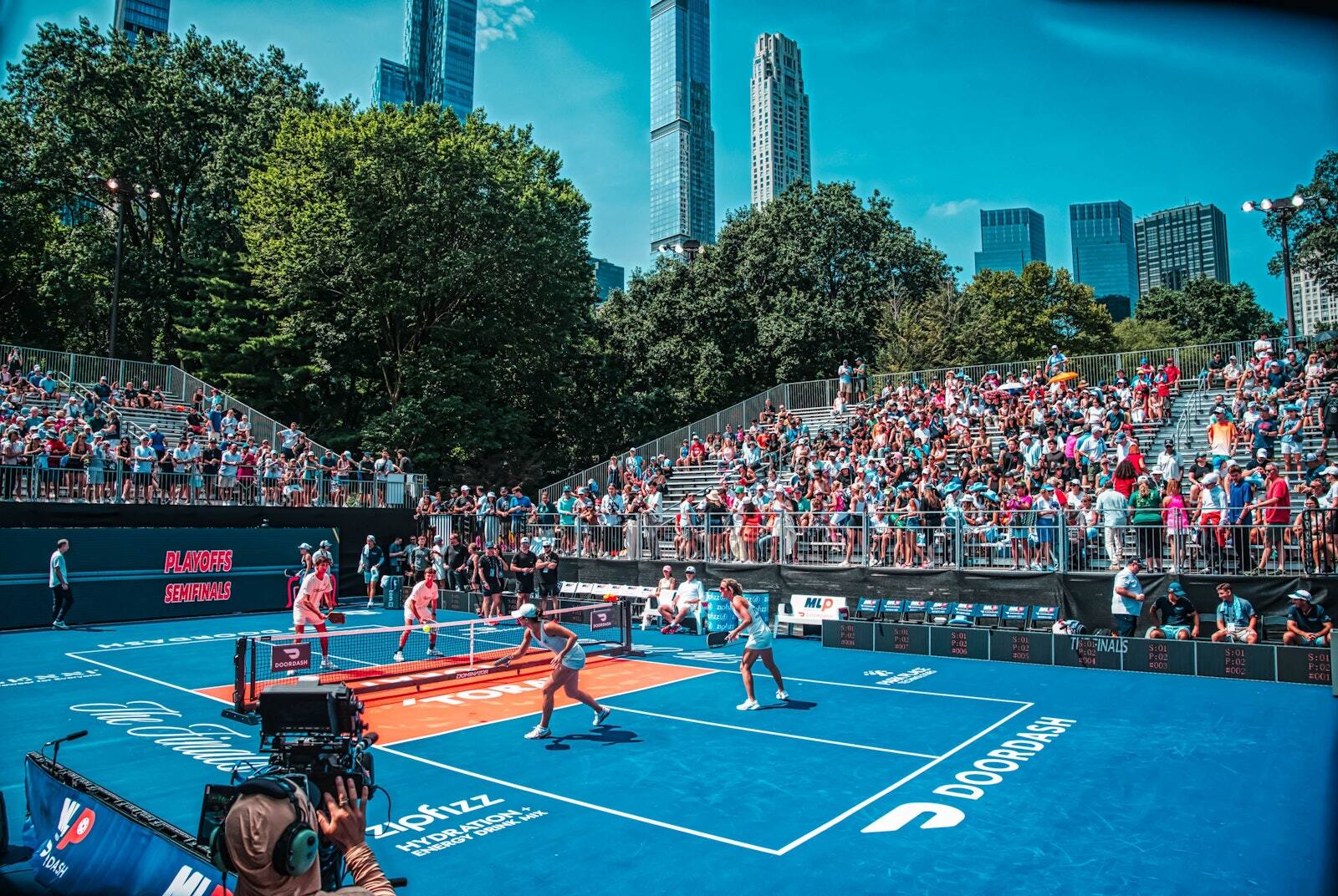
A sightline is the line from a seated eye to the point the audience came to see. Good event seating gives every row a clear one, over the heads in front, and gives every camera a clear one too. Row rise, rake, and camera positions get drawn together, because changing one changes the others.
What Sets a Sightline
Three things decide what a seat can see.
- The focal point. The near sideline of a court, the front edge of a stage, the finish line. The closest point the audience needs to see sets the hardest sightline in the house.
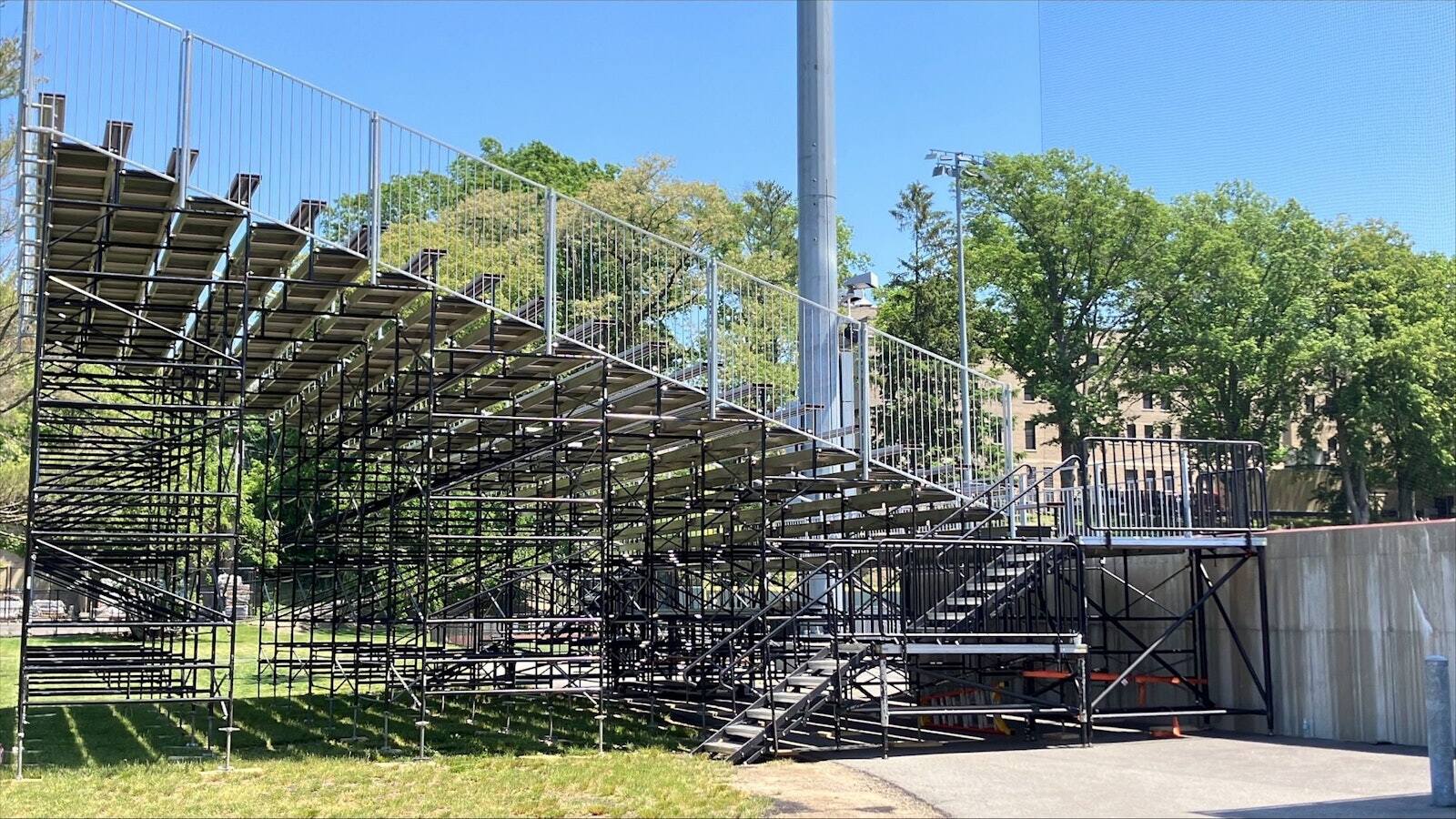
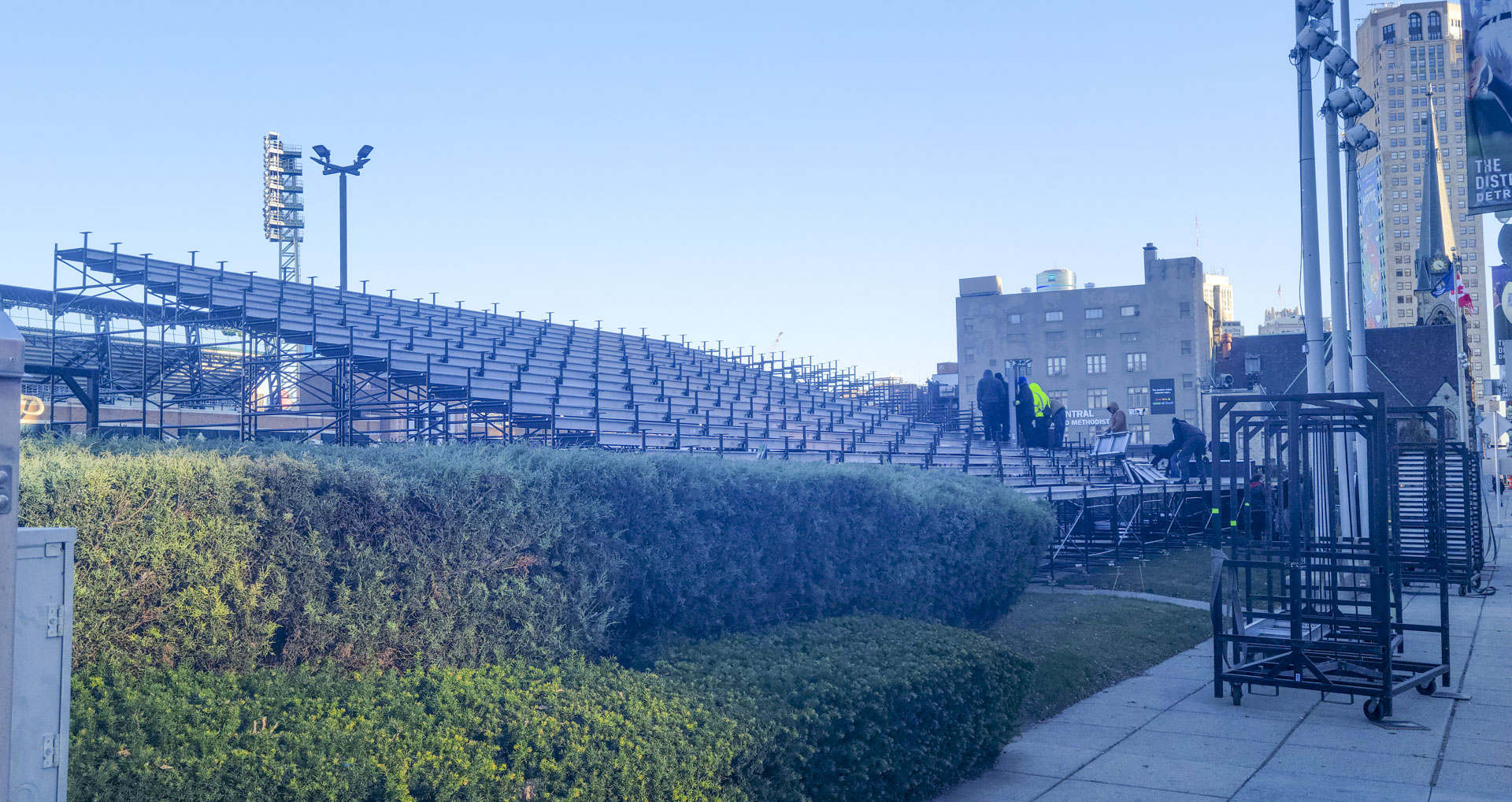
- Row rise. How much higher each row sits than the one in front. Enough rise, and each eye line clears the head ahead of it. Too little, and the back rows watch the backs of heads.
- Rake. The overall slope of the seating, from the first row to the last. A steeper rake lifts the back rows higher over the crowd and makes the structure taller.
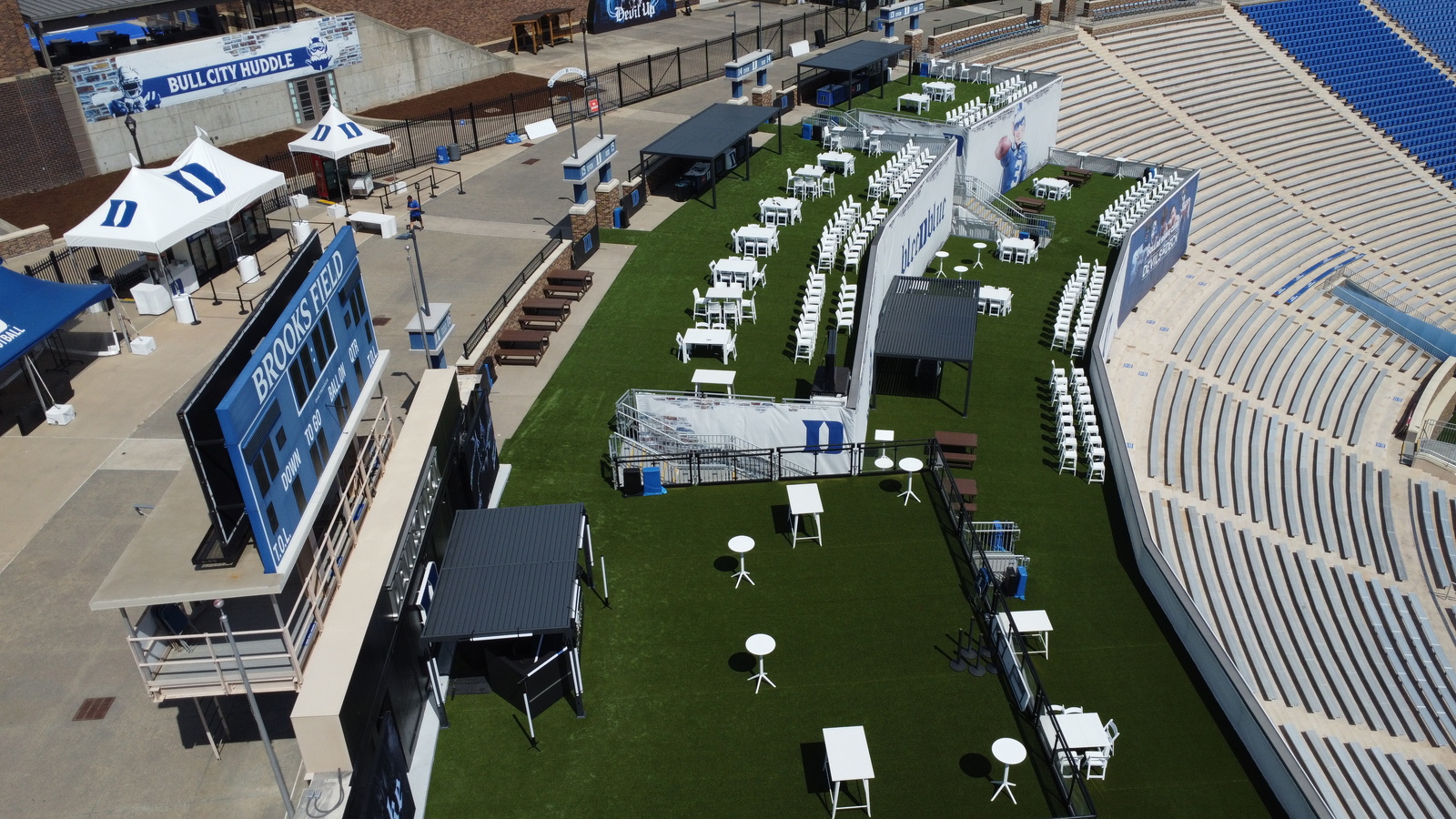
Then there's what sits between the seats and the show: a barricade, a field wall, a scrim, a crowd standing on the floor, a camera on a tripod. Each one raises where the first row has to start.
Check the Top Row, the Bottom Row, and the Camera
Three checks catch most problems before anything is built.
The bottom row
The front row has the shortest distance to the action and the most in the way. If it looks over a barricade or a scrim, it has to start higher. That's often the moment bleachers become a grandstand with an elevated first row.
The top row
The back row has the longest view. On a shallow rake, it sees heads. On a tall structure, it can be far enough away that the experience changes, and video starts to matter as much as the view.
The main camera
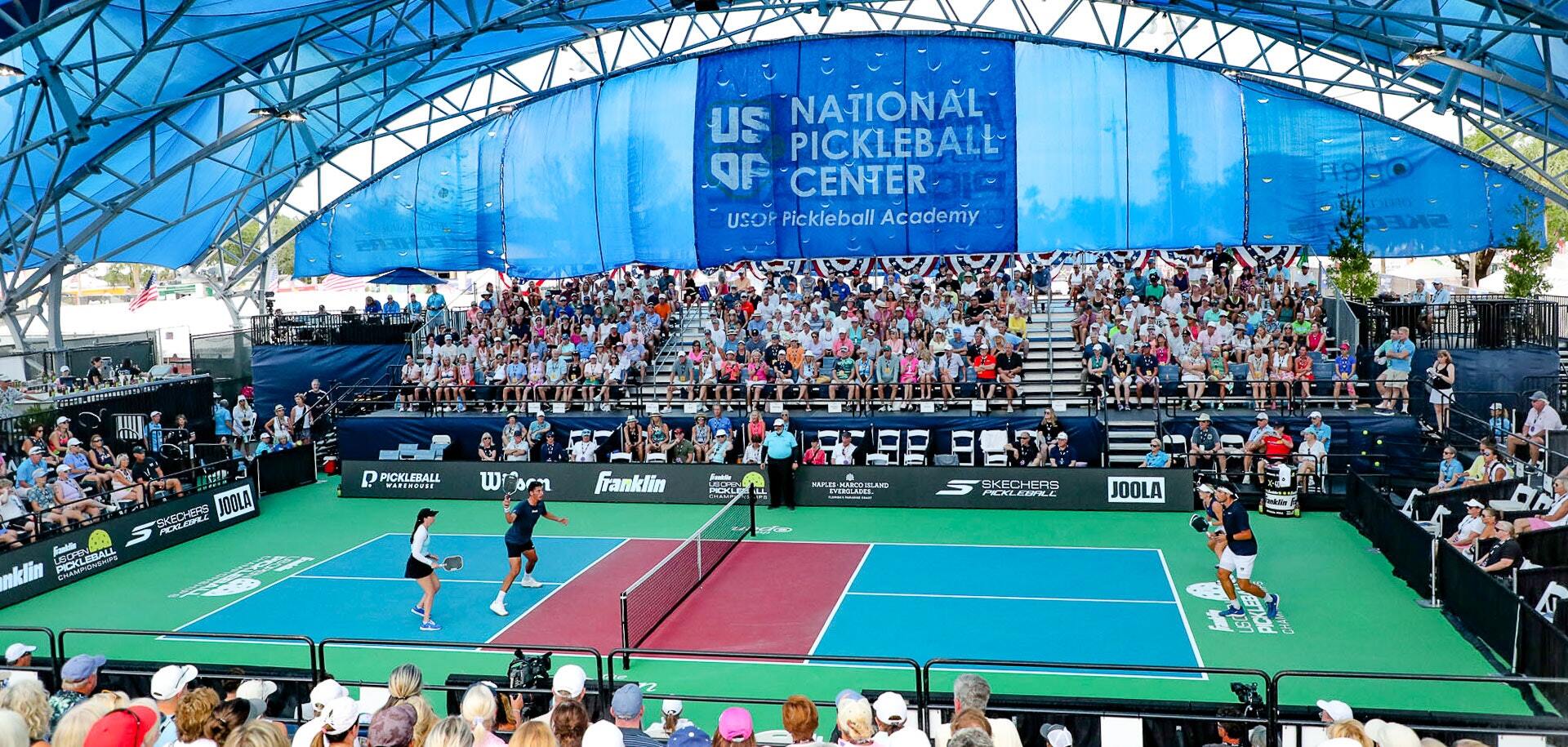
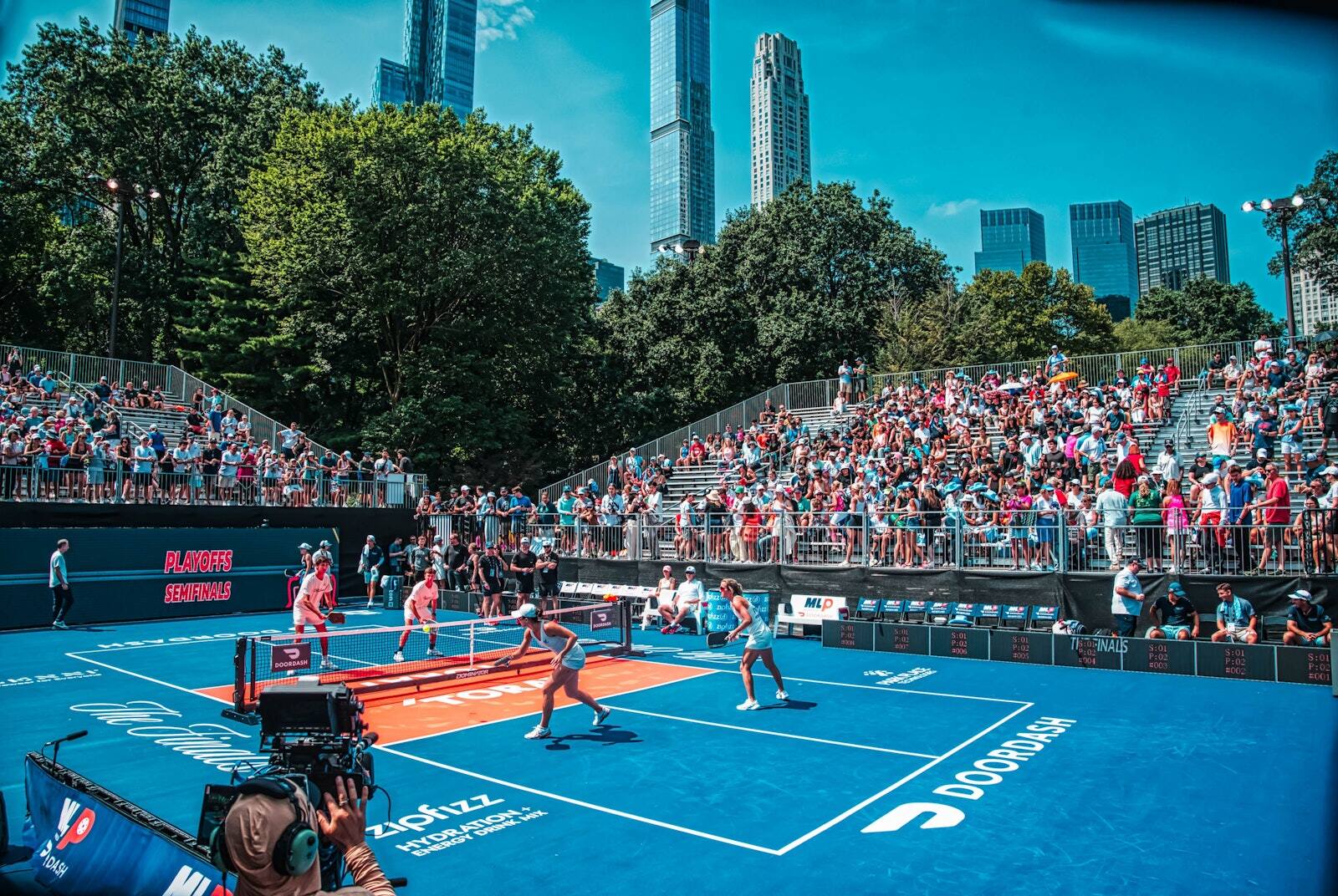
The broadcast has its own sightline, and it has to coexist with the crowd's. A camera placed in front of the seats blocks them. A camera placed behind them can lose its shot when the crowd stands up. Camera platforms and press positions go on the structure or behind it, drawn with the sightlines so the shot and the seats both work.
Ask for those three views on a drawing before the build. The answer should come with one.
Cameras on the Structure
Building cameras into the seating solves the placement problem, and creates a new one: movement. When a crowd jumps, a deck flexes. At the US Open Pickleball Championships in Naples, Florida, PM1 isolated the camera platforms from the VIP deck so the shot holds when the crowd moves.
Press and camera positions are their own structures, even when they sit inside the seating. For Varsity Spirit cheer and dance competitions, judges risers go in as three tiers with a dedicated camera tier, so the panel and the lens each get a clean view of the floor.
Wollman Rink: 18 Revisions
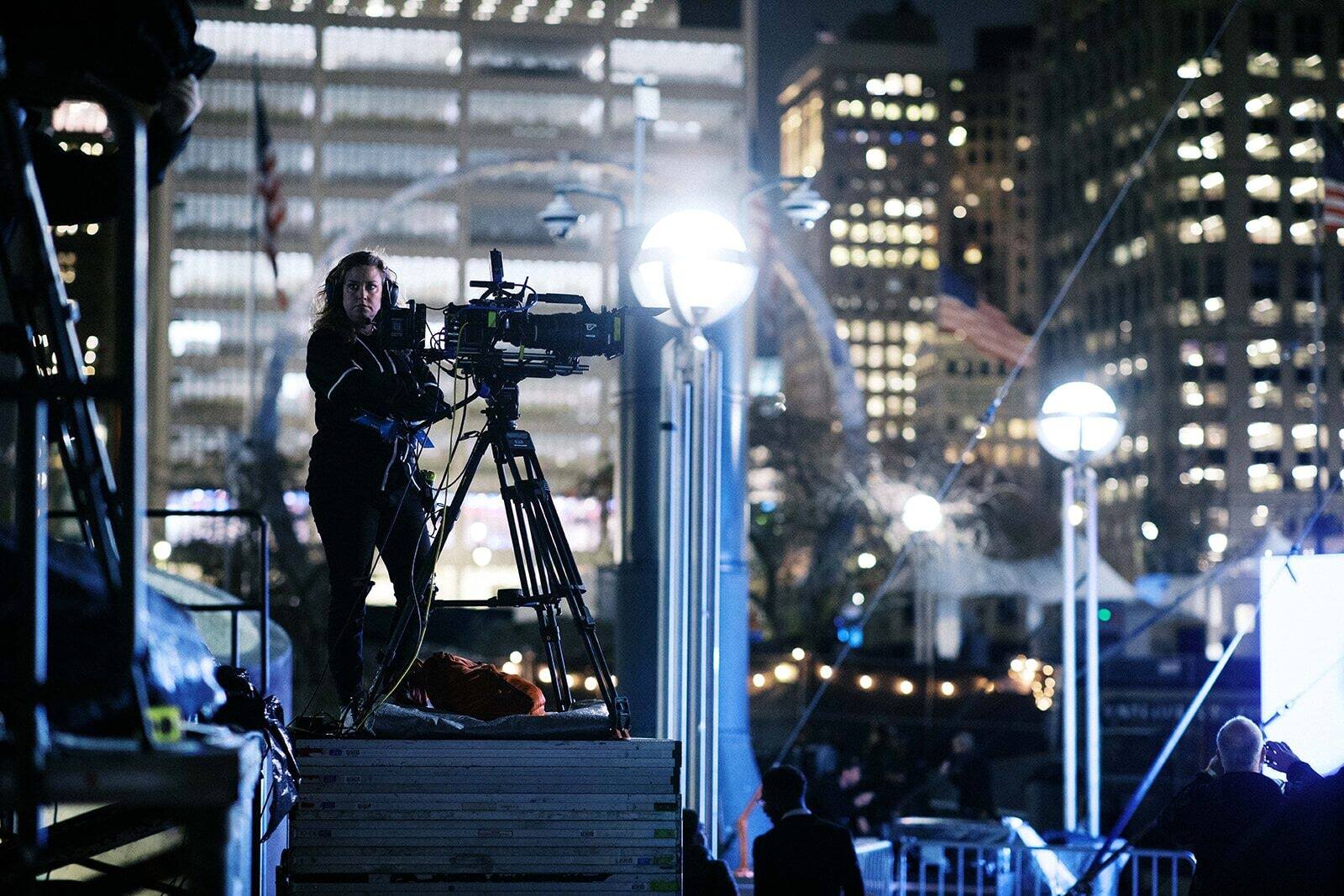
At Wollman Rink in Central Park, PM1 built a stadium on top of an ice rink for a professional pickleball tour. VIP rows, six sideline suites, three baseline suites, general admission, a party deck, and broadcast cameras all had to share one grandstand and still see the court's sideline.
Each time a camera moved, the seating moved with it, through 18 revisions of the drawing. That's what designing for the seat and the camera looks like in practice: the drawing changes until every group can see, and then the crew builds it once.
Sightlines on Uneven Ground
A perfect section drawn on paper still fails if the ground underneath it tilts. On grass, sand, asphalt, or a slope, PM1 uses laser-point elevation surveying so every row sits level and the rise on the drawing is the rise in the seats.