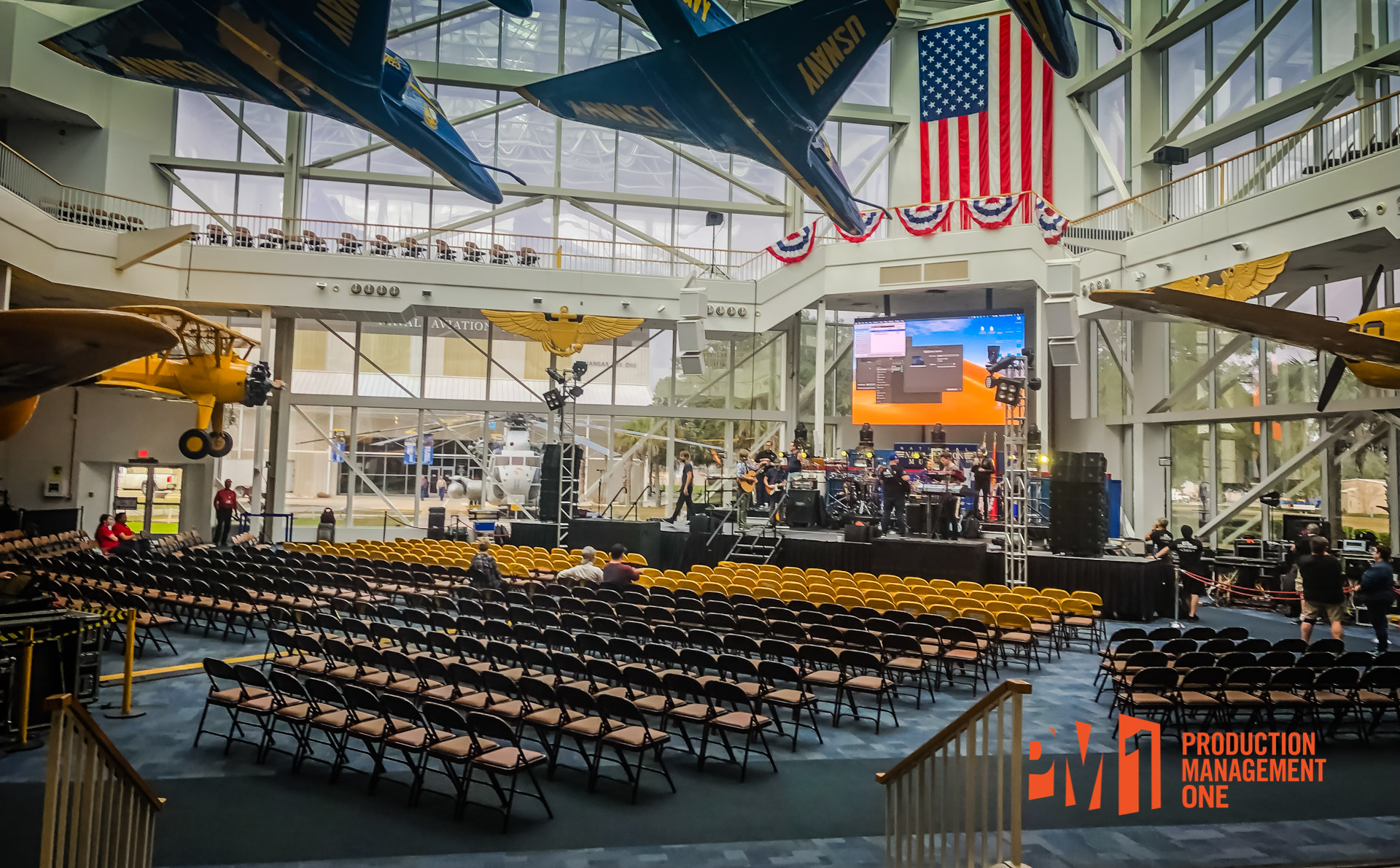
There are four basic types of stages for a live event: the end stage, often called a proscenium, the thrust, the stage in the round, and the found space. Each one decides where the audience sits, where the cameras go, and how much backstage the show gets. The program picks the type. The venue decides how far it can go.
PM1 builds all four from the same standard 4' x 8' StageRight decks, drawn to the program and the room. Here's what each type does, where it works, and what it asks of the build.
Proscenium and End Stages
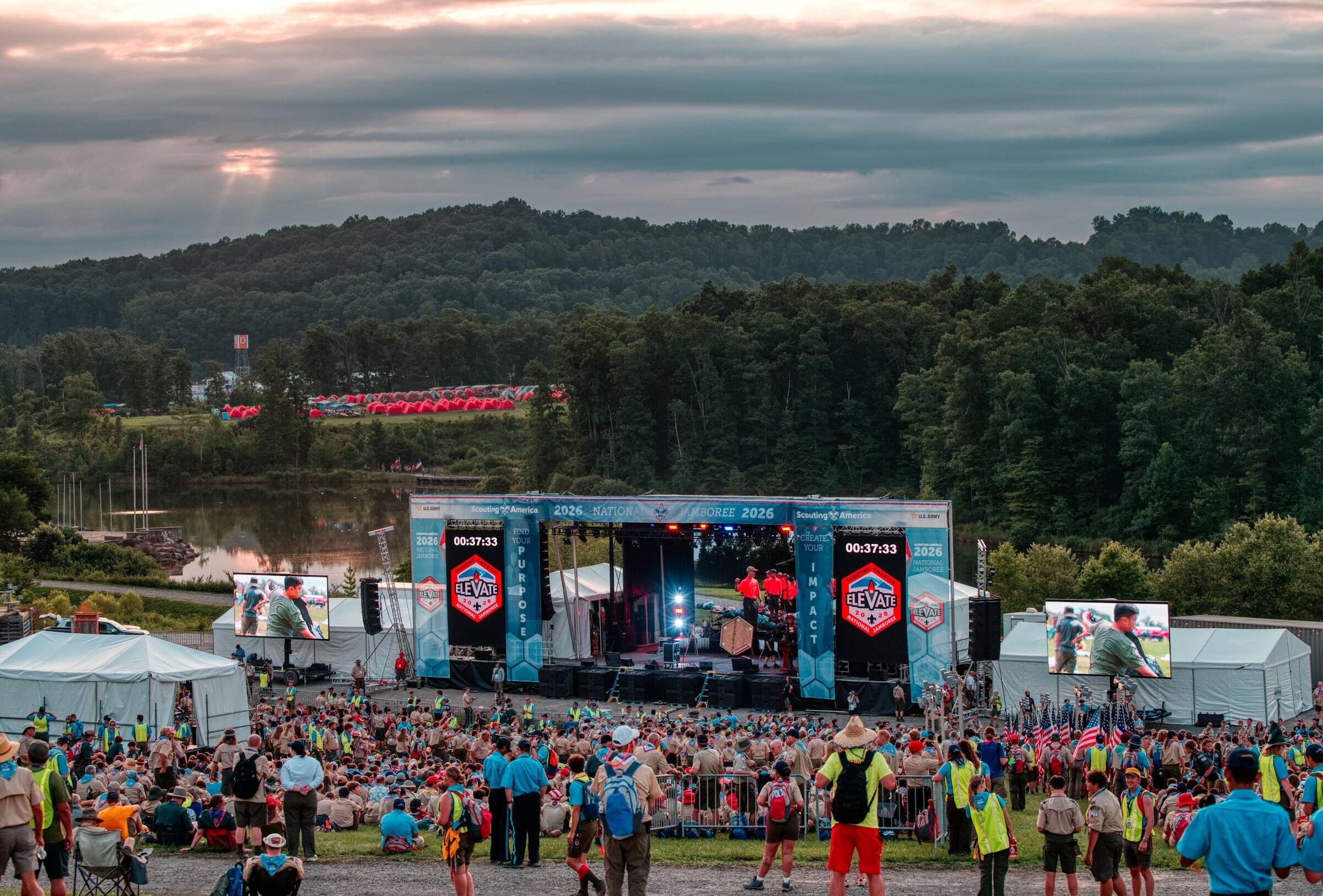
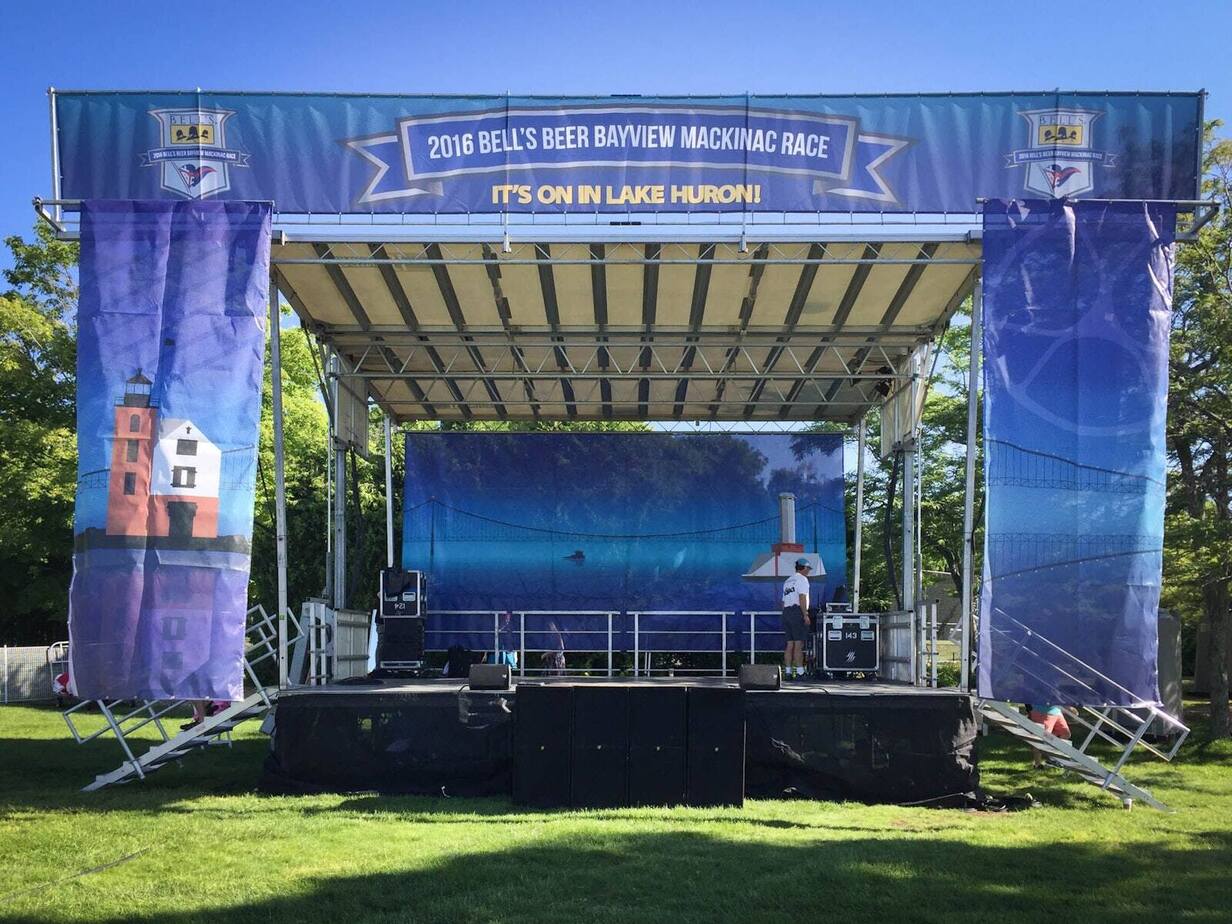
This is the stage most people picture. The audience faces one side of it, and everything behind the performers stays out of view: the backline, the changeovers, the crew. In a theater, the proscenium arch frames the picture. At a live event, the frame is a backdrop, an LED wall, or soft goods.
- One front. One main camera line and one clean wide shot.
- A real backstage. Room behind the backdrop for talent, gear, and the crew to work.
- Any room. A ballroom, a convention hall, an arena floor, or a field.
The range is wide. A small end stage can be a few decks on legs with black drape behind it. A large one can be a mobile stage with a back wall and a roof that carries the lighting and the sound. At the Atlantic Council Global Energy Forum in DC, PM1 built the main ballroom stage for the room and the stream.
Thrust Stages and Runways
A thrust stage pushes into the audience, so people sit on three sides while the upstage end stays connected to backstage. It trades a little of the clean single front for a lot more closeness between the talent and the crowd.
At events, a stage thrust usually means an extension of an end stage out into the audience. When the downstage end drops to the floor, crews call it an ego ramp. Runways and catwalks are thrusts drawn to the show's walk, curved or straight, with seating and camera positions set around them.
Seats on three sides change the sightlines. The rows along the sides look across the thrust instead of at it, so the stage height and the seating plan have to be drawn together. The event seating guide covers the seating side of that drawing.
Stages in the Round
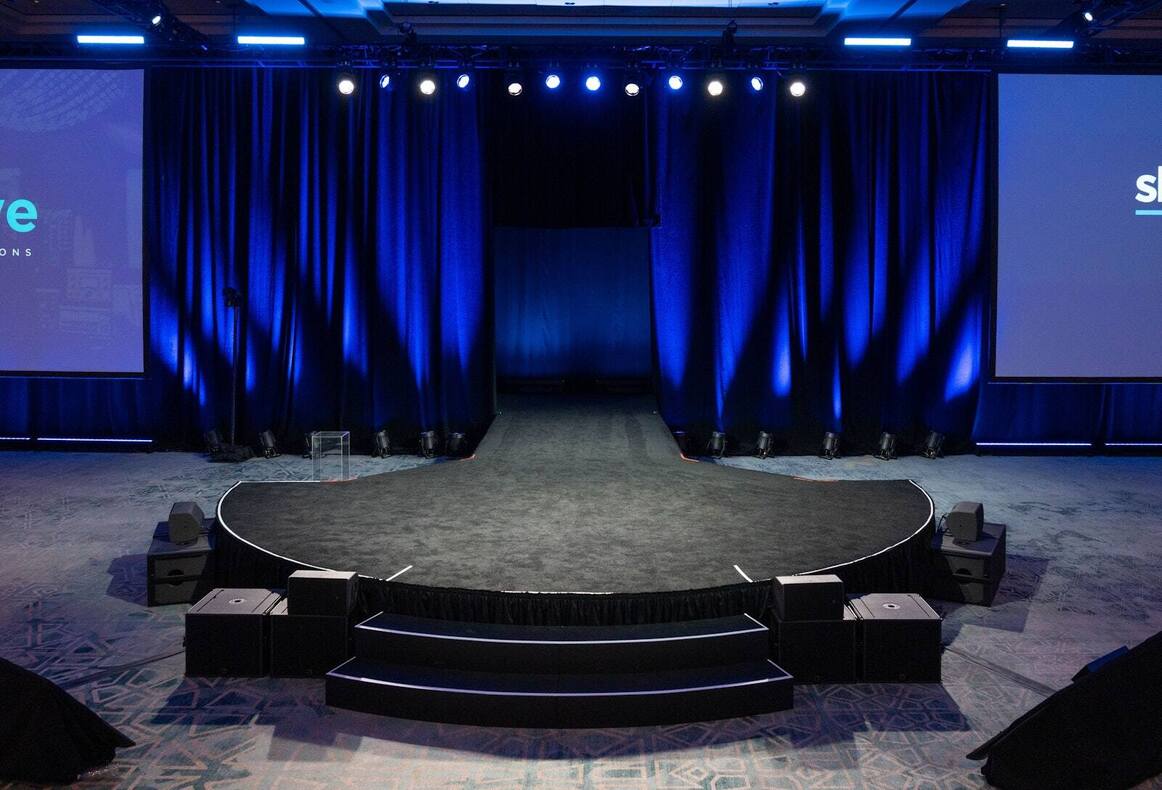
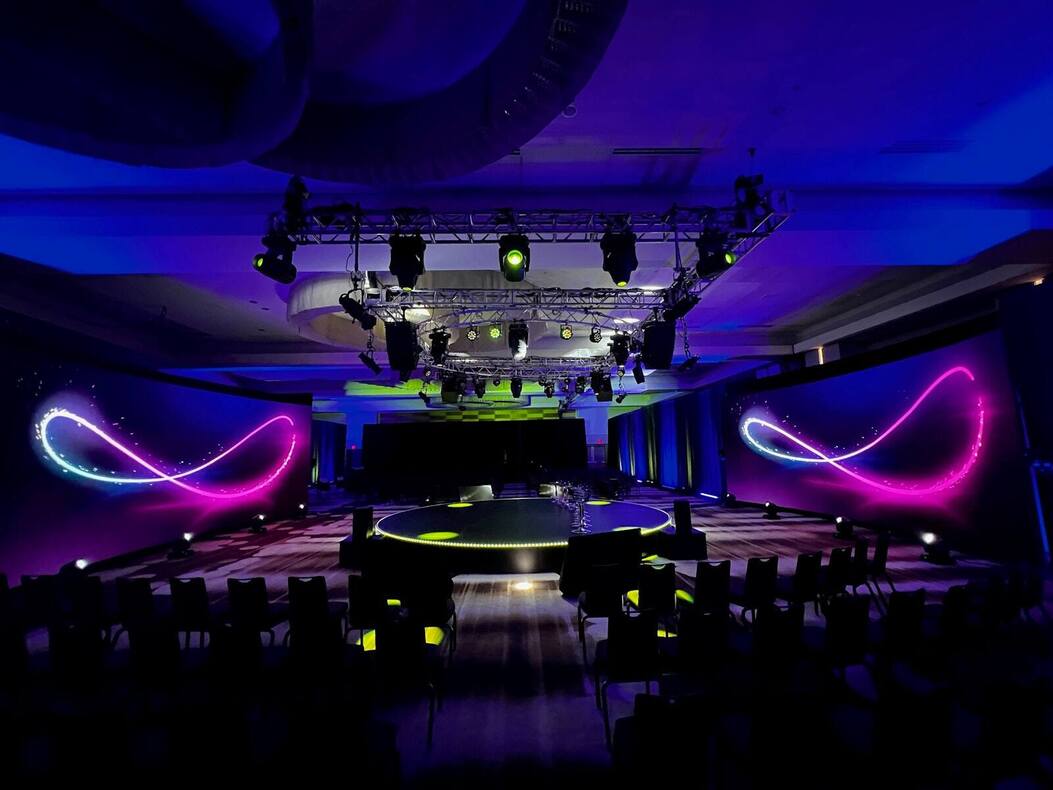
In the round, the audience surrounds the stage. Theater people also call it arena staging or central staging. The stage itself can be square, circular, or another shape cut from standard decks.
The trade is backstage. There's no wall behind the performers, so talent entrances, cable paths, and changeovers all have to be planned through the audience or under the deck. The lighting has to work from every side, and so do the cameras.
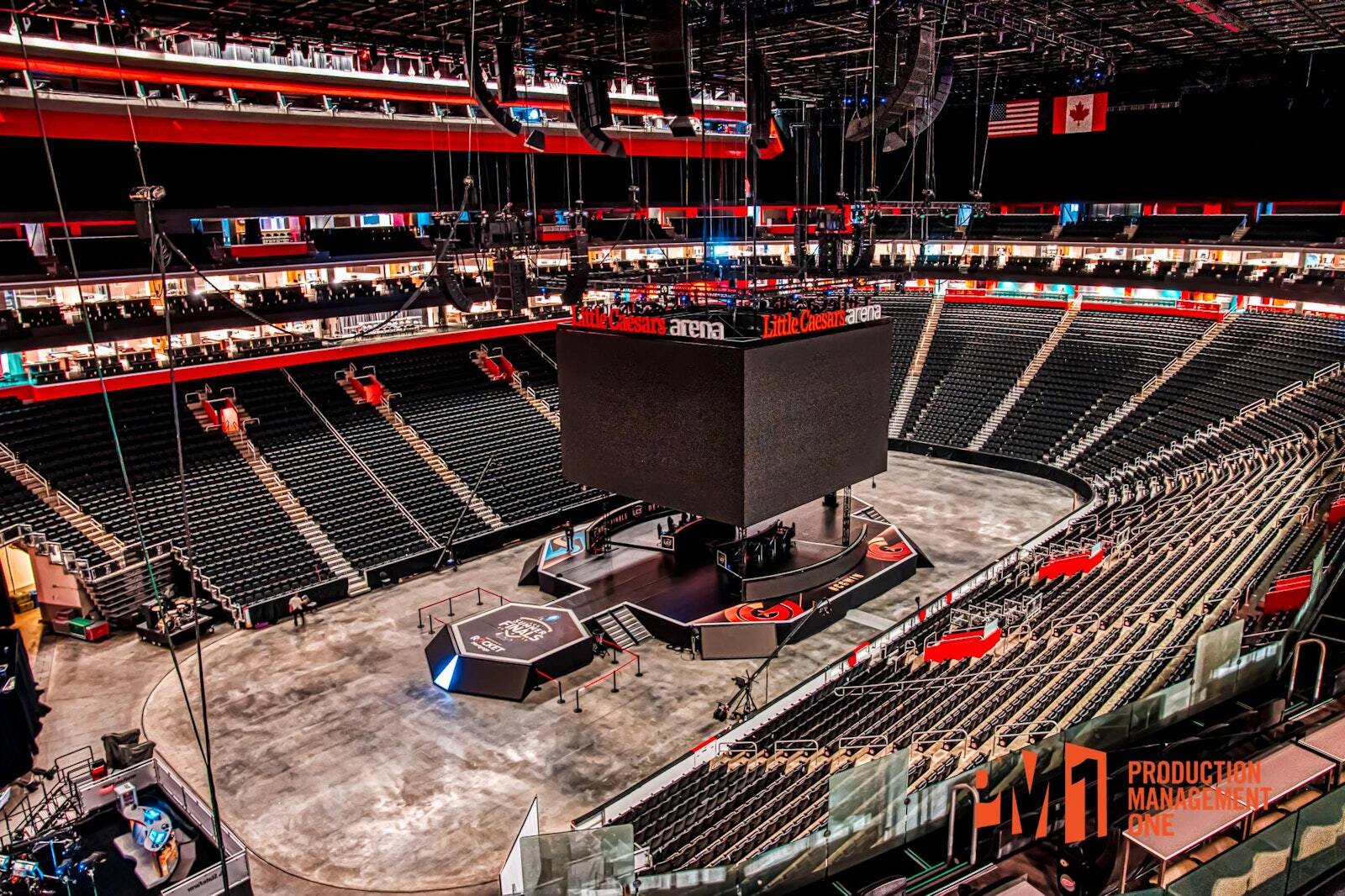
PM1 has built a 22-foot circle stage in a ballroom set for theater seating, and center stages with an audience on every side. On an arena floor, the shape can follow the show: for Riot Games' LCS at Little Caesars Arena in Detroit, PM1 built a hexagonal stage platform.
Found Spaces
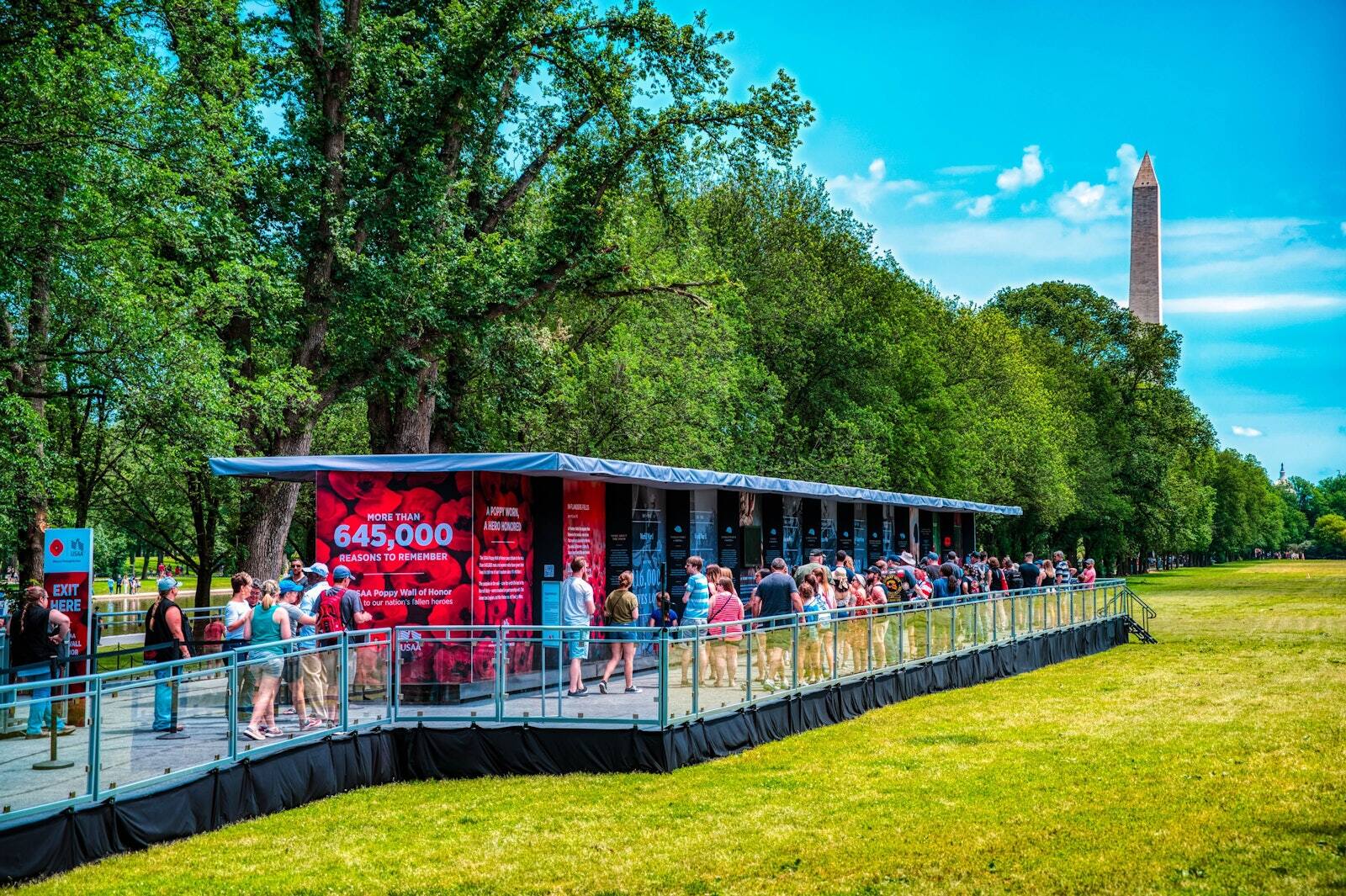
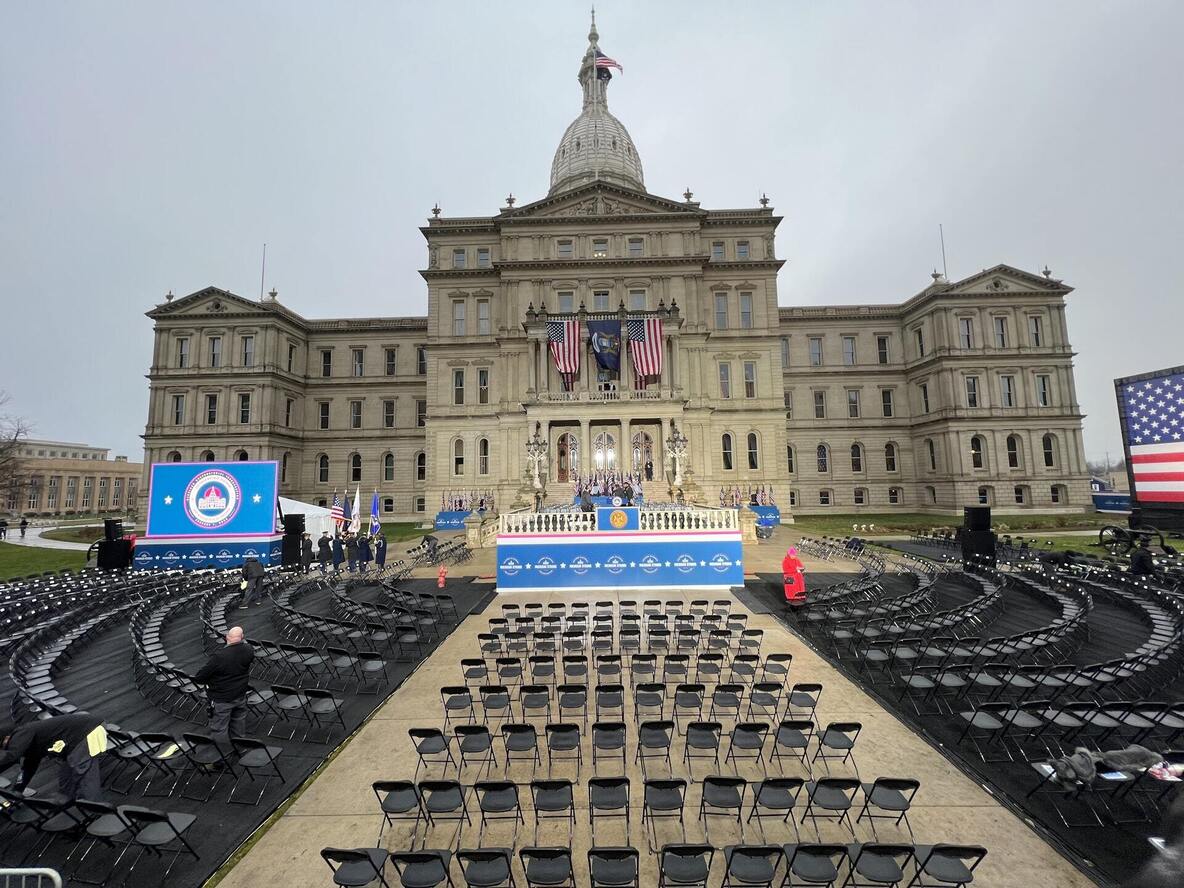
A found space is a stage built where no stage was meant to be: a plaza, a parking lot, a lakeshore, a stadium field, or a lawn with a landmark behind it. The site is the set. The build has to fit around it without damaging it.
- A plaza. A stage with a red roof and side speakers behind a stone fountain.
- The National Mall. A mobile stage for Unite for Veterans with the U.S. Capitol behind it.
- A display. A race car on a custom riser in front of an LED screen.
- A garden. A concert stage in a rocket garden.
Found spaces are where the drawing matters most. The ground isn't flat, the power isn't close, and the site has rules. Decks get leveled to the grade, and anything elevated gets engineering stamped by licensed engineers where the job requires it.
How to Pick the Type
Four questions settle it.
- Where does the audience sit? One side, three sides, or all the way around.
- Where does the main camera go? An end stage gives one clean line. A round stage needs coverage from every side.
- How much backstage does the show need? Band changeovers and a large cast need wings. A single speaker doesn't.
- What does the room or site allow? Ceiling height, floor load, exits, or something else on the site.
The type is the start of the drawing, not the end of it. Size, height, and the understructure come next.